Italian Societies
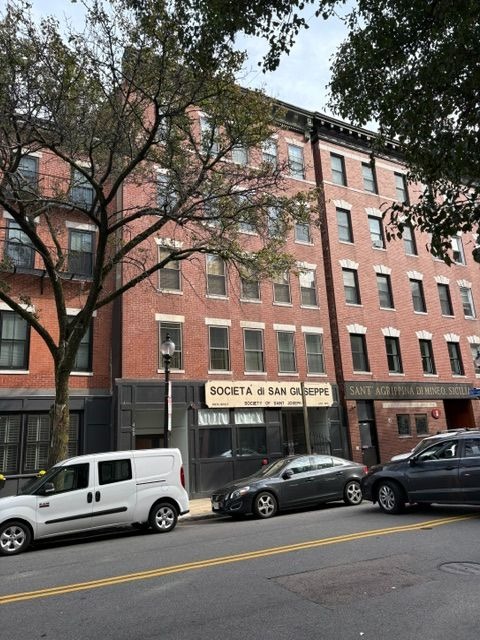
Walking along Hanover Street, we passed the neighboring entrances of the Saint Joseph Society and the Sant’Agrippina di Mineo Society. Their Italian names preserve connections to particular towns in Sicily and to traditions that immigrants brought with them to Boston.
The Saint Joseph Society was founded in 1915 by immigrants from Riesi, Sicily, and formally incorporated in 1925. Its members established a place where religious devotion, cultural traditions, and service to their neighbors could continue in their new home. The society still holds a Saint Joseph’s Table in March and a summer feast and procession
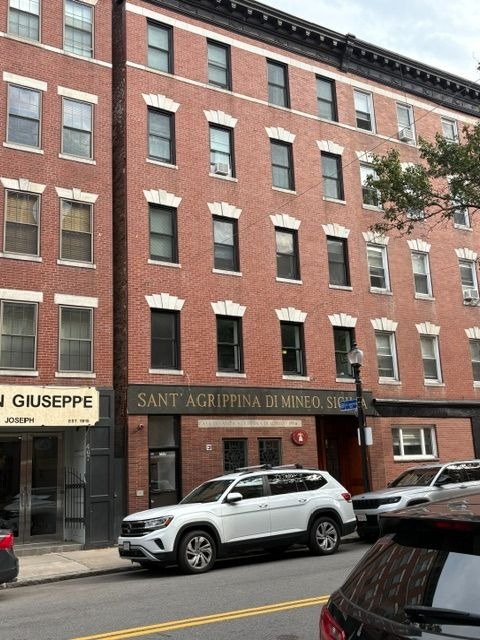
Nearby, the Sant’Agrippina society maintains a connection to Mineo, Sicily, whose patron saint is Agrippina. Boston’s celebration dates to 1914. For generations, families have carried this tradition forward, keeping the name of their ancestral town visible on a street thousands of miles away.
During the annual feast, members carry a statue of Saint Agrippina through the North End. Children take part in their own procession, giving the next generation an active role in the celebration. Music, food, and gatherings accompany the religious observances, bringing residents and visitors into the streets.
These societies also serve the community beyond their feast days. The volunteer-run Saint Joseph Society supports charitable organizations and families in need, shares its meeting space, and delivers Thanksgiving meals to elderly residents and veterans. In 2018, it contributed $1 million toward the restoration of Saint Leonard’s Church, helping preserve another important part of the neighborhood’s Italian heritage.
The entrances we passed belong to a history that is still being practiced. Through processions, shared meals, charitable work, and the participation of children, these societies have sustained ties between generations. Their presence along Hanover Street helps explain how the North End’s Italian identity has endured through the work of families and neighbors.
Read More From Nancy
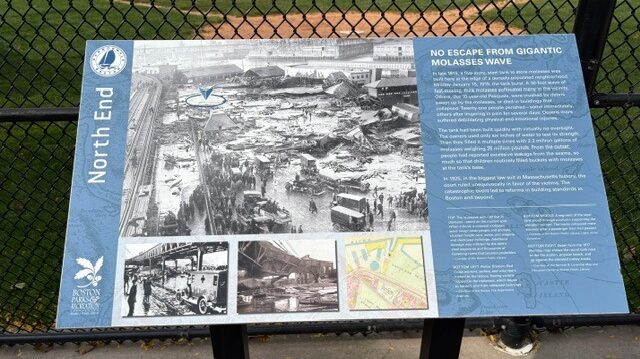
The Great Molasses Flood
Along Commercial Street in Boston’s North End, a waterfront marker recalls a disaster that can be difficult to imagine amid the neighborhood’s activity today. On January 15, 1919, a massive steel storage tank burst, releasing approximately 2.3 million gallons of molasses into the surrounding streets. Twenty-one people died, and roughly 150 were injured. The tank […]
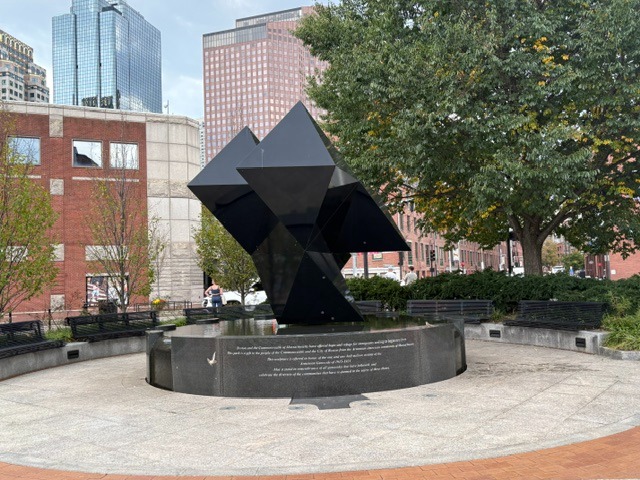
Armenian Heritage Park
During our walk around Boston, we stopped at Armenian Heritage Park on the Rose Kennedy Greenway. Its angular sculpture offers a different kind of memorial: one whose form changes while its purpose remains rooted in remembrance. The sculpture honors the lives lost during the Armenian Genocide of 1915–1923 and the genocides that followed. The park […]
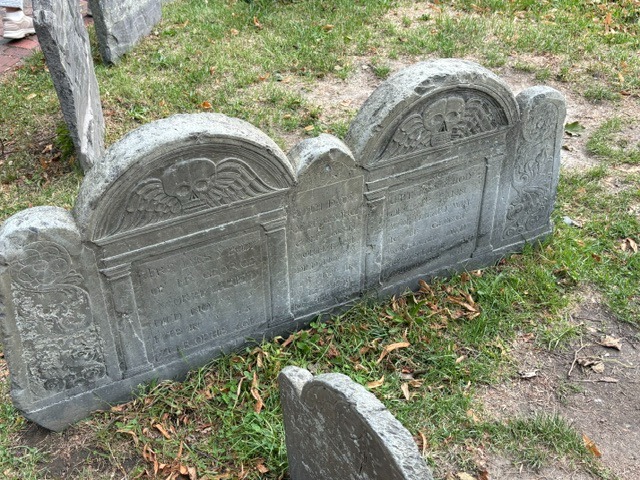
Carved Remembrance at Copp’s Hill Burying Ground
At Copp’s Hill Burying Ground, the carved gravestones preserve more than names and dates. Their shapes, lettering, and symbols reveal how earlier generations commemorated the dead and reminded the living of their own mortality. Looking closely at these markers introduces another part of Boston’s history: the work of stone carvers and the visual language their […]

