The Eliot School
During our walk through Boston’s North End, we passed the Eliot School on Charter Street. Its substantial brick building represents a history of public education that reaches back more than three centuries, long before this particular schoolhouse was built.
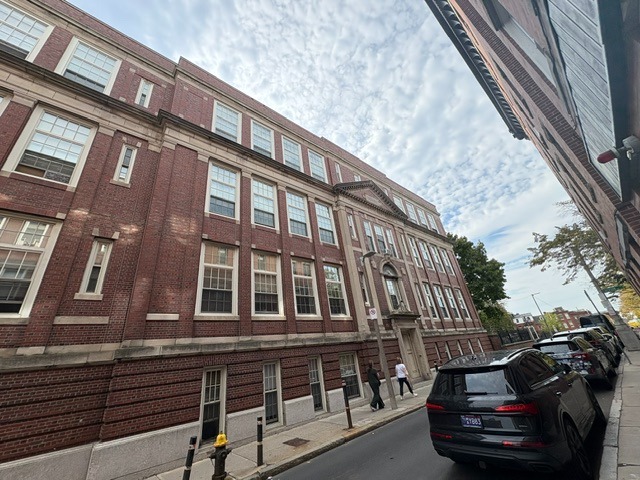
The institution traces its beginnings to the North Writing School, which opened in 1713. In 1790, it merged with the North Latin School and became the John Eliot School, named for a pastor of Boston’s North Church. The school identifies itself as Boston’s oldest continuously operating school and counts Samuel Adams and Paul Revere among its former pupils.
The Charter Street building dates to 1932. Its tall windows, symmetrical façade, and prominent central entrance belong to a later chapter in the school’s development. The distinction matters: the institution’s colonial origins have continued through successive buildings and generations of students.
The school also participated in civic life beyond the classroom. Its earlier facilities served as a meeting place for the women’s suffrage movement in 1917, connecting its history with the campaign to expand voting rights.
Continuity has required change. In 2007, the Eliot faced possible closure because of low performance. Under principal Traci Walker Griffith, teachers, families, and community members helped rebuild the school’s academic and social environment. That recovery led to expansion and its designation as an Innovation School in 2012.
Among the North End’s churches, memorials, and historic homes, the Eliot represents another form of neighborhood history: a school that continues to educate children. Its story connects colonial lessons with the ongoing responsibility of preparing each new generation.
Read More From Nancy
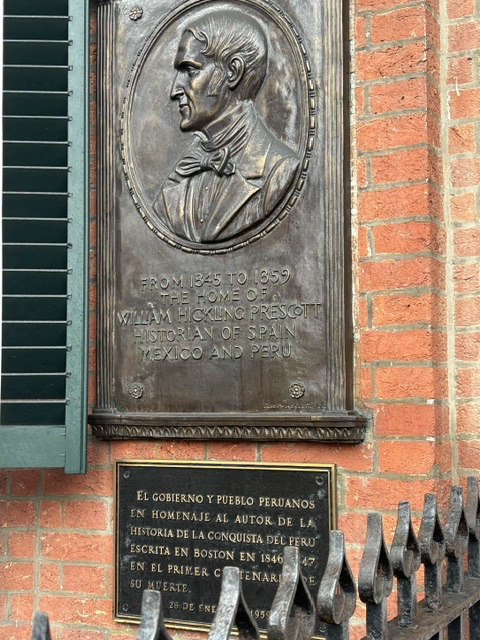
William Hickling Prescott
Walking through Boston’s Beacon Hill, it is easy to admire the elegant brick homes and historic streets without realizing how many remarkable people once lived behind these doors. One of those homes belonged to William Hickling Prescott, one of the nineteenth century’s most celebrated American historians. From 1845 until his death in 1859, Prescott lived […]
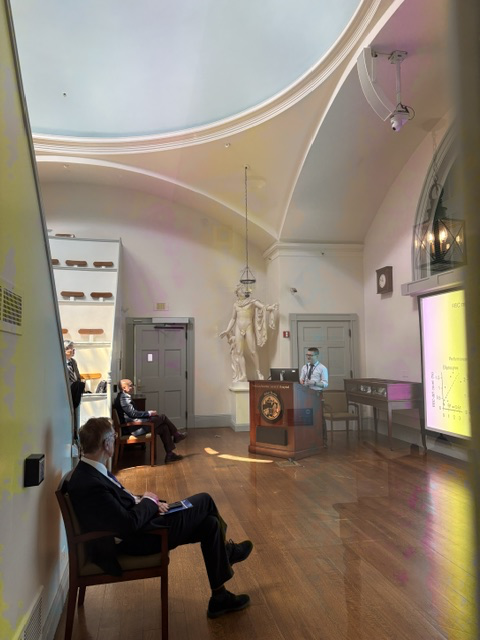
The Ether Dome
My first visit to Massachusetts General Hospital was for a consultation appointment. The hospital complex is enormous, a collection of buildings representing generations of growth and changes in medicine. Yet as I moved through the hospital, I kept noticing one building. Looking out from what seemed like almost every window was the magnificent Bulfinch Building, […]
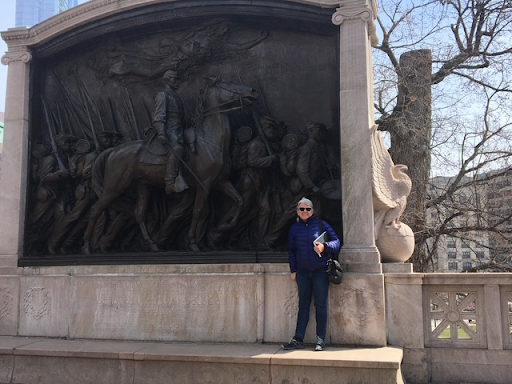
Shaw Memorial
Every time I visit Boston Common, I find myself stopping to admire this remarkable relief by Augustus Saint-Gaudens. Not only is it one of the finest works of public art in America, but it captures its subject with extraordinary power and dignity. Rather than glorifying war, the sculpture honors the courage, sacrifice, and determination of […]

