John Francis “Honey Fitz” Fitzgerald
Near St. Stephen’s Church in Boston’s North End, a bronze portrait set into a granite memorial honors John Francis Fitzgerald, remembered as “Honey Fitz”. His name connects the neighborhood with Boston’s political history and the Kennedy family, but his own story began here long before his grandson became president.
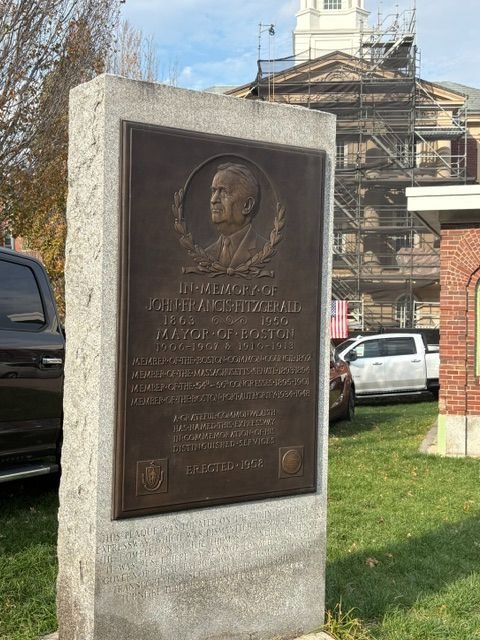
Born in the North End in 1863 to Irish immigrant parents, Fitzgerald grew up in a city where Irish Catholics faced prejudice and limited opportunities. He attended Boston Latin School and entered Harvard Medical School, but his father’s death led him to leave his studies to help support his younger siblings. His ambitions eventually found their expression in politics rather than medicine.
Fitzgerald rose through neighborhood politics to serve in the Massachusetts Senate and the United States House of Representatives. In Congress, he opposed an immigration restriction that would have imposed a literacy requirement on newcomers. His career reflected the growing influence of immigrant communities challenging Boston’s established political leadership.
Elected mayor in 1905, he promoted a “Bigger, Better, Busier Boston.” His mayoral terms began in 1906 and 1910, during a period of expanding public recreation and civic development. His outgoing manner and enthusiasm for singing at public gatherings helped make him a recognizable and popular figure throughout the city.
His record also carried the complications of machine politics. Although he campaigned on reform, his administration became associated with patronage and graft. A later return to Congress ended in 1919 when the House removed him following an investigation into election fraud. These controversies belong alongside his popularity and accomplishments in any account of his public life.
His eldest daughter, Rose Fitzgerald, married Joseph P. Kennedy in 1914. Their son John Fitzgerald Kennedy carried his grandfather’s name. When the young Kennedy ran for Congress in 1946, Honey Fitz campaigned beside him, bringing decades of political experience and personal connections to his grandson’s first successful election.
Fitzgerald died in 1950, a decade before Kennedy’s election to the presidency. His memorial returns his story to the neighborhood where it began. Standing near the church associated with his family, it recalls the Irish American community that shaped him and the political ambitions that carried a North End family into national history.
Read More From Nancy
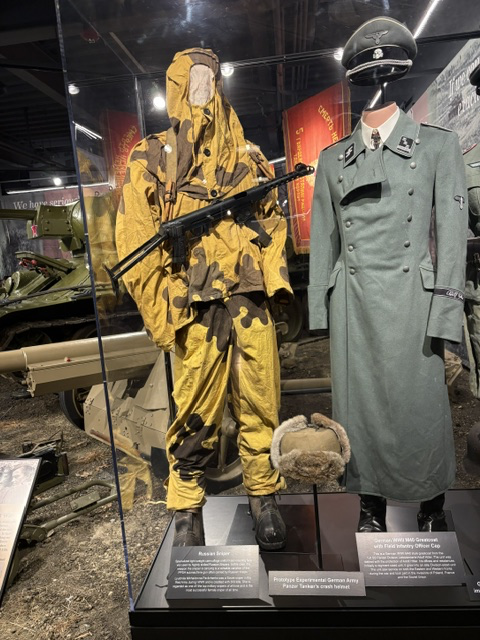
The Russian Sniper
During a visit to the American Heritage Museum in Hudson, Massachusetts, I stopped at this display highlighting one of the most specialized and demanding roles of the Second World War: the Soviet sniper. While the museum is known for its extraordinary collection of tanks and military vehicles, it also tells the human stories behind the equipment through […]
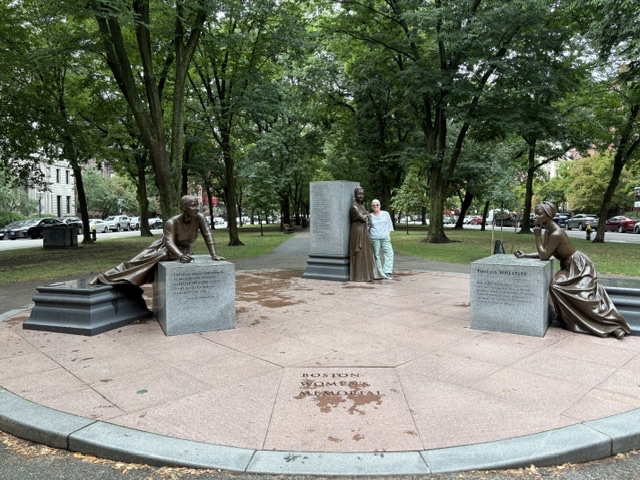
Boston Women’s Memorial
Located on the Commonwealth Avenue Mall, the Boston Women’s Memorial honors Abigail Adams, Lucy Stone and Phillis Wheatley, three women whose words challenged the political, social and intellectual boundaries of their times. Created by sculptor Meredith Bergmann, the bronze-and-granite memorial was dedicated by the City of Boston on October 25, 2003. The idea for the […]
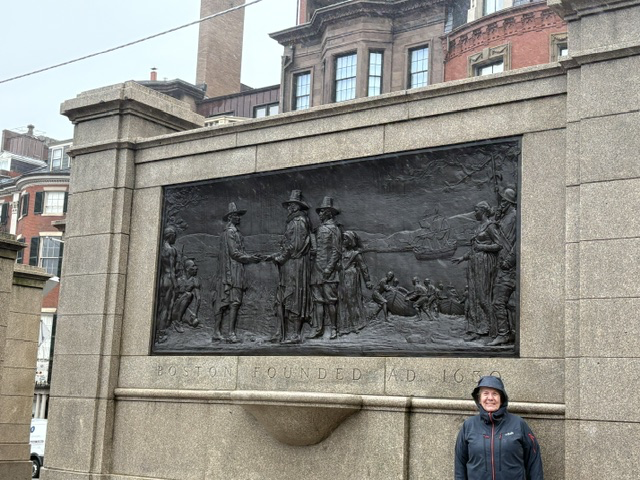
The Founders Memorial
Standing on Boston Common, the Founders Memorial commemorates the beginning of Boston’s story. Dedicated in 1930 during the city’s 300th anniversary celebration, the monument marks the founding of Boston in 1630 and honors the people whose decisions transformed a small peninsula known as Shawmut into one of America’s most influential cities. The centerpiece of the […]

