Robert Newman at Copp’s Hill Burying Ground
At Copp’s Hill Burying Ground, Robert Newman’s grave brings us close to one of the people who helped send a warning out of Boston on the eve of the American Revolution. As sexton of Christ Church, now known as Old North Church, Newman participated in displaying the two lanterns that signaled British troops were leaving the city by water on April 18, 1775.
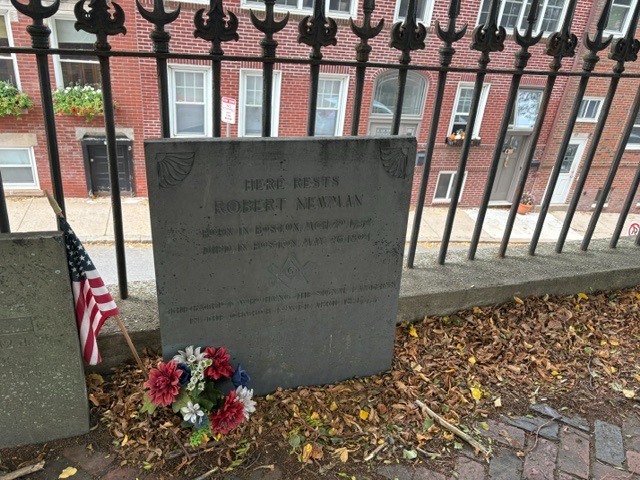
Born in Boston in 1752, Newman became the church’s sexton in 1772. A sexton cared for the church building and supported its daily operation. His position gave him access to the church and familiarity with its interior and practical knowledge that became important when the steeple was chosen as a place to display the warning. He was twenty-three years old when he took part in the signal.
The plan depended on a simple message that could be understood across the river in Charlestown. One lantern would indicate that British soldiers were departing by land through Boston Neck. Two would indicate that they were crossing the Charles River toward Cambridge before marching into the countryside. The lights provided another means of spreading the news if messengers were unable to leave Boston.
Newman worked with John Pulling Jr., a member of the church’s vestry, while Thomas Bernard served as a lookout. That evening, Newman and Pulling climbed the tower and briefly displayed two lanterns near its windows. From the tallest building in Boston, the signal warned those watching in Charlestown of the British movement toward Lexington and Concord. Their task required coordination, secrecy, and a willingness to risk arrest in a city occupied by British troops.
Accounts of Newman’s departure include the tradition that he escaped through a church window. Old North’s history identifies this detail as legend. It also recounts his arrest the following day and his release after he told authorities that he had lent the church keys to Pulling, who had already left Boston. The distinction between the established signal and the stories surrounding his escape is part of understanding how this event has been remembered.
Newman continued serving as sexton after the Revolution. He died in 1804 and was buried at Copp’s Hill, a short distance from the church where he had carried out his part in the warning. His gravesite connects a familiar national story to a neighborhood resident whose access, knowledge, and cooperation helped make the signal possible.
Read More From Nancy
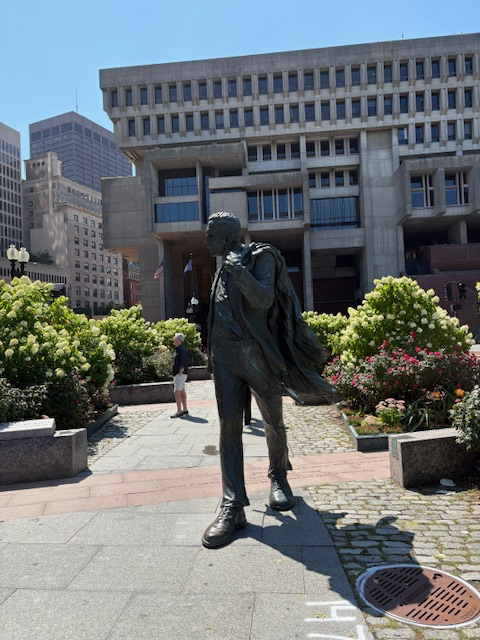
Mayor Kevin White
Walking near Faneuil Hall, it is easy to focus on the history you expect to find: Revolutionary sites, early American stories, the familiar markers of the city’s beginnings. Just beyond that, is a figure that is hard to ignore: the life size bronze statue of Kevin H. White. Located at street level and captured mid-stride, the sculpture immediately […]
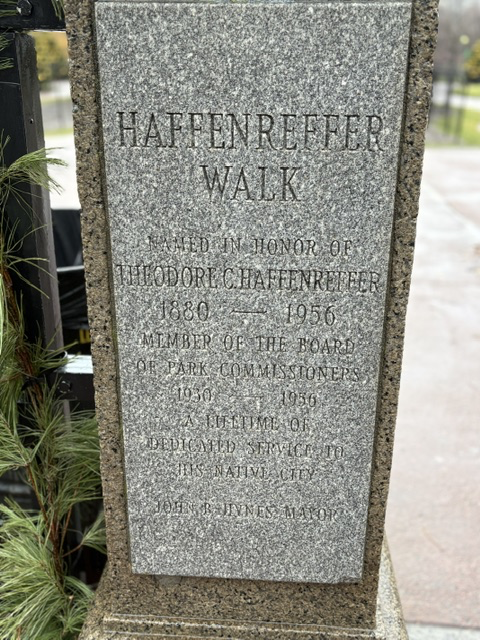
Haffenreffer Walk
While walking through the Boston Public Garden, I noticed this granite marker identifying Haffenreffer Walk. The inscription says that the walkway was named for Theodore Haffenreffer, 1880–1956, who served on Boston’s Board of Park Commissioners from 1930 until his death in 1956—a remarkably long period of service to the city’s parks. Haffenreffer was also part […]
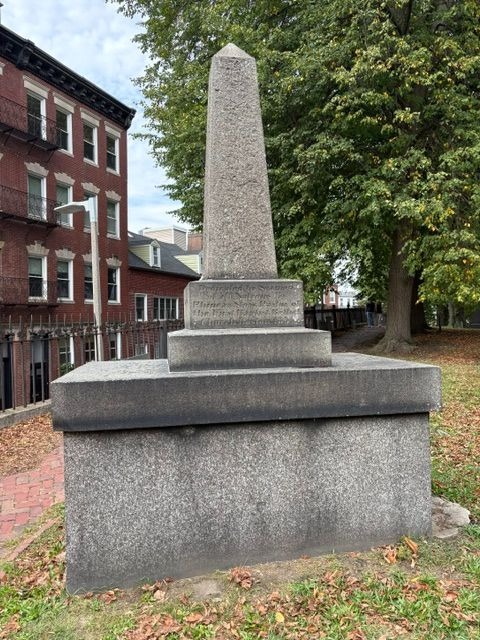
Edmund Hartt at Copp’s Hill Burying Ground
The monument to Edmund Hartt at Copp’s Hill Burying Ground connects this historic cemetery to Boston’s shipbuilding waterfront. Hartt owned the North End shipyard where the USS Constitution was built, helping provide the setting and skilled labor for one of the young United States Navy’s most ambitious projects. His memorial preserves the name of a […]

