All Souls Church
Walking along Main Street in Greenfield, I noticed a stone church whose square, battlemented tower gave it an almost castle-like appearance. Its rough stone walls and steep roof stood apart from the neighboring brick commercial buildings. Learning more about All Souls Church revealed a history that extended beyond its architecture, connecting religious independence with efforts to bring people together across the community.
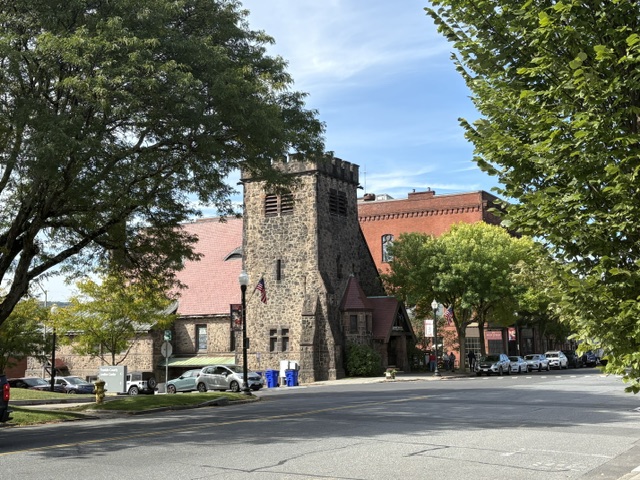
The congregation began in 1825, when dissenting members of Greenfield’s Second Congregational Church organized the Third Congregational Society. Their separation reflected the theological differences through which Unitarian congregations emerged in New England. In 1837, they built a Greek Revival church on this site, establishing a permanent home for their growing religious community.
In 1894, that earlier building was moved toward the rear of the property to make room for the present church. Rather than disappearing, the old meetinghouse entered another chapter of Greenfield’s history, later serving as an armory. The new stone church brought a markedly different architectural character to Main Street, combining English revival traditions with Gothic and Romanesque elements.
Its materials also connect it to the surrounding landscape. Stone for the walls came from Greenfield’s Highland Park quarry, while carved trim was fashioned from Longmeadow sandstone. The tower, textured masonry, and ornamental details gave the congregation a substantial and distinctive home. Gargoyles and a memorial rose window added further craftsmanship to a building intended to serve generations.
Some of the church’s most interesting contributions grew from the people who gathered there. Mary P. Wells Smith, a member remembered for her Boy Captive children’s books, initiated gatherings known as Union Teas around the turn of the twentieth century. She invited women from churches throughout Greenfield, creating opportunities for fellowship across denominational boundaries. These gatherings helped lead to the founding of the Women’s Club of Greenfield. The tradition continued for decades, eventually fading in the 1970s as women’s schedules and working lives changed.
In 1910, the church also became home to Greenfield’s first organized boys’ club. That effort was a forerunner of the area’s YMCA, giving the congregation another connection to community life beyond worship. Its rooms provided space where an organization serving young people could begin.
These stories gave the building more meaning for me. The stone tower first caught my attention, but the history revealed a place where residents developed relationships and started institutions that reached beyond the congregation. All Souls Church preserves the story of a religious community while also reminding us how much a town’s shared life can grow from people gathering in one welcoming place.
Read More From Nancy
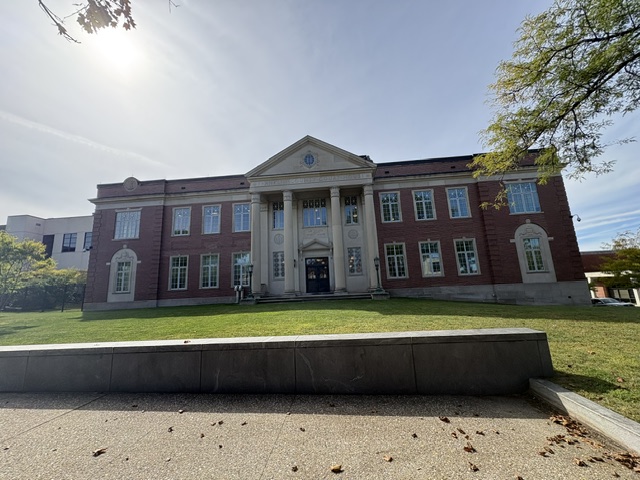
Franklin County Courthouse
Walking along Main Street in Greenfield, I stopped to look at the Franklin County Courthouse. Its red brick walls and tall, pale columns gave it a commanding presence, but its most interesting story was how the community had preserved this historic building while adapting it to the demands of a modern justice system. Built in […]
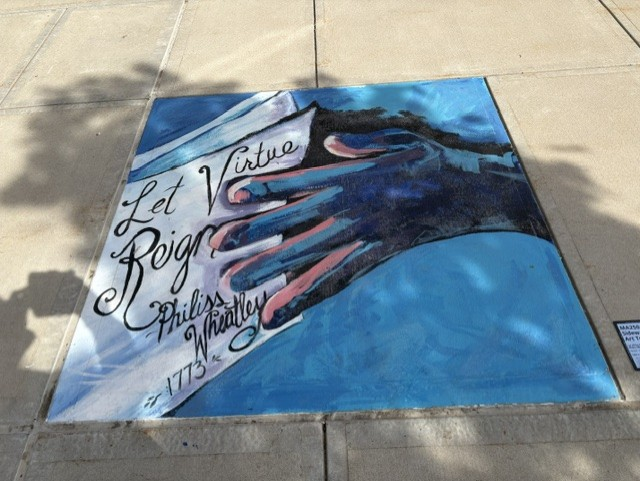
Let Virtue Reign: Two Women Who Claimed Freedom
Continuing my search for Greenfield’s sidewalk art, I found a mural with a dark hand resting across papers bearing the words “Let Virtue Reign” and the name Phillis Wheatley. Its simple arrangement brought together two remarkable women whose lives challenged the boundaries of freedom in Massachusetts. Created by artist Youme Nguyen Ly outside the Greenfield […]
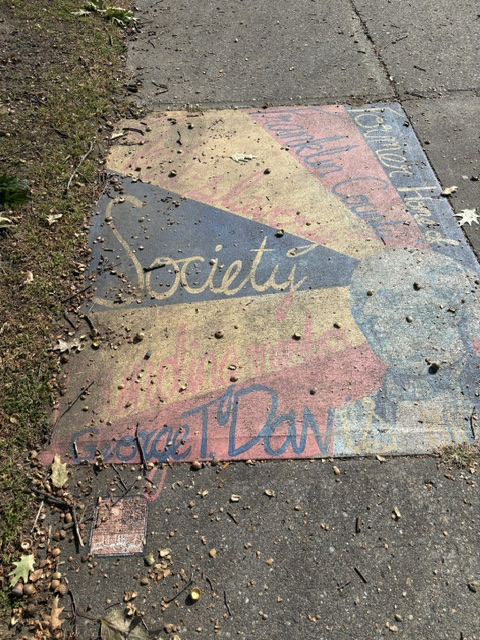
George T. Davis: Working for Freedom
Once I discovered Greenfield’s sidewalk art, I began looking for the next piece and the story it might reveal. This mural carried the name George T. Davis among colorful shapes and lettering referring to the anti-slavery movement. It introduced me to a man whose work connected Greenfield’s local history with the larger struggle to end […]

