Block of Women
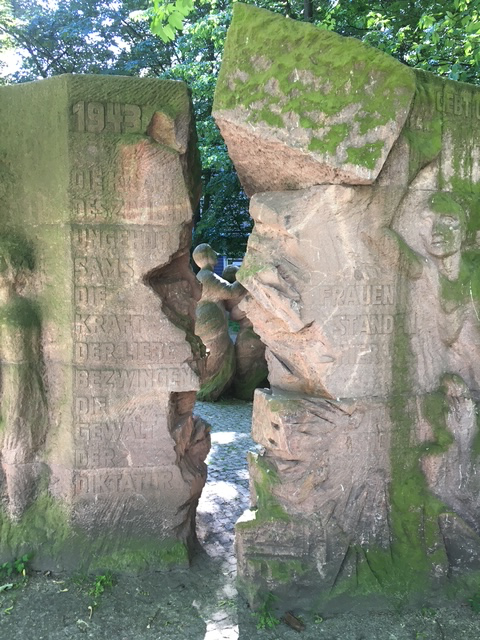
In a small park on Rosenstraße in central Berlin stands a group of fractured red sandstone blocks carved with human figures, Jewish symbols and German words. The monument is known as the Block der Frauen, or Block of Women. Created by German sculptor Ingeborg Hunzinger, it commemorates one of the most remarkable acts of public protest against Nazi persecution: the Rosenstraße Protest of 1943.
By the beginning of 1943, most of Berlin’s Jewish population had already been deported or forced into hiding. Those who remained included Jewish men married to non-Jewish women. Because the Nazi government classified these relationships as “mixed marriages,” many of these men had temporarily escaped the deportations that had taken so many other Jewish residents of the city.
That limited protection began to disappear on February 27, 1943, when the Gestapo and SS launched what became known as the Fabrik-Aktion, or Factory Action. Jewish forced laborers were arrested at factories and workplaces throughout Berlin. Approximately 8,000 Jewish residents were detained during the roundup, many of whom were soon deported to Auschwitz.
About 2,000 Jewish people connected to mixed marriages, mostly men with non-Jewish wives, were separated from the other prisoners. They were confined in the former Jewish Welfare Administration building at Rosenstraße 2–4 while Nazi officials decided what would happen to them.
News of the arrests quickly reached their families. Wives, mothers and relatives began gathering outside the building. They did not arrive as members of an organized resistance group, and there was no carefully prepared plan. They came because their husbands, fathers and sons had suddenly disappeared behind the walls of a detention center.
The women refused to leave.
Over the following days, the crowd grew. As many as 600 women gathered on Rosenstraße, returning despite the presence of police and the possibility of arrest or violence. They stood in the street and called for their family members to be released. Their demand was direct: “Give us our husbands back.”
Public protest against the Nazi government was extraordinarily dangerous. By 1943, Germans understood that opposition could lead to interrogation, imprisonment, deportation or execution. These women were challenging the Gestapo in the center of Berlin while the regime was intensifying its effort to remove the city’s remaining Jewish population.
Yet the protest continued for approximately one week.
Beginning on March 6, the prisoners held on Rosenstraße were released. Some men who had already been transported away were also returned. Many of those protected by mixed marriages survived the war. Historians continue to debate how directly the protest influenced the government’s decision and how much the releases also reflected existing Nazi policies concerning mixed marriages. Nevertheless, the women’s presence on Rosenstraßeremains a rare and powerful example of German civilians openly confronting Nazi persecution while it was taking place.
The building in which the men were detained was later destroyed during the war. For decades, little at the site explained what had happened there. Ingeborg Hunzinger designed a monument during the 1980s, but it could not be installed in East Germany. After German reunification, the Berlin Senate supported the project, and the completed Block of Women was erected in 1995 near the location of the protest and the former Old Synagogue.
Hunzinger did not create a smooth or comforting memorial. The massive sandstone blocks appear broken apart, reflecting the separation of husbands from wives and Jewish families from the society around them. Human figures emerge from the stone, reaching toward one another across deep divisions. Some faces convey fear and grief; others show determination, resistance and reunion.
The monument contains six sculptural elements arranged around a central couple holding one another. Women and children appear together, while a man emerging from one section of stone turns toward a woman carved into another. Although the blocks have been torn apart, they remain connected as parts of a single composition. The design suggests that the Nazi government could divide families physically without completely destroying the bonds between them.
Other elements broaden the meaning of the memorial. A man holding a broken violin represents the destruction of Jewish cultural life under the Nazi regime. A sculpted park bench recalls the everyday restrictions imposed upon Jewish people, including prohibitions against using public benches. Hebrew letters and Jewish symbols appear throughout the stone, preserving the identity of the people whom the Nazis sought to isolate and erase.
The words carved into the monument speak of civil disobedience and love overcoming the violence of dictatorship. They recall the women who stood on Rosenstraße and demanded the return of their husbands. The inscription does not portray them as soldiers or political leaders. Their resistance grew from personal loyalty and the refusal to surrender the people they loved.
The Rosenstraße Protest did not stop the Holocaust, nor did it protect the thousands of other Jewish Berliners arrested during the Factory Action. Most did not have non-Jewish relatives able to gather publicly and demand their release. That painful distinction is essential to understanding the event. The protest was both a remarkable success for some families and a reminder of how few Jewish people were offered any protection at all.
The monument therefore carries more than one meaning. It honors the courage of the women who acted, remembers the Jewish men who were imprisoned and acknowledges the larger community that was being destroyed around them. Its fractured surfaces resist a simple story of triumph. They leave room for fear, separation, loss and the moral complexity of survival.
The Block of Women also raises an enduring question: what becomes possible when ordinary people refuse to remain silent? The women of Rosenstraße possessed no official authority. They had only their presence, their voices and their unwillingness to go home without the people they loved. In a dictatorship built upon fear and obedience, even standing together in the street became an extraordinary act of resistance.
Read More From Nancy
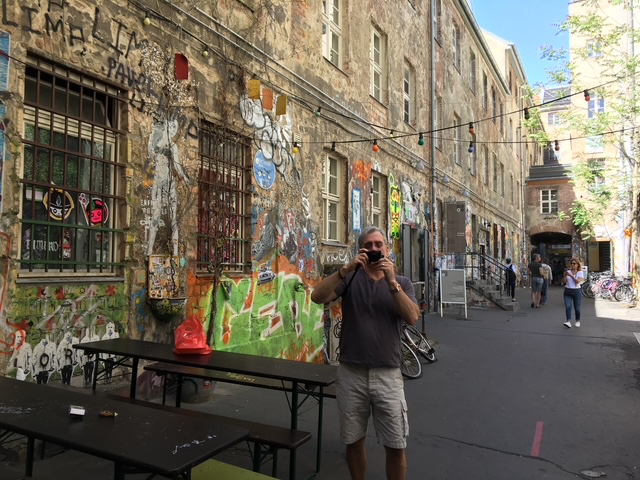
A Hidden Courtyard
While exploring Berlin on a Jewish history tour, we walked into what appeared to be an ordinary courtyard tucked behind the busy streets of the city. Today it is filled with cafés, shops, and visitors, making it difficult to imagine that this quiet space once became the setting for acts of extraordinary courage during the […]
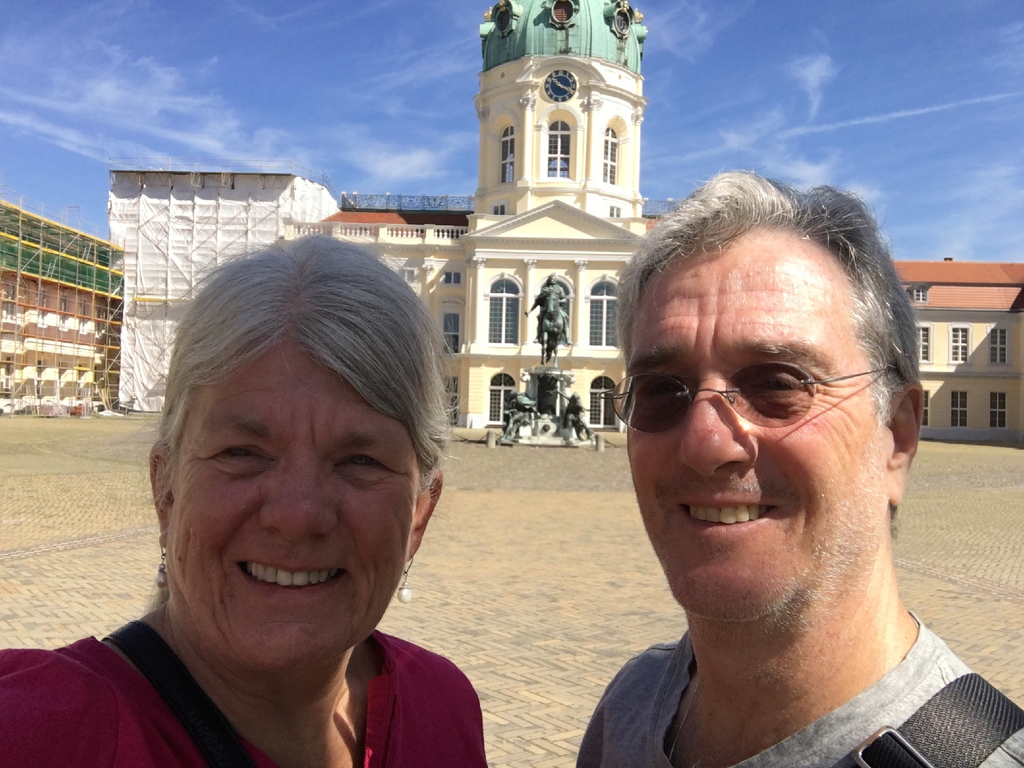
Charlottenburg Palace
While exploring Berlin, we visited Charlottenburg Palace, a place that opened another window into the city’s long history. Berlin is so often associated with the dramatic events of the 20th century that it can be easy to forget that for centuries it was also a royal capital. Charlottenburg takes us back into that earlier world […]
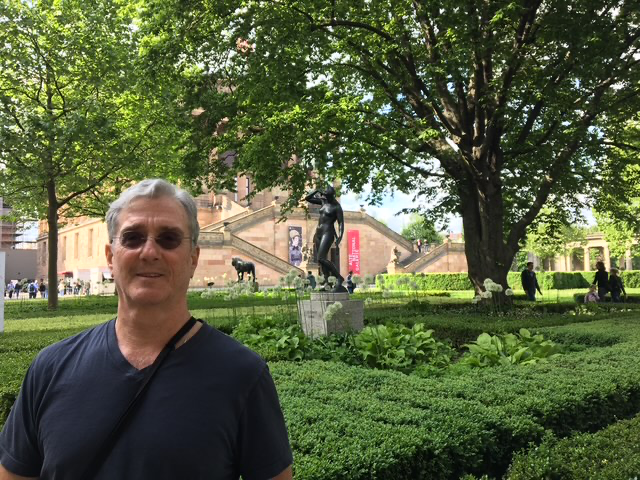
The Kolonnadenhof, Museum Island
On our trip to Berlin, we spent time exploring the museums on Museum Island. There was so much to see inside that it would have been easy to hurry from one collection to the next. Instead, we found ourselves lingering in the Kolonnadenhof, the garden shared by the Alte Nationalgalerie, the Neues Museum, and the Pergamon Museum. It gave […]

