Casa Masó
Standing along Carrer de les Ballesteries in Girona’s historic center, Casa Masó offers a fascinating contrast to the medieval buildings for which the city is best known. Its warm ochre exterior, dark wooden window frames, wrought-iron balconies and geometric arrangements of blue and green glazed tiles immediately distinguish it from the surrounding buildings. The façade reflects a period when Girona was preserving its past while also embracing new architectural ideas.
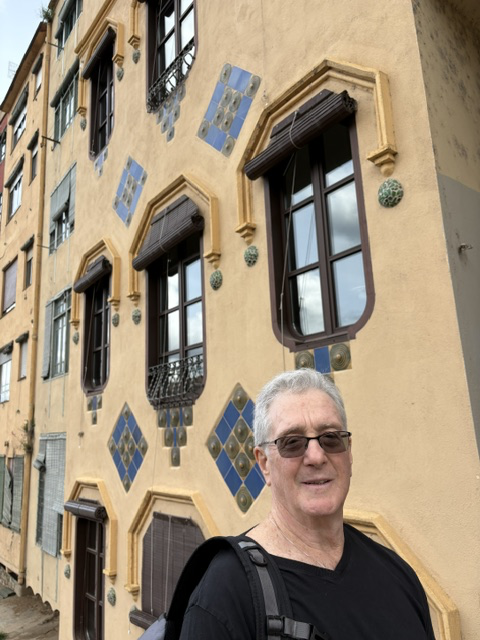
Casa Masó was the birthplace and family home of Rafael Masó i Valentí, one of Catalonia’s most important early-20th-century architects. Born in Girona in 1880, Masó studied architecture in Barcelona, where he was influenced by Antoni Gaudí and the artistic energy of Catalan Modernisme. He later became closely associated with Noucentisme, a movement that favored greater order, simplicity and classical balance while continuing to celebrate Catalan culture and craftsmanship.
The house did not begin as a single residence. The Masó family gradually acquired several adjoining buildings between the middle of the 19th century and the beginning of the 20th. Rafael Masó eventually combined them into one family home, carrying out major renovations between 1911 and 1919. The resulting structure extends from Carrer de les Ballesteries to the Onyar River, linking one of Girona’s historic streets with the colorful riverfront that has become one of the city’s most familiar views.
Masó treated the house as more than a practical family residence. Its architecture brought together glazed ceramics, carved stone, wrought iron, stained glass and carefully designed woodwork. These materials connected the home to traditional Catalan craftsmanship, while its organization and decorative restraint reflected newer European ideas about comfort, natural light and domestic living. The exterior’s ceramic diamonds and circular ornaments reveal how Masó used relatively simple forms and materials to create a distinctive identity.
The building was also connected to the intellectual life of Girona. Rafael Masó’s father operated the Masó Printing Press on the ground floor. From 1889 until 1936, the family printed and published the Diario de Gerona de avisos y noticias there. Casa Masó was therefore not only a family home but also a place associated with journalism, literature, public discussion and the cultural life of the city.
Today, Casa Masó is the only one of Girona’s celebrated houses overlooking the Onyar River that is open to the public. Preserved with furnishings and decoration from the Noucentista period, it provides a glimpse into the private life of a prosperous Catalan family and the creative world of the architect who transformed their home. In a city celebrated for its Roman walls, medieval streets and Gothic churches, Casa Masó represents another important chapter—the emergence of a modern Girona that remained deeply connected to its history and traditions.
Read More From Nancy
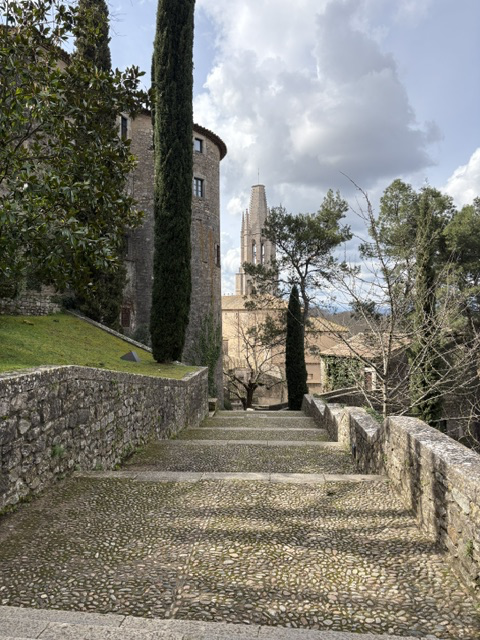
Passeig Arqueològic
The Passeig Arqueològic follows the northeastern edge of Girona’s historic center, winding among sections of the city’s ancient walls, medieval towers and religious buildings. Stone stairways, terraces and pathways pass beneath tall cypress trees, creating a peaceful transition between the densely built Old Quarter and the greener landscape of the Galligants Valley. Although the walkway […]
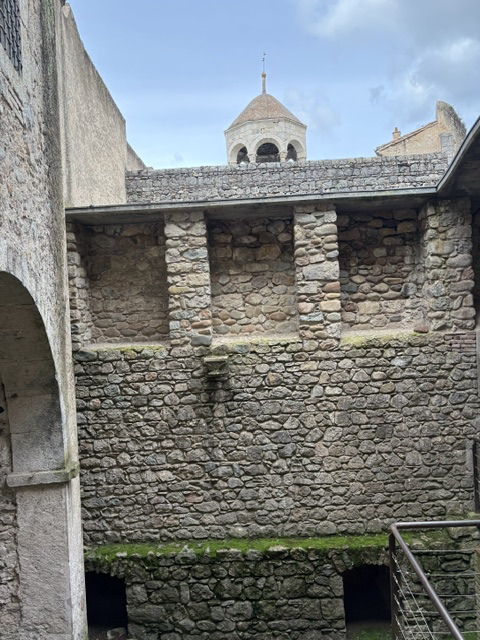
The Arab Baths
Hidden among the stone buildings of Girona’s old quarter, the Arab Baths reveal very little from the outside. Only the octagonal lantern rising above the roof suggests that something unusual lies within. The building appears ancient and austere, its weathered walls blending almost seamlessly with the medieval city surrounding it. Despite their name, the baths […]
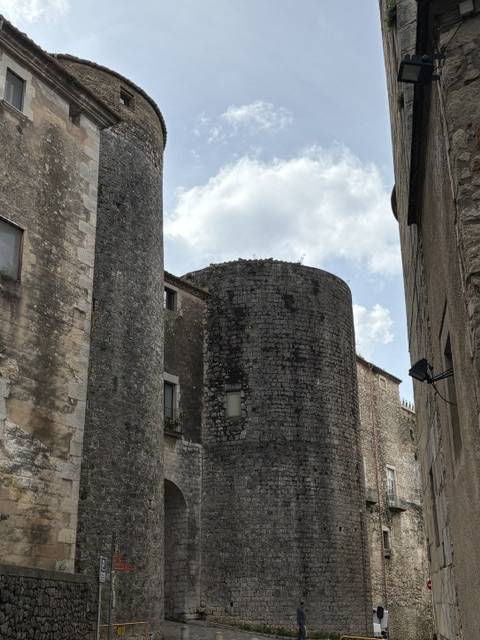
The Portal de Sobreportes
As we walked through Girona’s old quarter, two enormous circular towers rose above the narrow cobblestone street. Their height, thickness and close position immediately suggested that this was once more than an ordinary passageway. These towers guarded the Portal de Sobreportes, one of the principal entrances into the historic city. The gateway originated as the […]

