USS Cassin Young
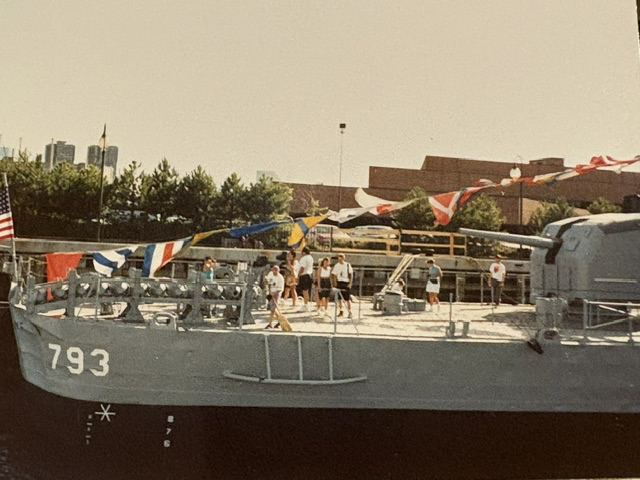
The USS Cassin Young, identified by the hull number DD-793, is preserved at the Charlestown Navy Yard as part of Boston National Historical Park. The Fletcher-class destroyer represents both the industrial effort that produced thousands of American warships during the Second World War and the experiences of the sailors who served aboard them.
The ship was named for Captain Cassin Young, a United States Navy officer recognized for his actions during the Japanese attack on Pearl Harbor. Young commanded the repair ship USS Vestal, which was moored beside the battleship USS Arizona. Blown overboard during the attack, he swam back to his damaged ship and directed efforts to move it away from the burning Arizona. He received the Medal of Honor for his leadership. Young was killed in November 1942 while commanding the cruiser USS San Francisco during the Naval Battle of Guadalcanal.
The USS Cassin Young was constructed in California and commissioned on December 31, 1943. After training in the Pacific, it joined American naval operations against Japanese-held islands. Destroyers such as the Cassin Young protected aircraft carriers and larger warships, provided gunfire support for troops ashore, rescued sailors and used radar to warn fleets of approaching enemy aircraft.
During its wartime service, the ship participated in operations connected with Saipan, Leyte Gulf, Iwo Jima and Okinawa. Its most dangerous assignment came during the Battle of Okinawa, when it served on the radar picket line. Destroyers positioned around the invasion fleet provided early warning of incoming Japanese aircraft, making them frequent targets of kamikaze attacks.
On April 12, 1945, the Cassin Young helped shoot down several attacking aircraft before a kamikaze struck its foremast and exploded above the ship. One sailor was killed and dozens were wounded. Despite the damage, the crew kept the destroyer operating and brought it to safety for repairs.
After returning to duty, the Cassin Young was struck by another kamikaze on July 30, 1945. The aircraft crashed into the starboard side near the forward fire-control room, causing a powerful explosion and fires aboard the ship. Twenty-two sailors were killed and 45 were wounded. Surviving crew members controlled the fires, restored power to one engine and had the damaged destroyer underway within approximately 20 minutes. The ship received the Navy Unit Commendation for its service at Okinawa.
The Cassin Young was decommissioned in 1946 but returned to active service in 1951 during the Korean War era. It operated primarily with the Atlantic Fleet, participated in training exercises and deployed to the Mediterranean. Several major overhauls were completed at the Boston Naval Shipyard, establishing the ship’s connection with the location where it would eventually be preserved.
The destroyer was decommissioned for the final time in 1960. It later became a museum ship at the Charlestown Navy Yard and was designated a National Historic Landmark in 1986. Preserved near the USS Constitution, the USS Cassin Young documents a much later period of American naval history and commemorates the sailors who served aboard destroyers during some of the most dangerous naval operations of the Second World War.
Read More
Read More From Nancy
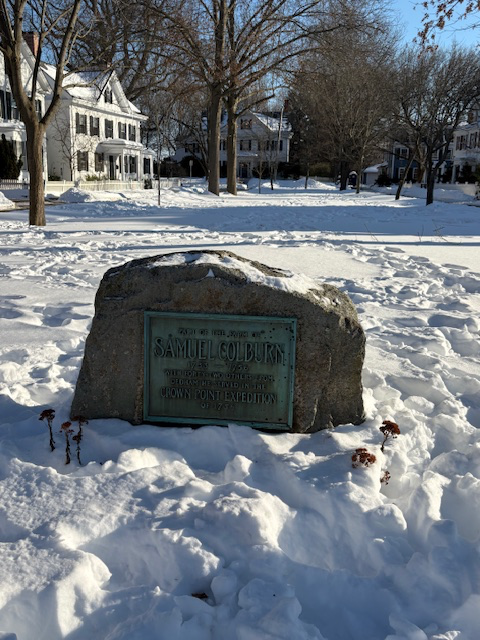
Samuel Colburn
As I was walking through downtown Dedham, I came across a simple rock monument honoring Samuel Colburn. I must admit I was not aware of the Crown Point Expedition. That unfamiliar name immediately caught my attention. I was excited to take a photo and look up more information later. There is something satisfying about discovering a small marker and realizing it opens […]
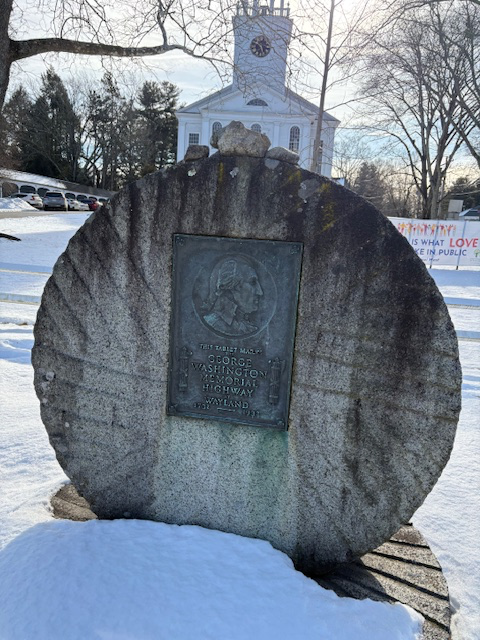
George Washington Marker
Driving through the town of Wayland, there is the round stone monument that sits along the roadside. Unlike grand statues that make historic events, this one is modest, a cylindrical stone pillar with a bronze marker identifying it as part of the George Washington Memorial Highway. The roadside marker reflects an interesting moment in American history when […]
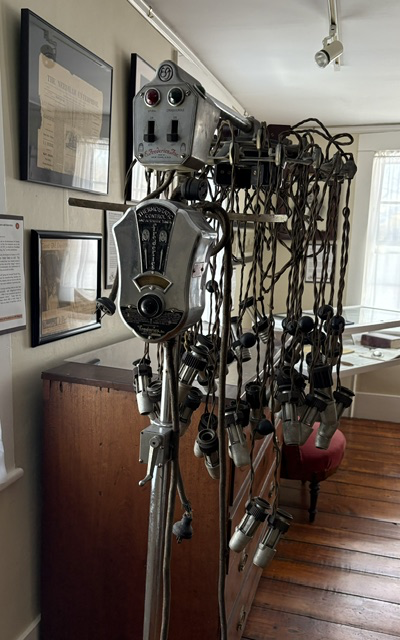
Electric Permanent Wave Machine
One of the things I enjoy most about local history museums is discovering objects that tell the story of everyday life. This unusual machine immediately caught my attention. At first glance, it looked more like an industrial invention than something you would expect to find in a beauty salon. This is an Electric Permanent Wave […]

