Castillo de San Marcos National Monument
Castillo de San Marcos stands along the western shore of Matanzas Bay in St. Augustine. Constructed by the Spanish between 1672 and 1695, it protected the oldest continuously occupied European-established settlement in the continental United States and guarded Spain’s interests in Florida.
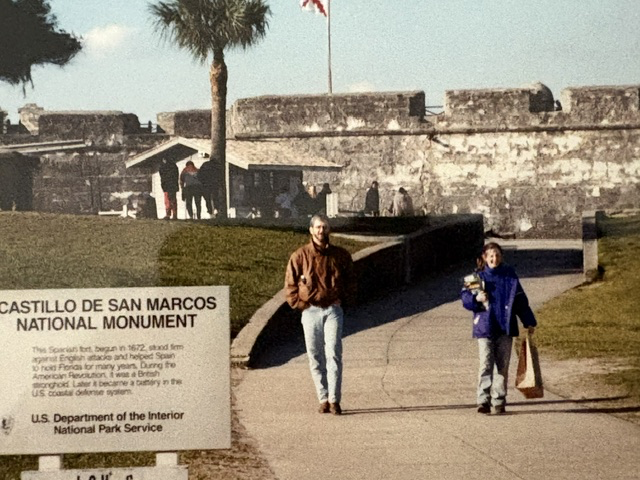
St. Augustine was founded by Pedro Menéndez de Avilés in 1565. For more than a century, the Spanish defended the settlement with a series of wooden forts. As English colonies expanded southward from the Carolinas, Spain recognized the need for a stronger and more permanent defensive structure.
The Castillo was built from coquina, a local limestone formed from compressed shell fragments. The stone was quarried on nearby Anastasia Island and transported across the bay. Its porous composition proved remarkably effective under attack. Rather than shattering when struck by cannonballs, the walls compressed and absorbed much of the impact. Some sections were built as much as 19 feet thick.
English forces attacked St. Augustine in 1702 and again in 1740. Residents took shelter within the fort while enemy artillery bombarded its walls, but the Castillo was never captured by force. Control changed through treaties and political agreements rather than military conquest.
When Britain acquired Florida in 1763, the fort was renamed Fort St. Mark. Spain regained Florida in 1783 but transferred the territory to the United States in 1821. The United States renamed the structure Fort Marion in honor of Revolutionary War officer Francis Marion. During the nineteenth century, it served as a military post and as a prison for members of several Native American nations.
The fort was designated Fort Marion National Monument in 1924 and transferred to the National Park Service in 1933. Congress restored its Spanish name, Castillo de San Marcos, in 1942. Today, it is the oldest surviving masonry fort in the continental United States.
During our family visit, we entered across the moat and explored the rooms, courtyard and defensive walls that had protected St. Augustine for centuries. Standing outside the massive coquina walls provided a sense of the fort’s size and its commanding position beside the bay. Castillo de San Marcos preserves the complex history of Spanish, British and American control in Florida. Its survival reflects both the strength of its design and St. Augustine’s long importance as a military, maritime and colonial outpost.
Read More From Nancy
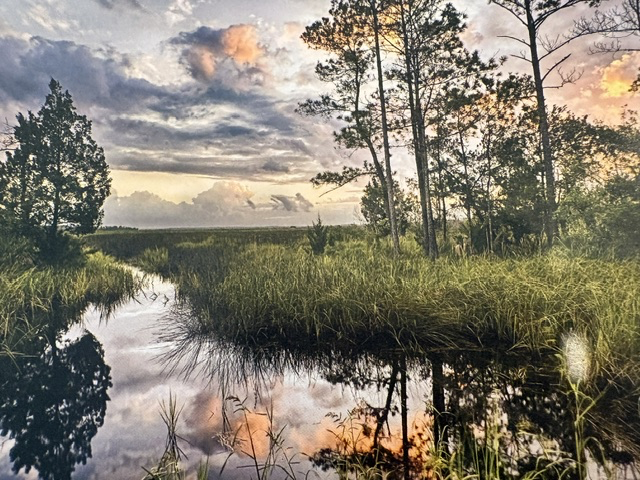
Timucuan Ecological and Historic Preserve
The National Park Service protects places where history unfolded over thousands of years as well as places where a single dramatic event occurred. Timucuan Ecological and Historic Preserve, near Jacksonville, Florida, is one of those places. Established in 1988, the preserve encompasses more than 46,000 acres of salt marshes, tidal creeks, rivers, hardwood hammocks, and […]
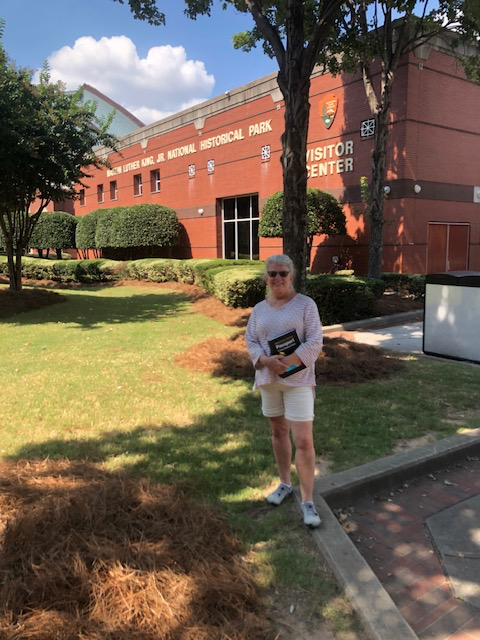
Martin Luther King Jr. National Historical Park
We have visited Martin Luther King Jr. National Historical Park many times over the years, and each visit unfolds a little differently. Originally, this area was established in 1980 as an Historic Site by Jimmy Carter. It was later redesignated as a National Historical Park in 2018, expanding its recognition and preserving the broader legacy of Dr […]
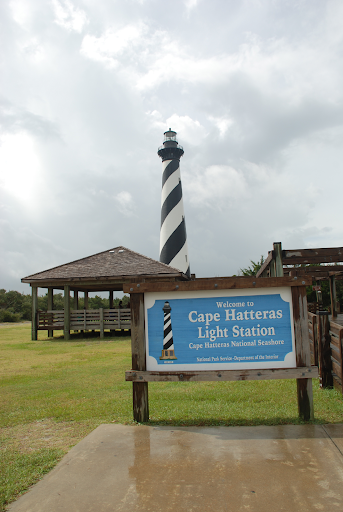
Cape Hatteras National Seashore
On our vacation to the Outer Banks of North Carolina, we visited the Cape Hatteras National Seashore. This site was established in 1953 as the first national seashore in the United States Cape Hatteras protects more than 70 miles of barrier island coastline. Rising above the landscape is the Cape Hatteras Lighthouse which was completed in […]

