The Onyar River
The Onyar River flows northward through the center of Girona before joining the larger Ter River. It is one of four rivers associated with the city, together with the Ter, Güell and Galligants, and has played an important role in shaping Girona’s growth and appearance.
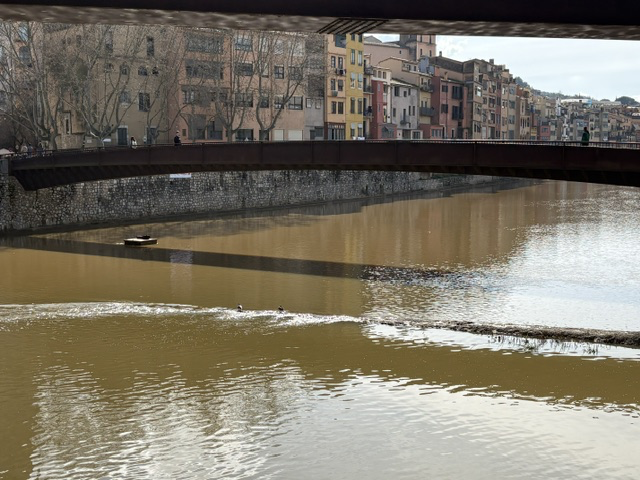
As we walked along the river, we stopped to take in the closely grouped buildings rising from its banks. Their varied heights, warm colors and narrow façades create a distinctive waterfront, with the towers and stone buildings of the historic city visible above them. From each bridge, the view changed slightly and offered another perspective on Girona.
The river has not always been as peaceful as it appeared during our visit. For centuries, flooding was a recurring part of life in Girona, sometimes causing extensive damage to homes, bridges and streets. Over time, flood-control projects and changes to the surrounding waterways reduced the danger, although the Onyar remains closely tied to the rhythms of rainfall and the larger river system.
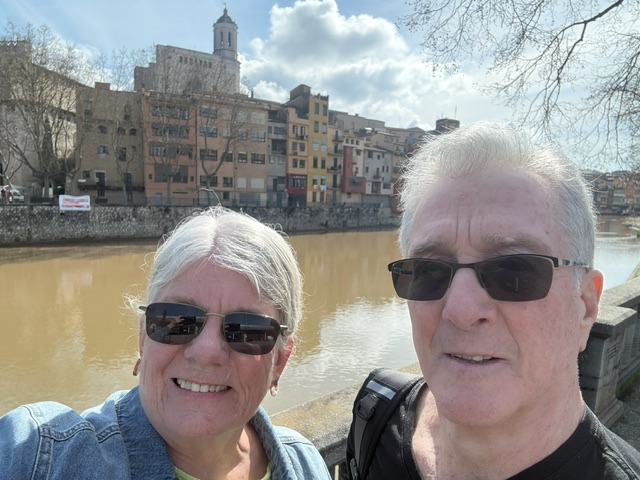
The buildings overlooking the Onyar have become one of Girona’s most recognizable sights. Constructed over many generations, they form a wall of homes along the water and help define the boundary between the historic quarter and the newer city. The bridges crossing the river do more than connect the two banks; they bring together different periods and neighborhoods within Girona.
The river is more than a picturesque setting for Girona’s buildings. It is a natural feature that has influenced the city’s history, development and character for centuries.
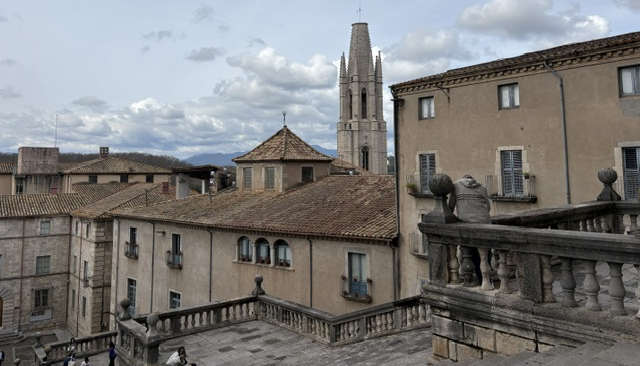
Read More From Nancy
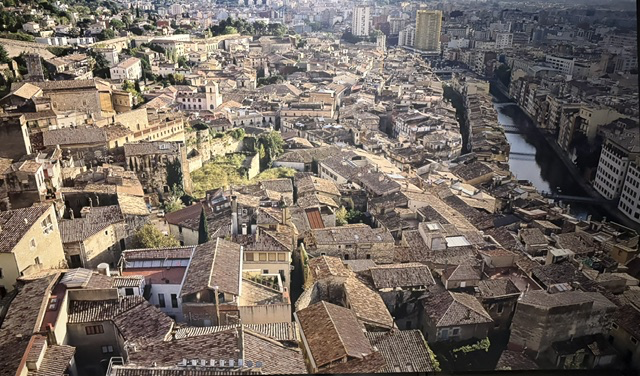
A Neighborhood Within the City
We traveled to Girona specifically to explore its Jewish Quarter, known in Catalan as the Call. Although we had seen photographs of its narrow streets and stone passageways, the aerial view in the Museum of Jewish History helped us understand the neighborhood in a different way. From above, the Call appears woven into the densely […]
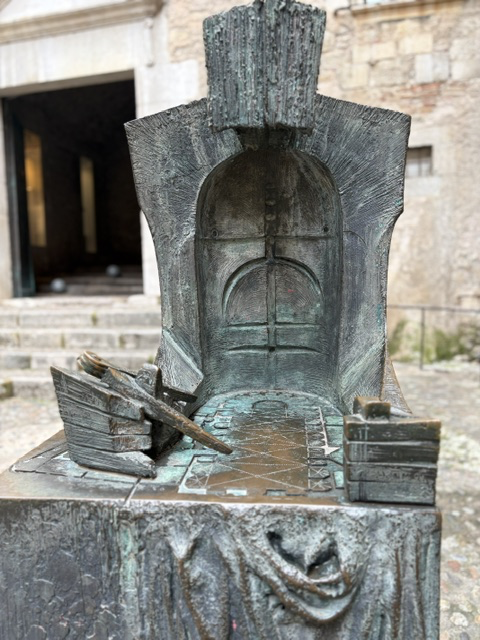
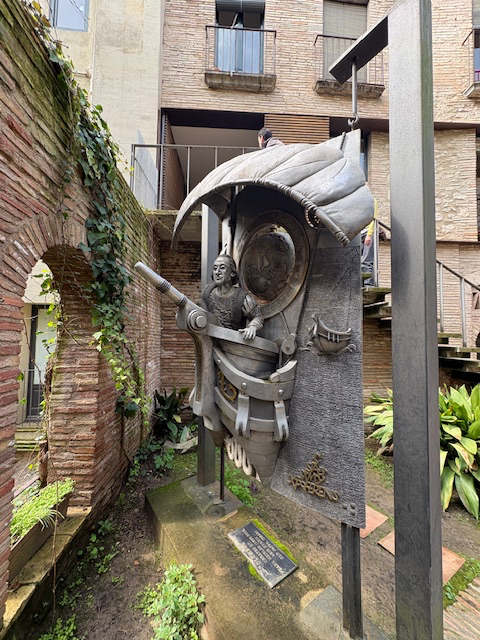
Studio of Modest Urgell
A bronze sculpture outside this stone building recreates the intimate world of an artist’s studio. Within its small architectural setting are the tools and furnishings associated with creative work, inviting passersby to look more closely. A plaque on the nearby wall explains the reason for its placement: Catalan painter and writer Modest Urgell i Inglada […]
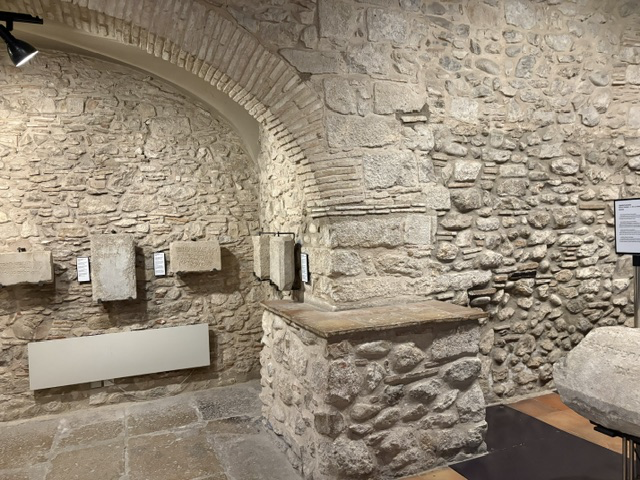
Jewish Cemetery
The medieval Jewish community of Girona maintained its cemetery on Montjuïc, a hillside north of the city. The name Montjuïc is traditionally understood as “Mountain of the Jews”, reflecting the land’s long association with the Jewish burial ground. Jewish tradition requires a separate and permanent place for burial. A cemetery is known in Hebrew as […]

