Jewish Cemetery
The medieval Jewish community of Girona maintained its cemetery on Montjuïc, a hillside north of the city. The name Montjuïc is traditionally understood as “Mountain of the Jews”, reflecting the land’s long association with the Jewish burial ground.
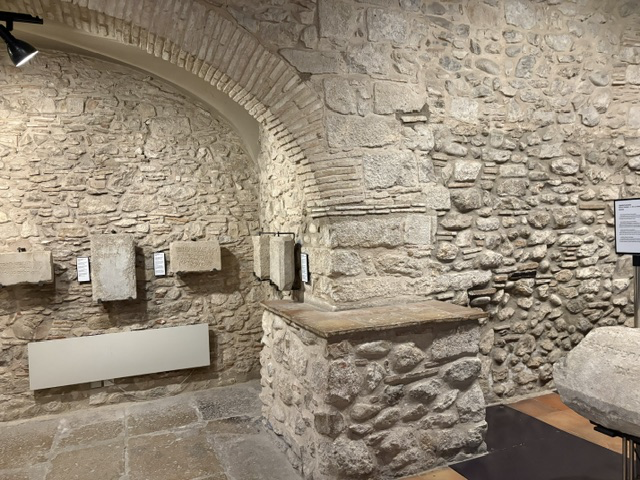
Jewish tradition requires a separate and permanent place for burial. A cemetery is known in Hebrew as Beit Olam, meaning “House of Eternity,” or Beit Chaim, the “House of Life.” Cemeteries were generally established outside the populated center on dry, elevated ground. Trees and plants often grew among the graves, leading some burial grounds to be described as gardens.
Funeral processions traveled from the Call through the city and continued north toward Montjuïc. There, members of Girona’s Jewish community were buried beneath stone markers carrying epitaphs written in Hebrew. These inscriptions recorded names, family relationships and expressions of remembrance, preserving identities that might otherwise have been lost.
After the expulsion of Girona’s Jewish population in 1492, the cemetery was abandoned. Many of its gravestones were removed from Montjuïc and reused as building material. Others remained buried or scattered until they were rediscovered during later construction and archaeological work.
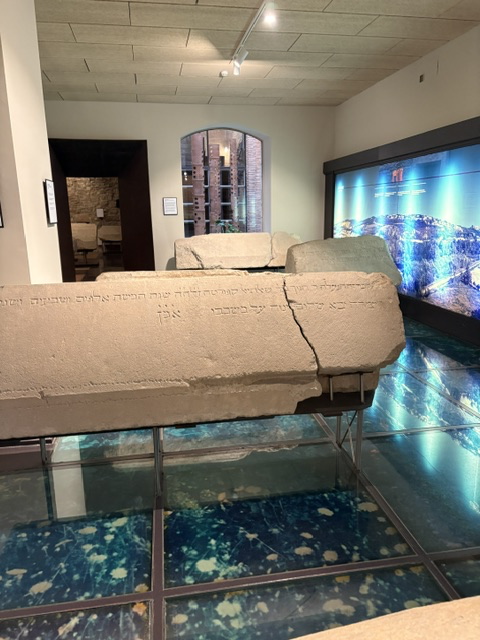
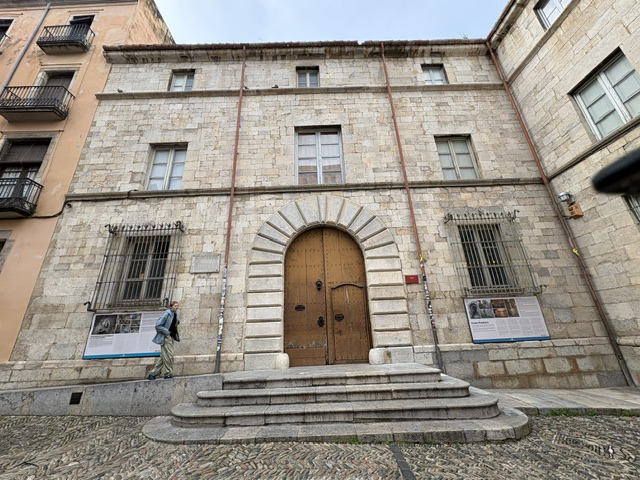
The Museum of Jewish History now preserves a collection of 29 medieval tombstones and fragments, primarily from Girona’s cemetery. Dating from the 12th through the 15th centuries, they are carved from local stone and contain Hebrew inscriptions commemorating members of the community.
Among the people remembered are Estellina, whose name means “little star”, and Josef, described in his epitaph as a beloved child whose life ended prematurely. Other stones preserve the names of prominent Girona families, including the Ravaia, Cabrit, Caravida and Saporta families. Historical research into municipal records has allowed some of the individuals named on the stones to be connected with homes, occupations, property and events within the Jewish Quarter.
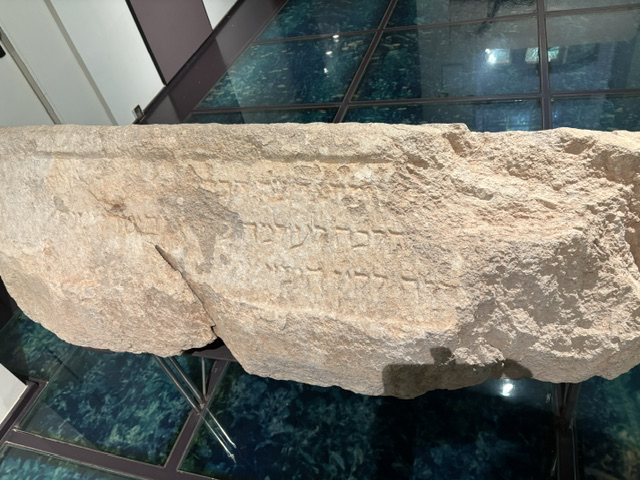
The weathered surfaces, broken edges and incomplete inscriptions reveal what happened to the cemetery after 1492. At the same time, the words that remain restore individual identities to the broader history of Girona’s Jewish community. These are not anonymous pieces of medieval stone. They are memorials created for particular women, men and children whose names have survived for centuries.
Read More
Read More From Nancy
The Jewish Quarter
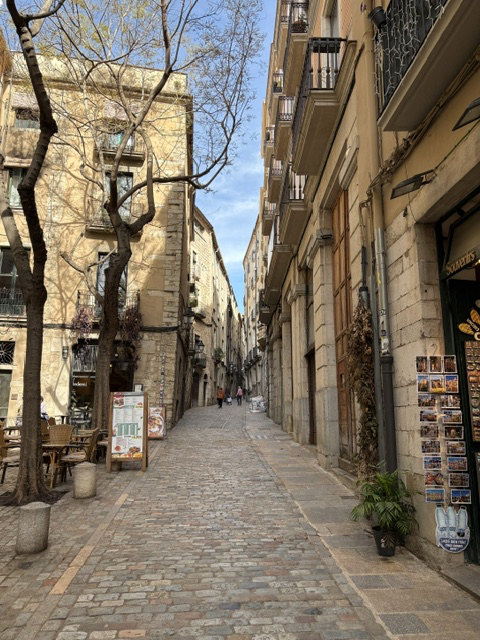
We traveled to Girona specifically to visit its historic Jewish Quarter. Girona was home to one of the most important Jewish communities in medieval Catalonia and became an influential European center of Jewish scholarship and Kabbalah. Known in Catalan as the Call, the Jewish Quarter developed around Carrer de la Força. This central street follows […]
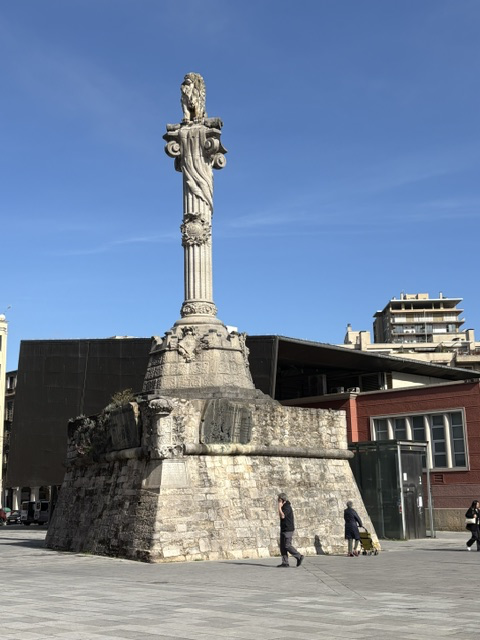
The Monument del Lleó Girona
While walking through Girona, we noticed this tall column rising above a surviving section of the city’s old fortifications. Known as the Monument del Lleó, or Lion Monument, it stands in Plaça Calvet i Rubalcaba beside the Mercat del Lleó. The monument honors the soldiers and civilians who defended Girona during the Napoleonic sieges of […]
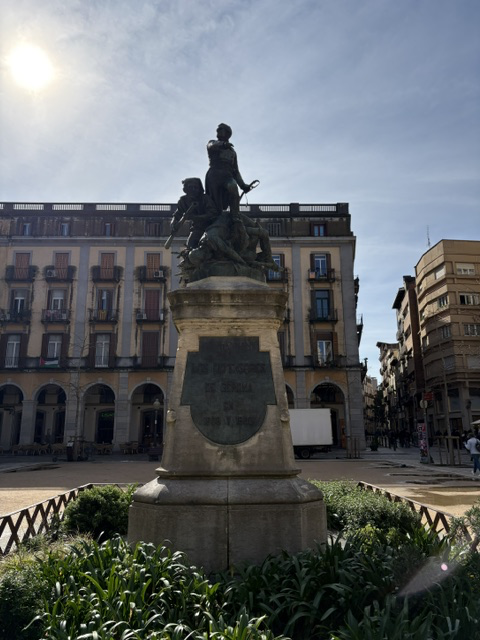
Monument to the Defenders of Girona
While visiting Girona during our travels in Spain, we noticed this impressive monument standing in the center of Plaça de la Independència. So much of Spanish history is new to us, which makes it especially important to pause and identify the prominent monuments found in the country’s public squares. These memorials often reveal the events […]

