The Monument del Lleó Girona
While walking through Girona, we noticed this tall column rising above a surviving section of the city’s old fortifications. Known as the Monument del Lleó, or Lion Monument, it stands in Plaça Calvet i Rubalcaba beside the Mercat del Lleó.
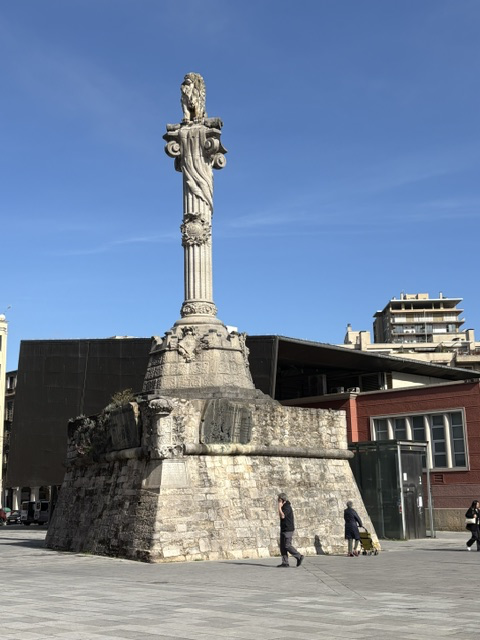
The monument honors the soldiers and civilians who defended Girona during the Napoleonic sieges of 1808 and 1809. Its location is especially appropriate because the column stands upon the remains of the Baluard de Sant Francesc, the southernmost of the bastions that once protected the Mercadal section of the city.
A tall, fluted column rises from the stone bastion and is crowned by a lion resting one paw upon a cannon. The lion represents courage and resistance. Plaques and sculpted reliefs around the base commemorate the artillerymen, militia members and military officers who participated in Girona’s defense.
The monument was inaugurated on November 7, 1909, during events marking the centennial of the sieges. The original design was created by Joan Oliver de Bezzi, with sculptural work associated with Josep Campeny. The monument was later modified, and its present form dates from 1915.
Read More From Nancy
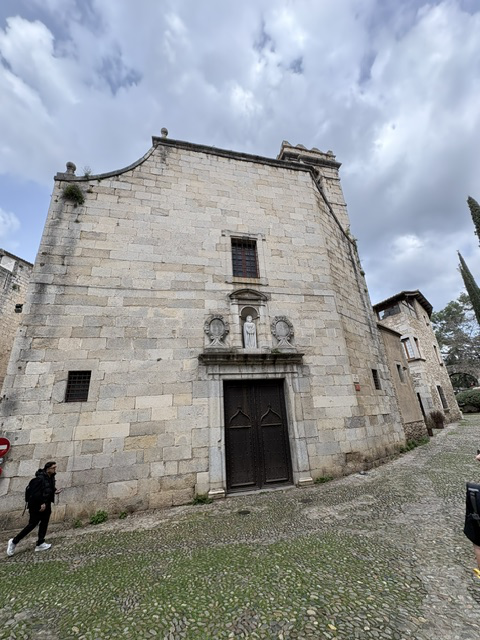
The Church of Sant Lluc
Walking through the stone-paved streets of Girona’s old quarter, we came upon the Church of Sant Lluc. Its broad façade fills one side of the narrow street, yet its simple design allows it to blend naturally with the surrounding stone buildings. There is little ornamentation beyond the entrance, a small statue set within a niche […]
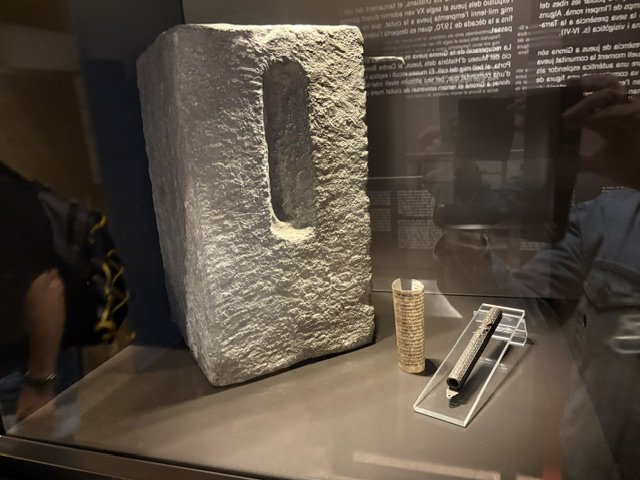
The Mezuzah
Inside Girona’s Museum of Jewish History, a large piece of an old doorway preserves the long, narrow recess that once held a mezuzah. Displayed beside examples of parchment scrolls and protective cases, the stone connects a continuing Jewish tradition with the families who lived in Girona’s Jewish Quarter centuries ago. The tradition originates in two […]
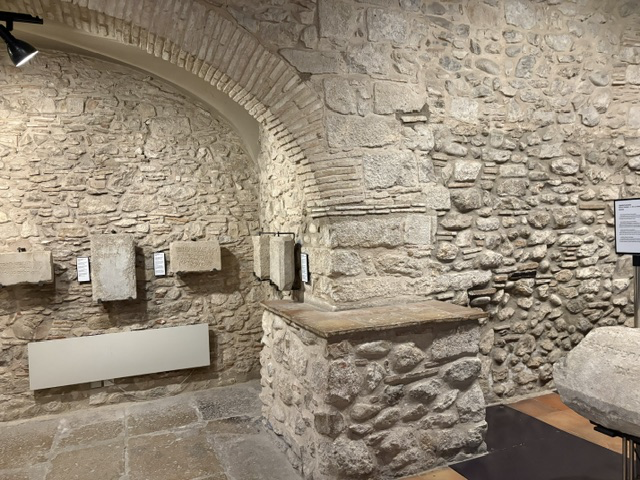
Jewish Cemetery
The medieval Jewish community of Girona maintained its cemetery on Montjuïc, a hillside north of the city. The name Montjuïc is traditionally understood as “Mountain of the Jews”, reflecting the land’s long association with the Jewish burial ground. Jewish tradition requires a separate and permanent place for burial. A cemetery is known in Hebrew as […]

