Monument to the Defenders of Girona
While visiting Girona during our travels in Spain, we noticed this impressive monument standing in the center of Plaça de la Independència. So much of Spanish history is new to us, which makes it especially important to pause and identify the prominent monuments found in the country’s public squares. These memorials often reveal the events and people a community has chosen to remember.
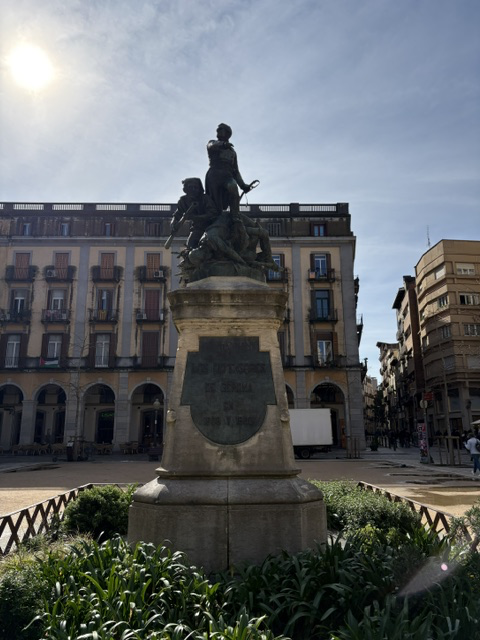
The Girona monument honors those who defended the city during the Napoleonic sieges of 1808 and 1809. The square takes its name from the Spanish War of Independence, known in Catalonia as the French War.
Girona’s position on the route between France and Barcelona made it strategically important to Napoleon’s army. French forces attacked the fortified city several times in 1808 but were driven back. They returned in 1809 and began a siege that continued for approximately seven months.
Under the command of General Mariano Álvarez de Castro, soldiers and civilians resisted repeated assaults, bombardment, hunger and disease. By December 1809, much of the city had been damaged and its population severely reduced. Girona finally surrendered after Álvarez de Castro became gravely ill, but its prolonged resistance became an enduring part of the city’s identity.
Created by Catalan sculptor Antoni Parera, the monument was inaugurated on October 28, 1894. Its bronze figures represent the defenders of Girona gathered around a fallen comrade. The inscription on the pedestal dedicates the memorial “to the defenders of Girona in 1808 and 1809.”
Surrounded today by residences, cafés and the activity of daily life, the monument preserves the memory of a time when Girona’s walls, streets and residents became part of the wider European struggle against Napoleon. Learning its meaning transformed it from an impressive work of public art into a marker of the city’s history.
Read More From Nancy
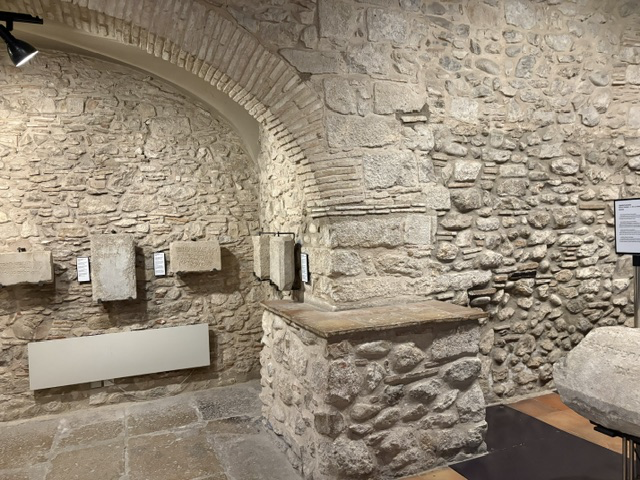
Jewish Cemetery
The medieval Jewish community of Girona maintained its cemetery on Montjuïc, a hillside north of the city. The name Montjuïc is traditionally understood as “Mountain of the Jews”, reflecting the land’s long association with the Jewish burial ground. Jewish tradition requires a separate and permanent place for burial. A cemetery is known in Hebrew as […]
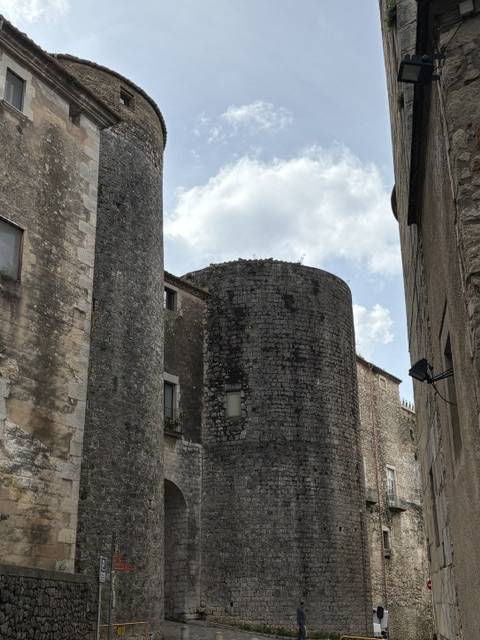
The Portal de Sobreportes
As we walked through Girona’s old quarter, two enormous circular towers rose above the narrow cobblestone street. Their height, thickness and close position immediately suggested that this was once more than an ordinary passageway. These towers guarded the Portal de Sobreportes, one of the principal entrances into the historic city. The gateway originated as the […]
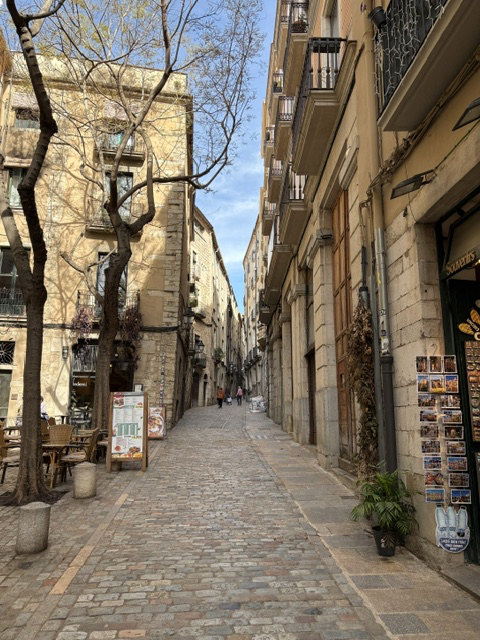
The Jewish Quarter
We traveled to Girona specifically to visit its historic Jewish Quarter. Girona was home to one of the most important Jewish communities in medieval Catalonia and became an influential European center of Jewish scholarship and Kabbalah. Known in Catalan as the Call, the Jewish Quarter developed around Carrer de la Força. This central street follows […]

