The Arab Baths
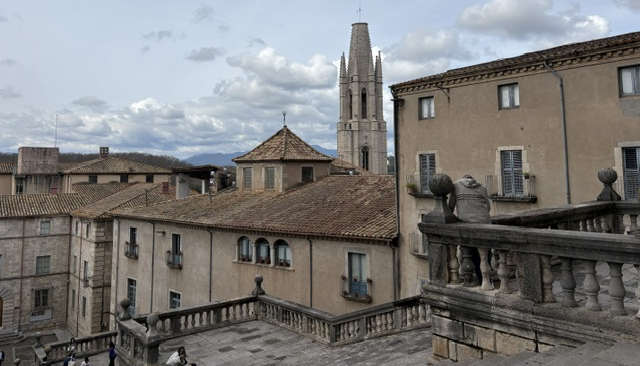
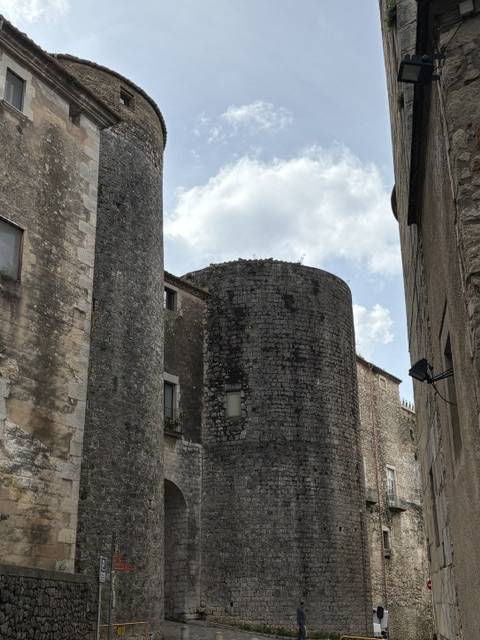
Hidden among the stone buildings of Girona’s old quarter, the Arab Baths reveal very little from the outside. Only the octagonal lantern rising above the roof suggests that something unusual lies within. The building appears ancient and austere, its weathered walls blending almost seamlessly with the medieval city surrounding it.
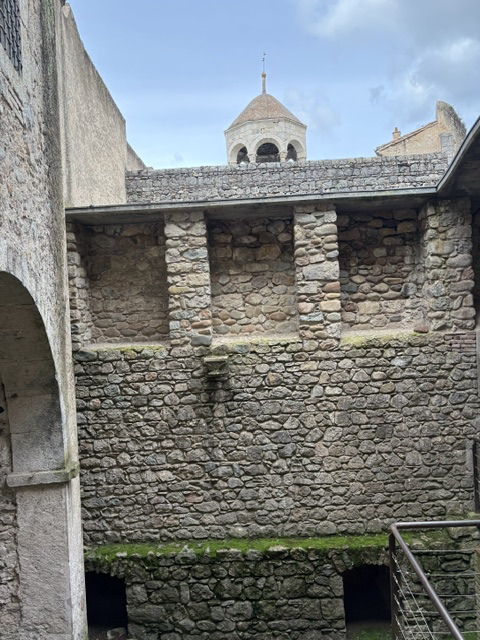
Despite their name, the baths were not built during Muslim rule. They were constructed in 1194, when Girona was a Christian city, in the Romanesque style. Their design, however, was inspired by the organization of Roman baths and by bathing traditions preserved and refined throughout the Islamic world. The result is a distinctly medieval Catalan building shaped by architectural ideas that had crossed cultures and centuries.
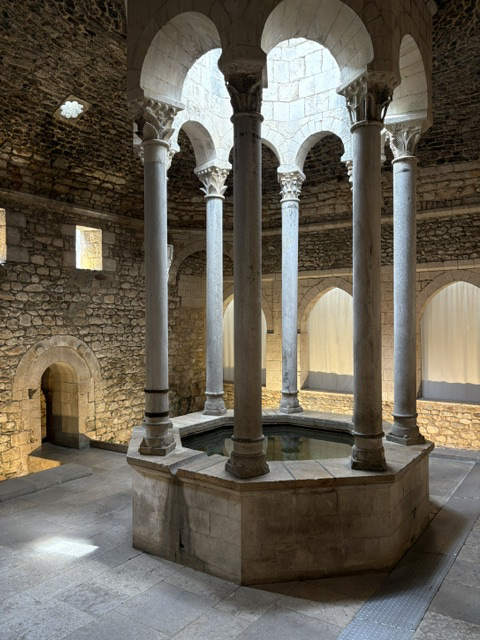
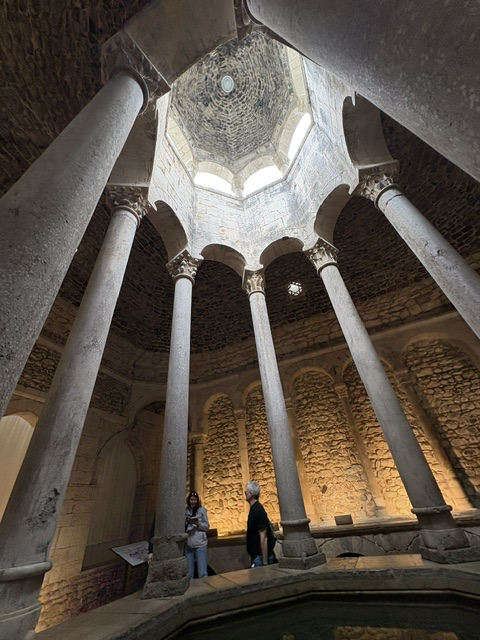
We entered through a modest doorway and emerged into the building’s most remarkable space: the changing room, or apodyterium. At its center stands an octagonal stone basin enclosed by eight slender columns. Carved capitals support rounded arches, and the entire structure rises toward an octagonal lantern overhead. Daylight enters from above, travels down the columns and settles on the water and stone below. The effect is quiet and beautifully balanced.
This room would have prepared bathers for the sequence that followed. From the changing area, they progressed through rooms of different temperatures: a cold room, a warm room and finally the hot bath. The increasing heat encouraged the body to adjust gradually as visitors moved deeper into the building.
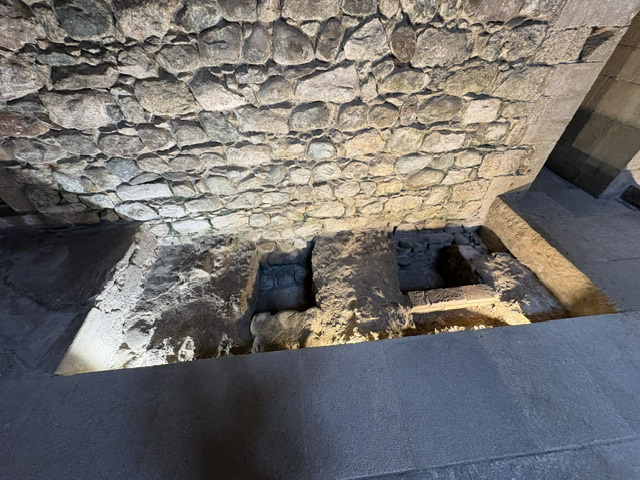
The baths required more than graceful architecture. Beneath portions of the floor, heated air circulated through concealed spaces created by raised paving. A furnace supplied warmth to the hot room, while channels and openings helped manage water, heat and steam. The surviving archaeological remains expose part of this hidden system, allowing us to see the engineering that made the bathing ritual possible.
The building was damaged during the siege of Girona in 1285 and subsequently restored. It continued to serve as a public bathhouse into the later Middle Ages. In the seventeenth century, Capuchin nuns incorporated the structure into their convent, adapting its rooms for practical purposes that included a pantry, kitchen and laundry. The building entered public ownership in 1929 and was restored, allowing its original form to be recognized once again.
The name “Arab Baths” reflects the inspiration behind the building rather than the identity of its builders. Its architecture preserves the memory of Roman engineering, Islamic bathing customs and medieval Catalan craftsmanship within a single structure. Nearly nine centuries after its construction, the central basin, carved columns and light-filled lantern still communicate the care with which this place was conceived—not simply as a place to wash, but as an ordered passage through water, warmth, architecture and light.
Read More From Nancy
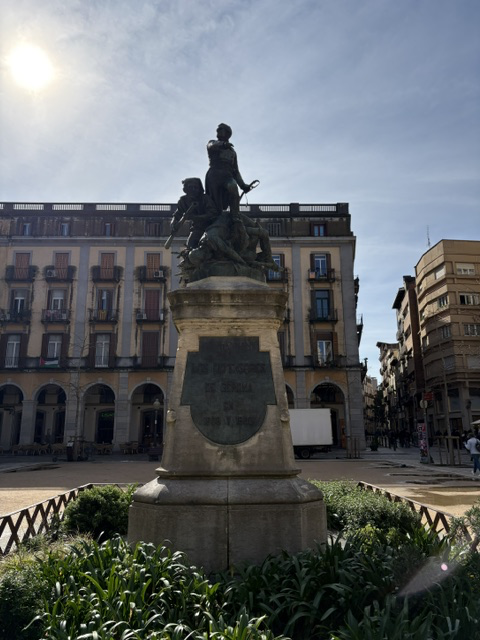
Monument to the Defenders of Girona
While visiting Girona during our travels in Spain, we noticed this impressive monument standing in the center of Plaça de la Independència. So much of Spanish history is new to us, which makes it especially important to pause and identify the prominent monuments found in the country’s public squares. These memorials often reveal the events […]
The Church of Sant Lluc
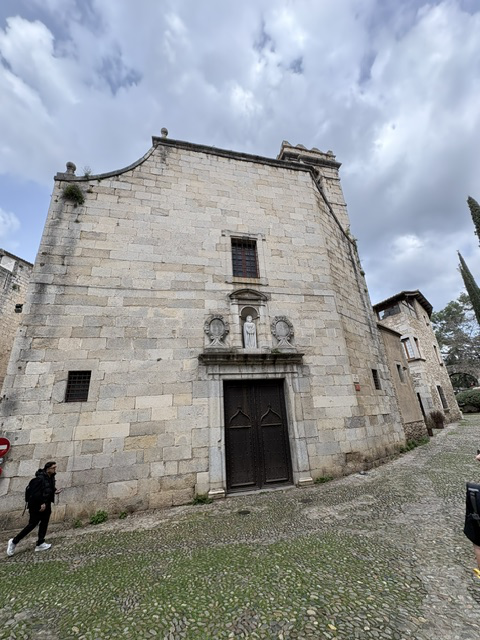
Walking through the stone-paved streets of Girona’s old quarter, we came upon the Church of Sant Lluc. Its broad façade fills one side of the narrow street, yet its simple design allows it to blend naturally with the surrounding stone buildings. There is little ornamentation beyond the entrance, a small statue set within a niche […]
Girona FC
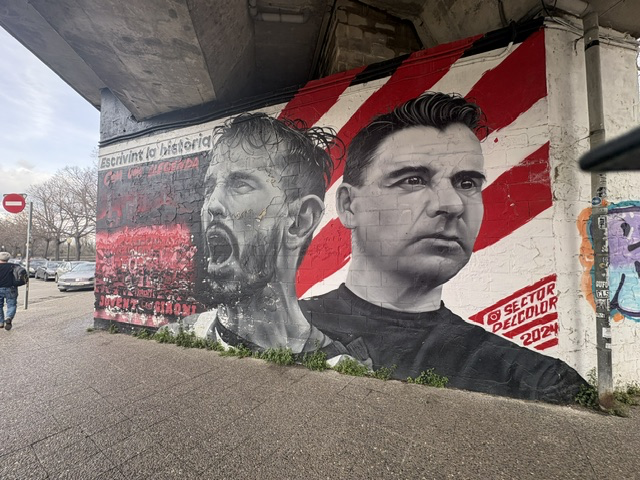
As we walked through the medieval streets of Girona, absorbing as much of the city’s history as we could, an unexpected mural caught our attention. Beneath an underpass, two enormous faces looked out from a wall covered in Girona’s red-and-white colors. We did not know who the men were, but their commanding presence made it […]

