King’s Square
At the center of Uptown Saint John is King’s Square, a public space that has served the city since its earliest years. Named for King George III, the land was granted to Saint John through the royal charter that incorporated the city in 1785. Its history therefore began alongside that of Saint John itself, which became the first incorporated city in what is now Canada.
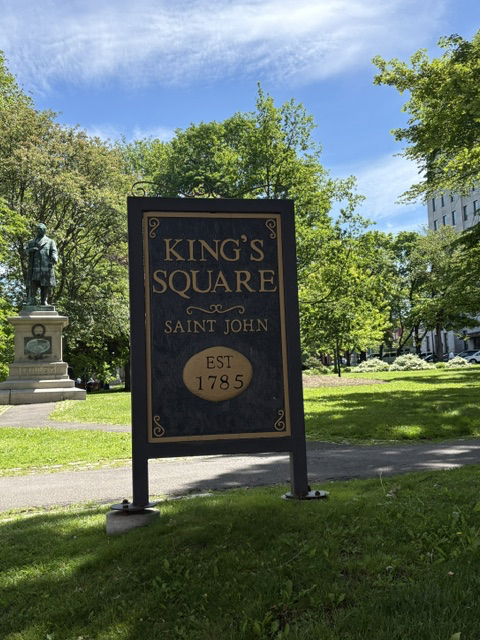
King’s Square was not originally the quiet, landscaped park seen today. During its early years, it functioned as a practical gathering place where residents attended militia parades, agricultural fairs, cricket matches, fireworks displays, and public celebrations. Oxen were roasted there, public wells supplied water, and the grounds included a pillory and even a slaughterhouse. The square was less an ornamental park than an outdoor extension of the young city’s civic and commercial life.
In 1844, King’s Square was redesigned as a public park. Its straight and diagonal walkways were arranged in a pattern resembling the British Union flag, reflecting the Loyalist heritage of many of Saint John’s founders. The paths continue to converge in a circle at the center of the park, making the original design visible to anyone walking through the square.
The park gradually became more formal during the second half of the nineteenth century. A fountain was installed in 1851, and many of the mature trees were planted in 1883 during celebrations marking the centennial of the Loyalists’ arrival in Saint John. Formal flower beds were added in the 1890s, helping transform what had once been a busy public ground into a Victorian urban park.
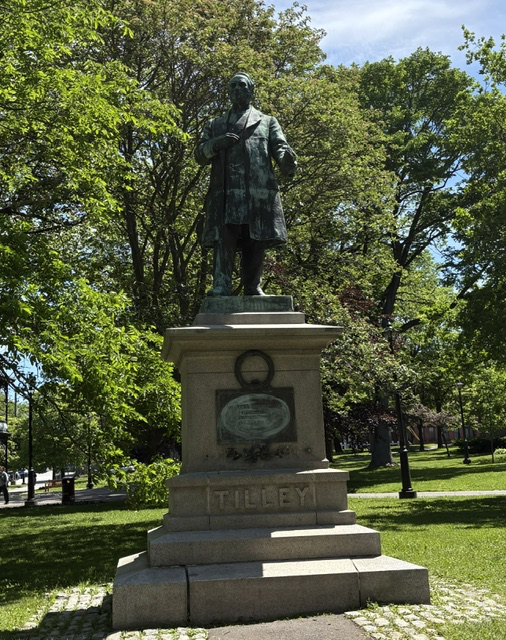
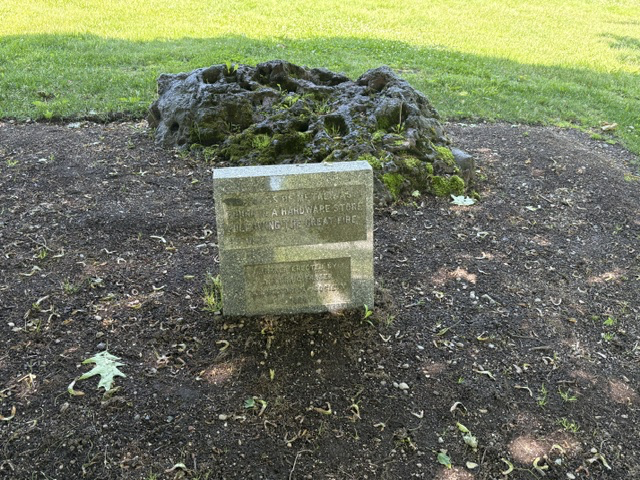
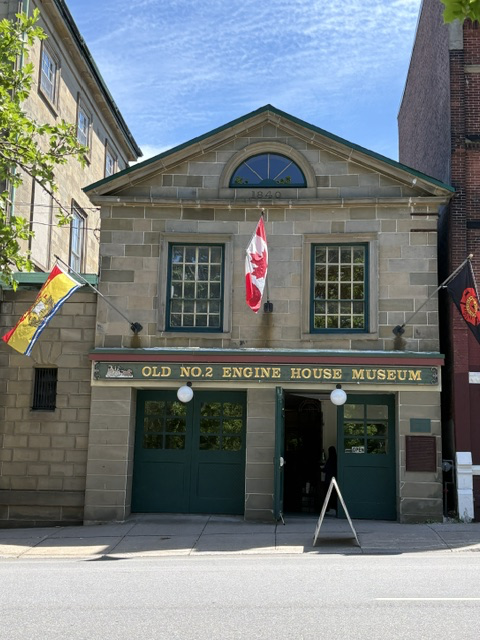
King’s Square is surrounded by some of Saint John’s most recognizable landmarks. It continues to function as it has for generations—a place to walk, rest, gather, remember, and move through the center of the city.
Read More From Nancy
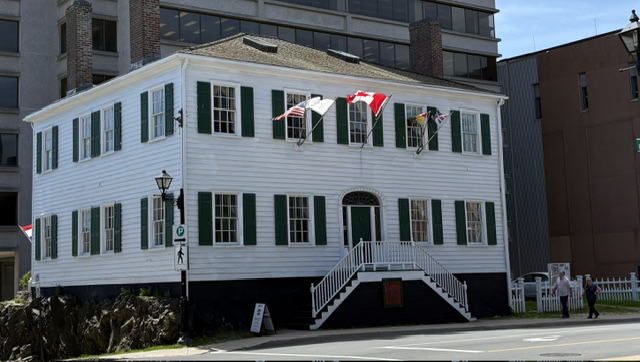
Loyalist House
Surrounded by the larger buildings of modern Saint John, Loyalist House appears almost out of place. Its white wooden walls, green shutters, and balanced rows of windows preserve the appearance of an earlier city and one that largely disappeared in the Great Fire of 1877. The story of the house begins with Thomas and Amy […]
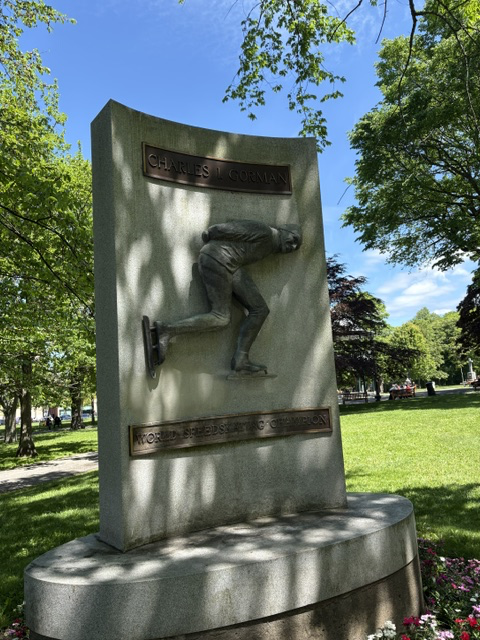
Charles Gorman Memorial
The figure on this monument is not shown standing triumphantly on a podium. Instead, Charles Gorman is captured at the beginning of a race with his body bent forward, one skate braced behind him, and every muscle prepared for the explosive first stride that made him one of the fastest skaters of his generation. Born […]
Inside the Saint John City Market
While visiting Saint John, we stopped at the City Market for lunch. What began as a place to find something to eat also allowed us to participate in a tradition that reaches back to the city’s founding. Saint John’s 1785 royal charter authorized the operation of public markets, and vendors have gathered inside the present […]

