Arch Street Friends Meeting House
While visiting Philadelphia, I toured the Arch Street Friends Meeting House at Fourth and Arch Streets. It is one of the city’s most important surviving Quaker landmarks and remains an active place of worship more than two centuries after it was constructed.
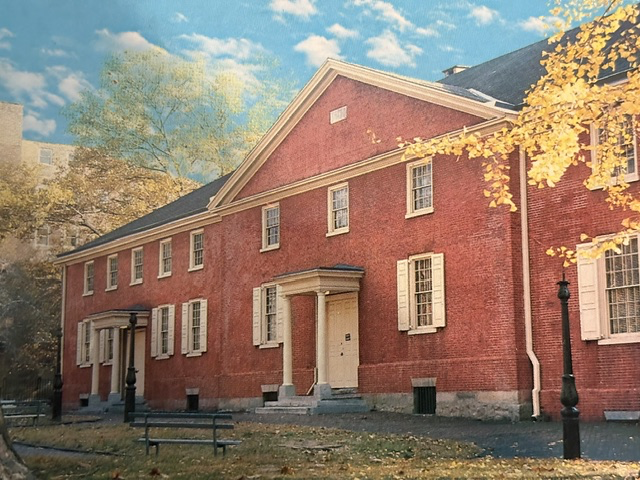
Quaker history is deeply connected to both Philadelphia and Pennsylvania. William Penn, who founded Pennsylvania in 1681, was a Quaker who envisioned the colony as a place where people could practice their faith freely. His belief in religious tolerance helped shape the development of Philadelphia and contributed to its lasting identity as the “Quaker City.”
The land on which the meetinghouse stands has an especially long history. William Penn deeded the property to the Quakers as a burial ground in 1701. Nearly 20,000 people are believed to have been buried there, although the Quaker tradition of simplicity meant that relatively few graves received elaborate markers.
Philadelphia’s Quakers faced a difficult test during the American Revolution. Their religious commitment to peace prevented many Friends from bearing arms, swearing military oaths, or supporting either side in the conflict. This neutrality led some Patriots to suspect them of secretly favoring the British. In 1777, as the British Army approached Philadelphia, approximately twenty prominent men, most of them Quakers, were arrested without trial and exiled to Winchester, Virginia. Two died before the surviving exiles were permitted to return home in 1778.
Quakers did not all respond to the Revolution in the same way. Some supported independence or served in the Continental Army despite the traditional Quaker opposition to warfare. Those who openly participated in the war risked being separated from their meetings. Some later organized as the Free Quakers, demonstrating how the Revolution divided the Quaker community as well as the colonies themselves.
The present Arch Street Friends Meeting House was constructed after the Revolution. Designed by Quaker master builder Owen Biddle Jr., its eastern section and central rooms were completed in 1804. The western room was added in 1811. Its red-brick exterior, Georgian design, and limited ornamentation reflect the Quaker values of simplicity, equality, and practicality.
Inside, the meeting rooms were arranged for worship without elaborate ceremonies, altars, religious images, or ordained ministers. Friends traditionally gathered in silence, with anyone permitted to speak if spiritually moved to do so. The simplicity of the rooms expressed the belief that all worshippers stood equally before God.
For generations, the meetinghouse served as an important center of Quaker life. Friends gathered here not only for worship but also to consider religious, social, and community concerns. Quakers became closely associated with movements promoting abolition, peace, education, prison reform, and women’s rights, although progress within the community was often gradual and accompanied by disagreement.
Touring the Arch Street Friends Meeting House gave me an opportunity to explore a part of Philadelphia’s history that extends beyond its more familiar Revolutionary landmarks. Although the present building was not standing during the Revolution, the Quaker community connected to this site experienced the uncertainty, division, and personal consequences of that struggle. The meetinghouse remains a reminder that the founding of the nation was shaped not only by those who fought, but also by those whose beliefs prevented them from taking up arms.
Read More From Nancy
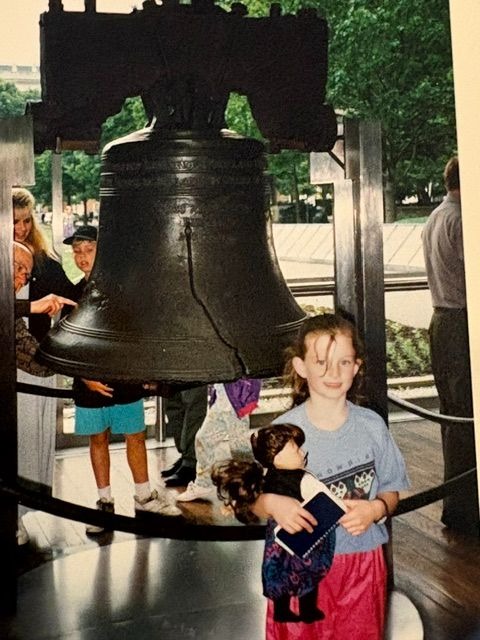
The Liberty Bell
During our family visit to Philadelphia, we stopped to see the Liberty Bell, one of the most recognizable symbols of American freedom. For Erin, it was an opportunity to encounter an actual object connected with the history she was learning. Its size, inscription, and distinctive crack gave us a starting point for exploring how an […]
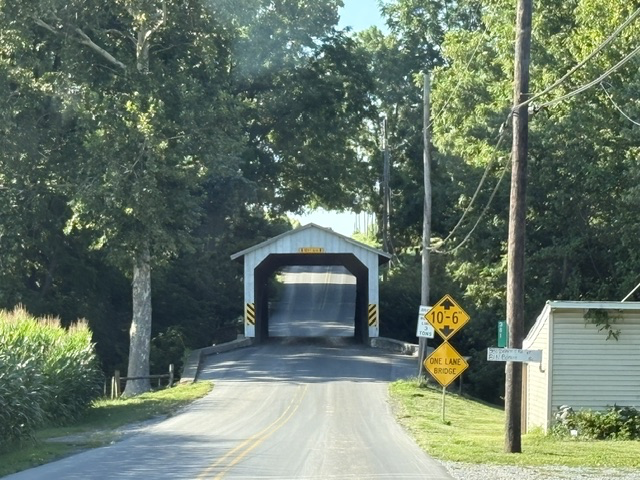
Leaman’s Place Covered Bridge
Leaman’s Place Covered Bridge carries a narrow country road across Pequea Creek in Lancaster County, Pennsylvania. Officially designated Pequea Bridge No. 4, it is also known as Eshelman’s Mill Covered Bridge and Paradise Bridge. Its location near farmland and small rural communities reflects the transportation network that once connected farms, mills and markets throughout the […]
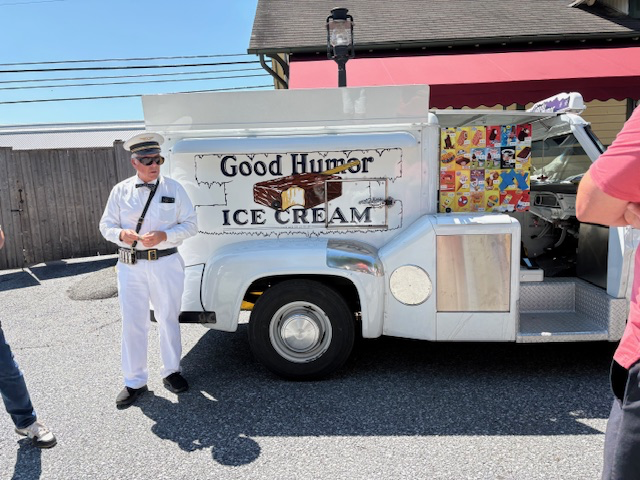
The Good Humor Truck
During our trip to Lancaster County Pennsylvania this summer, we rode the historic train in Strasburg. As part of their railroad grounds exhibition, was a Good Humor ice cream truck. It stood there as if it had rolled out of our 1950s neighborhood. The story of the Good Humor truck begins in Youngstown, Ohio […]

