Written in Granite
The exposed granite along Peggy’s Cove’s coast holds evidence of events separated by hundreds of millions of years. Its broad, rounded surfaces, deep fractures, and scattered boulders record the formation of rock beneath an ancient mountain range and the much later passage of glaciers. Understanding these features turns the shoreline into a visible record of geological change.
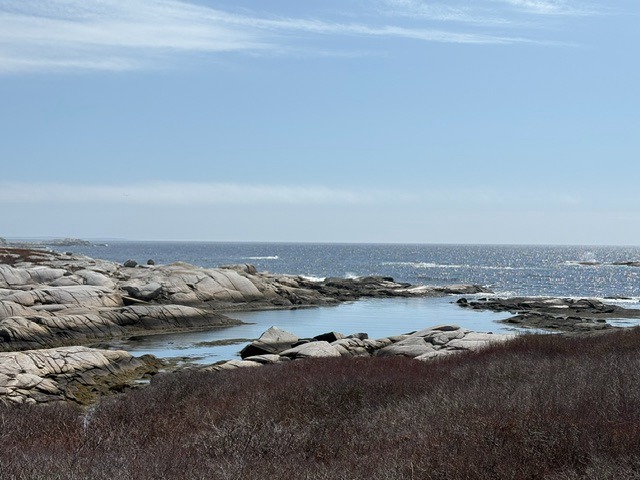
Glaciers subsequently reshaped the exposed bedrock. As ice moved across it, sand and stones trapped beneath the glacier acted as abrasives, scraping and polishing the granite. Larger fragments cut grooves into its surface. These marks can preserve the direction of ice movement, while the rounded contours show the cumulative effects of glacial erosion.
The glaciers also transported rock. Fragments loosened from the bedrock became incorporated into the ice and were carried away from their original positions. When the ice melted, it left boulders resting on the landscape. Known as glacial erratics, these displaced stones are another record of the glacier’s movement and carrying power.
Different features reveal different parts of this history. The granite itself records cooling deep underground. Its polished surfaces and scratches record abrasion beneath moving ice. The scattered boulders mark material carried and deposited by glaciers. Across the rocky shoreline, these traces make processes that unfolded over immense spans of time visible at the surface.
Read More From Nancy
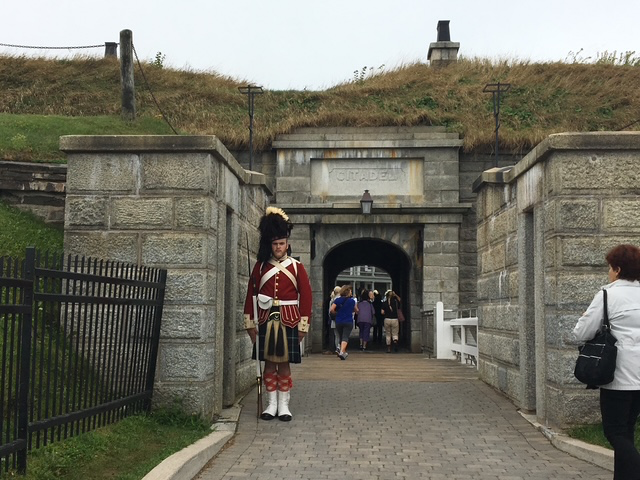
Halifax Citadel National Historic Site
We will be visiting Halifax again this month, and as I look back through my photos, I am reminded of how much I enjoy this town and the province that surrounds it. Sitting at the top of the city is the Halifax Citadel National Historic Site, a place that quietly watches over everything below. From […]
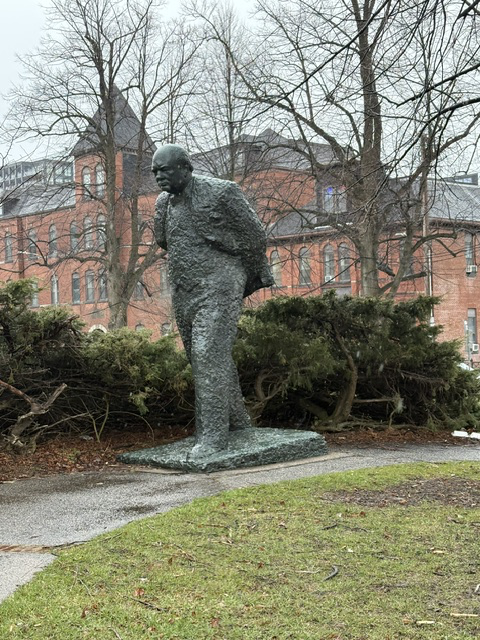
Sir Winston Churchill
It was one rainy Halifax afternoon when this familiar figure appeared through the mist. Standing outside the former Halifax Memorial Library is a bronze statue of Sir Winston Churchill, his hands clasped behind his back, his head slightly lowered, as though he is deep in thought. It is a fitting pose for a man whose […]
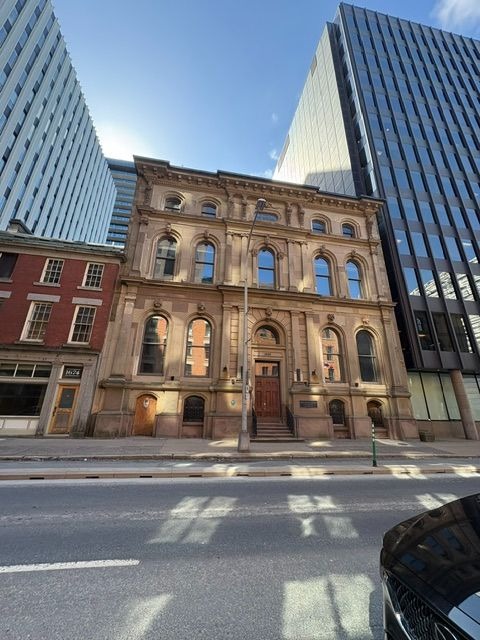
The Dominion Building
The Dominion Building on Hollis Street was conceived as a centre for the services that connected nineteenth-century Nova Scotia to the wider world. In 1863, the provincial legislature approved its construction to house the Post Office, Customs House and Railway Department. Completed in 1868, it brought together institutions responsible for communication, trade and transportation. Designed […]

