Where an Industrial Giant Once Stood
Today, it is a quiet field.
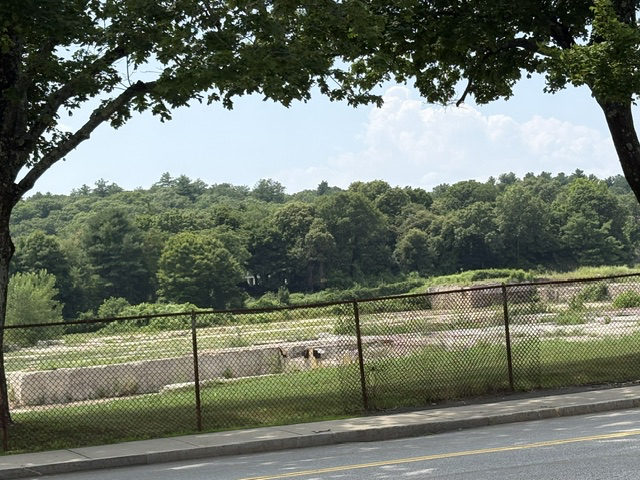
It is difficult to imagine that this empty expanse was once the center of one of the most important textile machinery manufacturing complexes in the world. Beginning with the Little Red Shop in 1841, the Draper business grew over the next century into the sprawling Draper Corporation. Dozens of factory buildings, foundries, machine shops, drafting rooms, warehouses, and offices eventually covered this site. Thousands of skilled workers designed, built, and assembled machinery that was shipped to textile mills throughout the United States and across the globe.
The Draper Corporation became internationally known for its innovations in textile manufacturing. Its engineers developed spinning equipment, winding machinery, warp preparation systems, and, most famously, the Northrop automatic loom. Introduced in the 1890s, the Northrop loom revolutionized weaving by automatically replacing an empty shuttle with a full one without stopping the machine. It dramatically increased productivity and helped transform the textile industry worldwide. For decades, Hopedale was recognized wherever textiles were manufactured, and the name “Draper” became synonymous with quality and innovation.
The company’s influence extended far beyond its factory walls. The Drapers helped shape nearly every aspect of Hopedale’s civic life. They funded the Community House, the Bancroft Memorial Library, churches, schools, parks, employee housing, and numerous public improvements. Their success allowed the ideals that had begun with Adin Ballou’s utopian community to continue in a different form through philanthropy, education, and investment in the well-being of the town.
By the second half of the twentieth century, however, the American textile industry began to change. Competition from overseas manufacturers and the movement of textile production away from New England gradually reduced the demand for Draper’s machinery. After more than a century as one of Hopedale’s largest employers, the company declined, and much of this enormous industrial complex was eventually demolished.
As someone who loves history, I found this to be one of the saddest stops in Hopedale. It is difficult to stand here and imagine that this empty field was once home to one of the world’s leading manufacturers of textile machinery. The buildings are gone, leaving behind only foundations and memories.
I couldn’t help but think of the many historic industrial sites I have visited across the country—places where factories, mills, and workshops have been preserved because they tell the story of American innovation. Standing here, I found myself wondering why this remarkable complex was not among them.
Every community must make difficult decisions about its future, and not every historic building can be saved. Yet when places like this disappear, we lose more than brick and stone. We lose the opportunity to walk where history happened, to understand the scale of what was accomplished here, and to connect future generations with the ingenuity that once made Hopedale known around the world.
Fortunately, Hopedale has preserved enough of its story to remind us of what once stood here. The Little Red Shop, the Community House, the Bancroft Memorial Library, the churches, and the homes of its founders continue to tell the story. But as I looked across this open field, I couldn’t help but imagine the great brick mills rising once again, their smokestacks reaching into the sky, the sound of machinery echoing through the valley, and thousands of men and women going about their work. Although the buildings are gone, the legacy of what was accomplished here still defines Hopedale, reminding us that preserving history is not only about saving places—it is about remembering the people, the ideas, and the achievements that shaped them.
Read More From Nancy
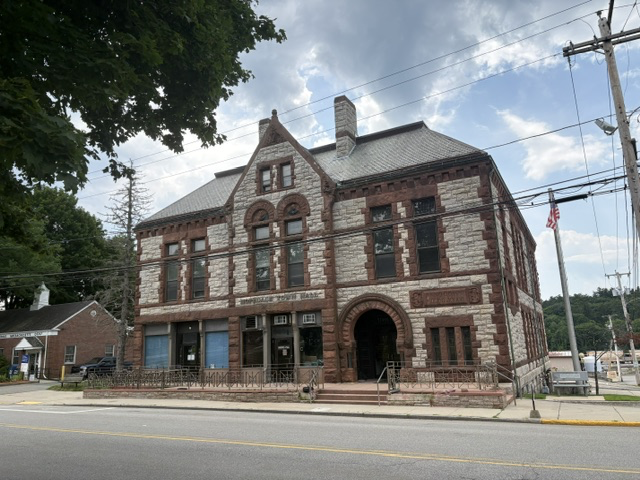
Town Hall
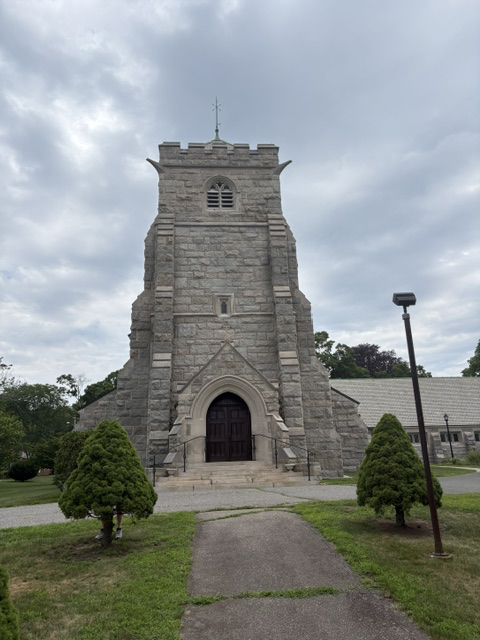
Few buildings better represent Hopedale’s transition from a utopian community to an independent town than its Town Hall. Standing proudly across from the community’s civic center, this impressive Romanesque building reflects both the confidence of a growing town and the generosity of the Draper family, whose vision extended far beyond the walls of their factories. […]
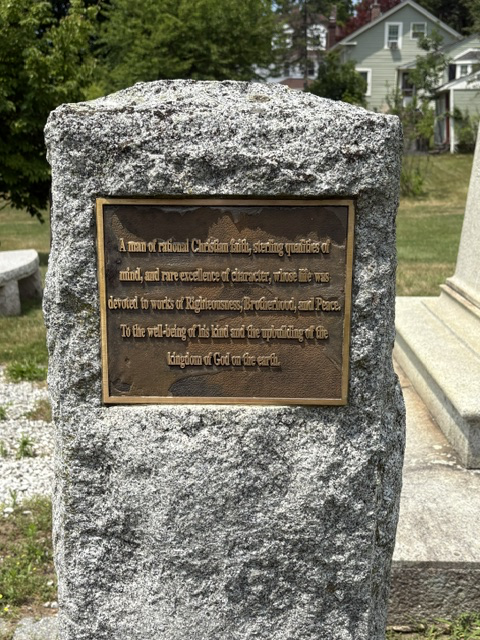
A Measure of Character
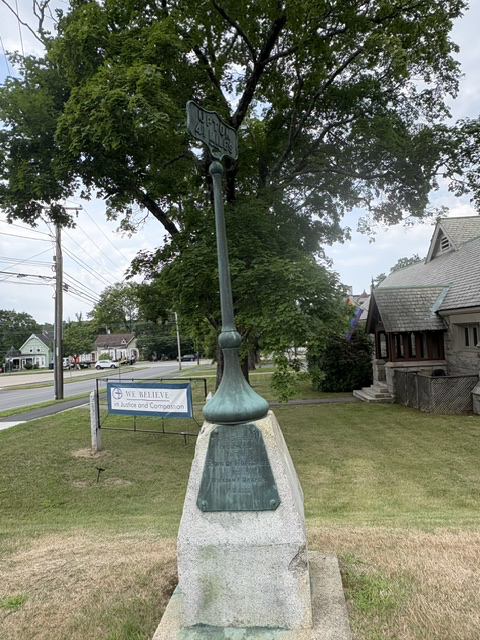
Perhaps the most touching inscription on the monument says very little about Ballou’s achievements. Instead, it speaks about the man himself. It remembers him as “a man of rational Christian faith, sterling qualities of mind, and rare excellence of character, whose life was devoted to works of righteousness, brotherhood, and peace.“ Those words were chosen […]
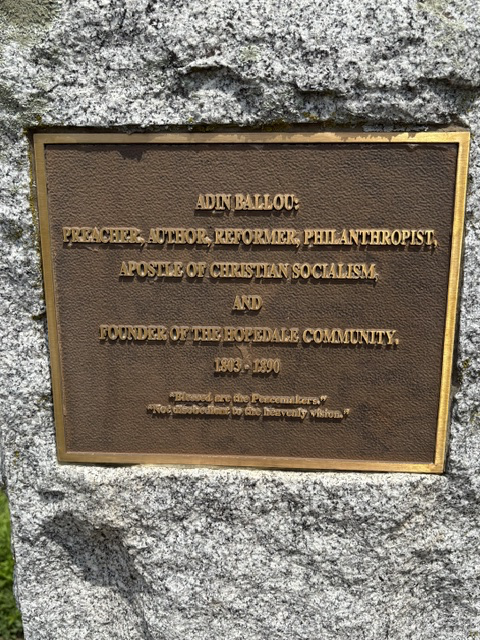
The Founder
The first plaque introduces us to the man whose vision gave birth to Hopedale. It identifies Adin Ballou as a preacher, author, reformer, philanthropist, “Apostle of Christian Socialism,” and founder of the Hopedale Community. Those titles reflect a remarkable life devoted not simply to preaching, but to putting faith into practice. Ballou believed Christianity should […]

