The Ganga
On the banks of the Ganges in Varanasi, the water is sacred. It is used for bathing, washing and for rituals that have been practiced for thousands of years. But to understand this river, you have to see that it is not just water, it is life, belief, and continuity flowing together.
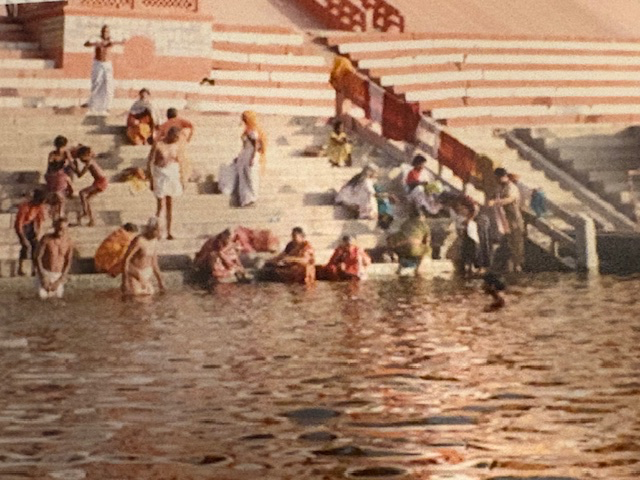
To Hindus, the Ganges, known as Ganga, is a living goddess. She is revered as a divine mother, one who purifies, nurtures and ultimately liberates. Every step down the stone ghats brings people closer not just to the river, but to something eternal. A single touch of the water is believed to cleanse sin. A full immersion is an act of renewal.
At sunrise, the river becomes a place of beginning. Pilgrims descend the steps, offering prayers as the first light reflects off the surface. They bathe as a spiritual practice, one that connects them to the generation before them who stood in the same place, performing the same rituals.
By evening, The Ganga Aarti ceremony fills the air with firelight and chanting. Priests stand at the edge of the river, offering flame and movement in synchronized devotion, honoring the goddess who flows before the river.
Here in Varanasi, the Ganges is tied to the end of life. Along the ghats, cremation fires burn continuously. To be cremated in Varanasi and have one’s ashes placed into the Ganges is believed to bring liberation from the cycle of rebirth. In this way, the river is both beginning and ending.
When we visited Varanasi, I began to understand that this was just a river that people used, it is a river they belong to.
Read More From Nancy
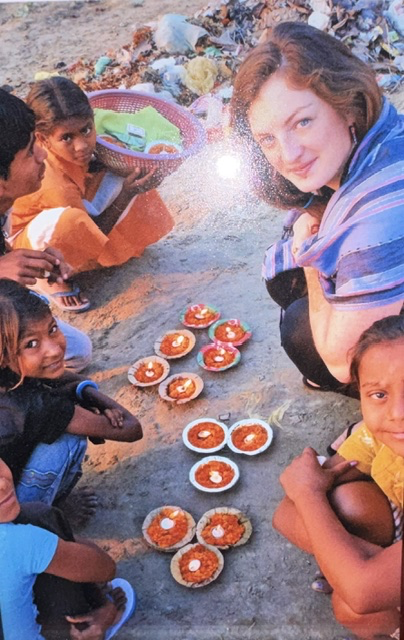
An Offering to the Ganga
This is a very special photograph of Erin during our time in Varanasi. We were along the banks of the Ganga, the river that is at the heart of the city and one of the most sacred places in Hinduism. Here, Erin is surrounded by children selling small offerings of flowers and candles that we […]
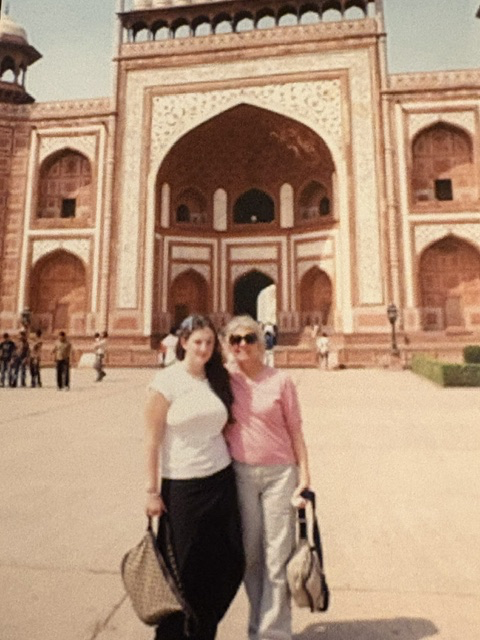
Buland Darwaza Fatehpur
While visiting northern India, we visited Fatehpur Sikri, the magnificent city built by the Mughal Emperor Akbar in the late sixteenth century. Although the city served as the capital of the Mughal Empire for only about fifteen years, it remains one of the finest surviving examples of Mughal architecture. Standing together in front of the […]
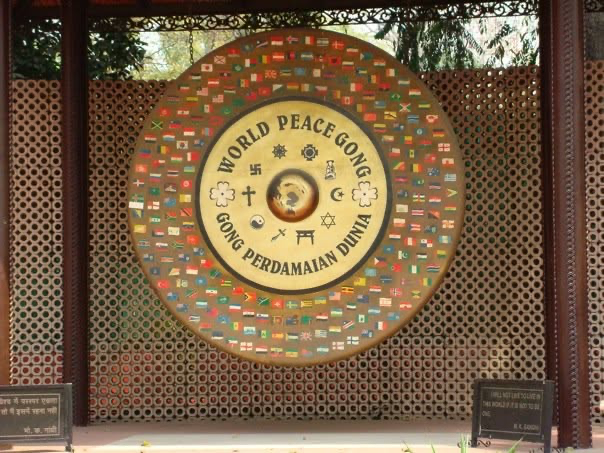
World Peace Gong
During our visit to Gandhi Smriti in New Delhi, one monument immediately drew my attention. Surrounded by the flags of nations from around the world and the symbols of many of the world’s major religions, the World Peace Gong stands as an international symbol of peace, cooperation, and mutual respect. The World Peace Gong was […]

