Upper Delaware Scenic and Recreational River
One of the unexpected discoveries during our travels was the home of Zane Grey, preserved within the Upper Delaware Scenic and Recreational River. Although I had never read his Western novels, I certainly knew his name and the enormous popularity he enjoyed during the early twentieth century. Finding his home overlooking the Delaware River was a wonderful surprise and one of those discoveries that makes exploring America’s national parks so rewarding.
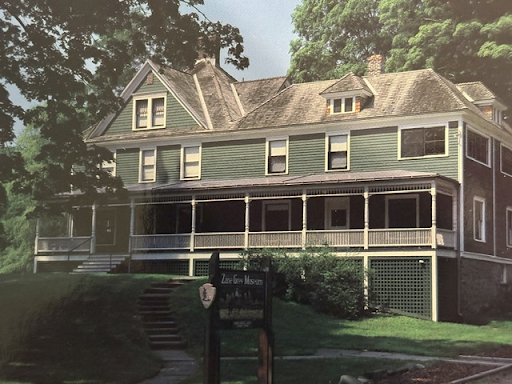
Zane Grey purchased this house in 1914 and used it as his family home and writing retreat until 1918. Perched high above the Delaware River, the broad porches and peaceful surroundings offered an inspiring place to write. Just two years earlier, in 1912, the publication of his novel Riders of the Purple Sage had made him one of America’s best-selling authors and helped define the Western novel for generations of readers. It was here that Grey continued writing stories that shaped America’s image of the Old West. His novels would eventually be adapted into dozens of motion pictures, making him one of the most influential authors of his era. It is fascinating to think that many of the stories that captured readers’ imaginations about the American frontier were written not in the West, but from this quiet hillside overlooking the Delaware River.
The home is now preserved by the National Park Service as the Zane Grey Museum, allowing visitors to learn not only about his writing career but also about his love of fishing, the outdoors, and his life with his family. Walking through the house and standing on the porch, it was easy to appreciate why this setting inspired him.
The museum is part of the Upper Delaware Scenic and Recreational River, a 73-mile stretch of the Delaware River that was added to the National Park System on November 10, 1978, when Congress passed the National Parks and Recreation Act of 1978, signed into law by President Jimmy Carter. The designation protects one of the last major free-flowing rivers in the eastern United States while preserving its natural beauty, historic villages, and cultural landmarks such as the Zane Grey Museum.
For me, this was one of those memorable travel moments that came completely by surprise. I had set out to explore the Upper Delaware National Park and instead found myself learning about an author whose stories became part of American culture. Sometimes it is tucked away along a quiet river, where an unexpected stop opens the door to a fascinating story waiting to be discovered.
Read More From Nancy
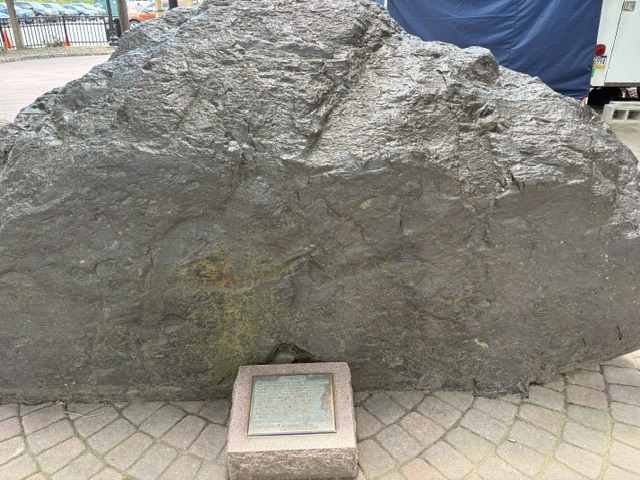
Anthracite — The Rock That Built Mauch Chunk
It is almost impossible to understand the story of Jim Thorpe without understanding anthracite coal. This enormous piece of anthracite displayed in town is a reminder that the community once known as Mauch Chunk grew because of the rich deposits of hard coal buried beneath the mountains of northeastern Pennsylvania. Anthracite is different from the […]
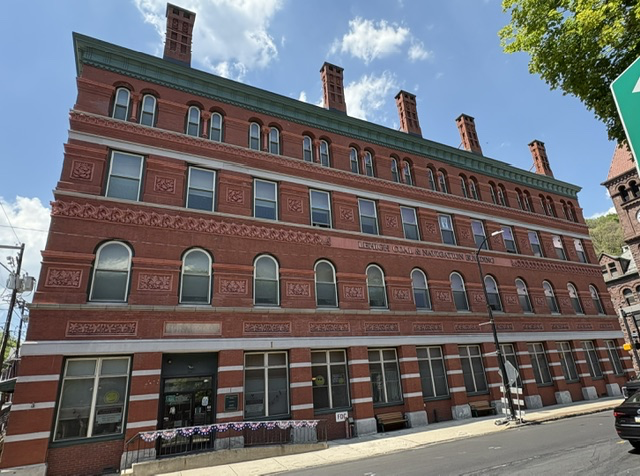
The Lehigh Coal & Navigation Building
Standing prominently near the center of Jim Thorpe is the former headquarters of the Lehigh Coal & Navigation Company. After seeing the enormous piece of anthracite displayed nearby, this building helps complete the story. The coal beneath the mountains created the opportunity, but the Lehigh Coal & Navigation Company developed the transportation system that helped […]
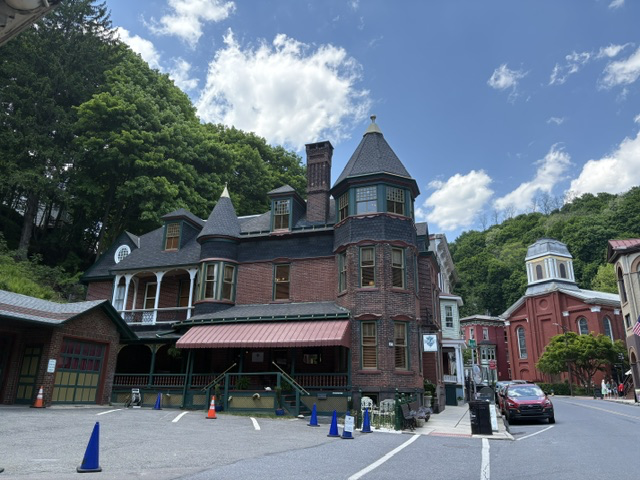
The Dolon House
Walking along Broadway in Jim Thorpe, the Dolon House immediately stands out. Its turret, elaborate roofline, porches and decorative brickwork make it easy to imagine this street during the prosperous years when the town was still known as Mauch Chunk. The house was completed around 1888 for John C. Dolon, a prominent local businessman who […]

