U.S. Coast Guard Motor Lifeboat CG44301
Displayed near Chatham Lighthouse, the U.S. Coast Guard motor lifeboat CG44301 represents nearly half a century of lifesaving service and Chatham’s enduring relationship with the sea.
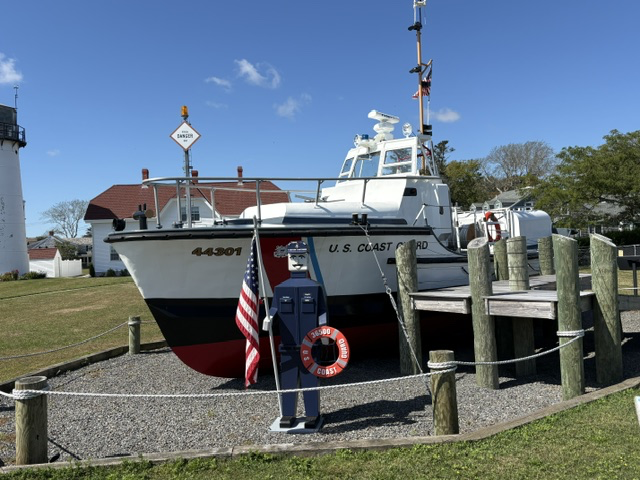
Completed in 1963 at the Coast Guard Yard in Curtis Bay, Maryland, CG44301 was the first production model in a new class of 44-foot motor lifeboats. It was assigned to Coast Guard Station Chatham, where it became part of a long tradition of rescuing fishermen, sailors and passengers from the dangerous waters surrounding Cape Cod.
The boat was designed to operate in conditions that would prevent many other vessels from leaving port. Its steel hull was divided into nine watertight compartments, and its twin diesel engines powered two propellers and two rudders. It could carry a minimum crew of three, accommodate as many as 21 survivors and operate in heavy seas and winds reaching 50 knots.
One of its most important features was its ability to right itself after capsizing. The boat could also remain afloat even if several of its watertight compartments were flooded. These capabilities made the 44-foot motor lifeboat especially valuable along the exposed Atlantic coastline, where shifting sandbars, breaking surf and powerful storms have challenged mariners for generations.
The development of the 44-foot class followed the service of the Coast Guard’s wooden 36-foot motor lifeboats. One of the most famous of those earlier vessels was CG36500, used by Bernard Webber and his crew during the rescue of the tanker Pendleton off Chatham on February 18, 1952. The four Coast Guardsmen crossed the dangerous Chatham Bar and rescued 32 members of the tanker’s crew. Webber later helped evaluate the capabilities of the newer 44-foot motor lifeboat.
CG44301 served at Chatham from 1963 until 1971 and returned in 2002 for its final years of active duty. It remained especially useful because its relatively shallow draft allowed it to cross the changing Chatham Bar more easily than the larger 47-foot lifeboats that replaced the 44-foot class at most Coast Guard stations. It was withdrawn from active service in 2009 and formally decommissioned in 2010, making it the last operational 44-foot motor lifeboat in the United States Coast Guard.
Today, CG44301 stands near Chatham Lighthouse as a reminder of the Coast Guard crews who have faced storms, heavy seas and uncertain conditions to assist those in danger. Its preservation in Chatham is especially fitting. This was not simply a boat stationed here; it was designed for the demanding waters that have shaped the town’s history and protected those who made their living on the sea.
Read More From Nancy
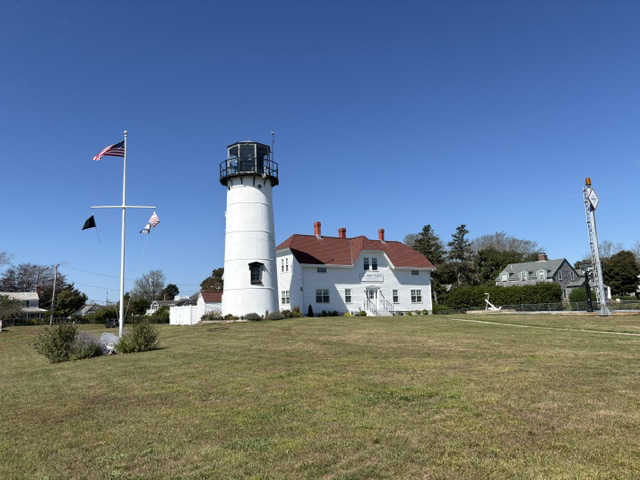
Chatham Lighthouse
Chatham Lighthouse was established in 1808 during the presidency of Thomas Jefferson to guide vessels around the dangerous waters and shifting shoals near the elbow of Cape Cod. It was the second lighthouse station constructed on the Cape. Unlike most stations, Chatham originally had two wooden towers. The twin lights distinguished Chatham from the single […]
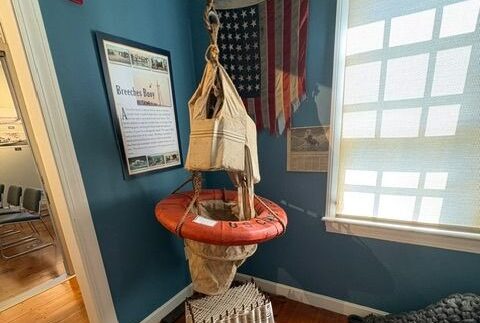
The Breeches Buoy
A life ring with a pair of canvas trousers attached may seem an unlikely means of escaping a shipwreck. Yet the breeches buoy offered a way to bring people safely ashore when a stranded vessel was within reach of land and the surf made launching a rescue boat too dangerous. The exhibit in Chatham preserves […]
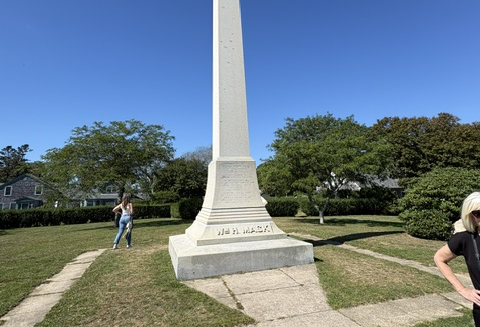
Mack Memorial
Standing near Chatham Lighthouse, the Mack Memorial recalls one of the most devastating tragedies in the history of the United States Life-Saving Service. During a powerful northeast gale on March 17, 1902, the coal barge Wadena became stranded on Shovelful Shoal, off Monomoy Point. Five men were trapped aboard, including the vessel’s owner, William Henry Mack. Keeper […]

