The Harrison Block
As I walked along Hopedale Street, this handsome brick building immediately caught my attention. While much of Hopedale’s story is told through its churches, library, parks, and former mill complex, this building reminds us that every thriving community also depends on places where everyday life unfolds.
Built in 1889 by General William Franklin Draper, the Harrison Block was named in honor of President Benjamin Harrison, who had been elected the previous year. At a time when Hopedale was rapidly growing into one of America’s leading manufacturing communities, the building was designed to serve many purposes under one roof.
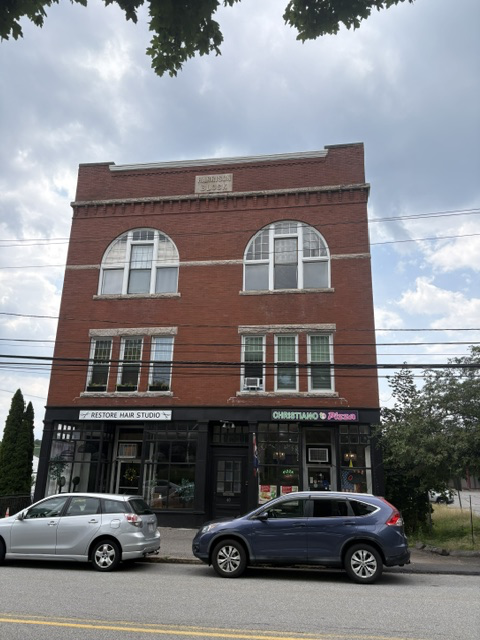
The first-floor housed shops that supplied the daily needs of residents. Above them were meeting rooms, offices, and gathering spaces used by civic organizations and fraternal groups. Rather than constructing separate buildings for each activity, the Harrison Block brought commerce, business, and community together in a single location. It became one of the town’s principal gathering places and reflected the confidence and prosperity of Hopedale during the height of the Draper years. Architecturally, the building complements many of Hopedale’s other public structures. Its warm red brick, large round-arched windows on the upper floor, and restrained Romanesque detailing echo the style found throughout the historic district. While less elaborate than the nearby Town Hall or Bancroft Memorial Library, the Harrison Block was designed with the same attention to quality and permanence that characterized so many of the buildings funded by the Draper family.
Unlike much of the Draper industrial complex, the Harrison Block still stands. It has adapted to changing times while continuing to serve the people of Hopedale, much as it did more than a century ago. As I looked at its brick façade, I was grateful that this piece of Hopedale’s past was preserved. It reminds us that historic buildings do not have to be grand monuments to be significant. Sometimes they are simply places where everyday life continues, generation after generation, quietly becoming part of a community’s story.
Read More From Nancy
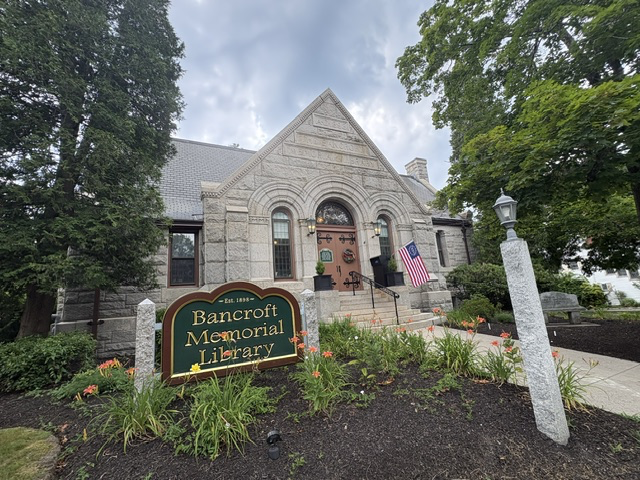
Bancroft Memorial Library
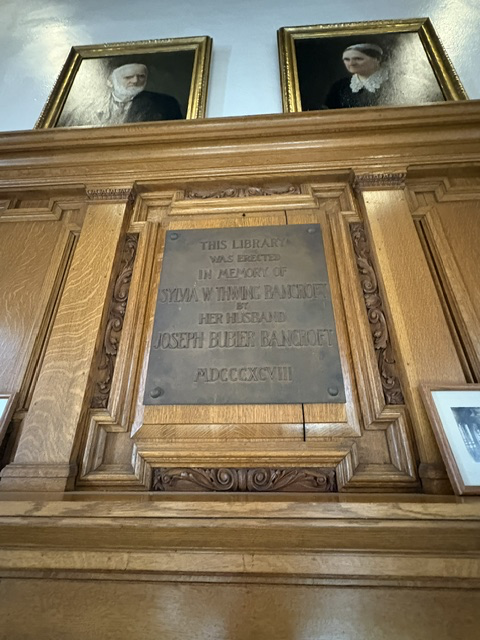
Standing in the center of Hopedale, the Bancroft Memorial Library is much more than a public library. It is the keeper of the town’s memory, preserving the stories of the people whose ideas, industry, and generosity shaped this remarkable community. Completed in 1898, the library was a gift from George and Eben Draper in memory […]
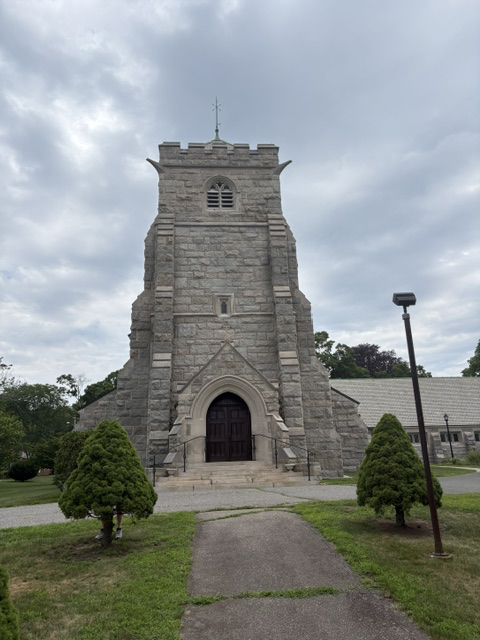
Unitarian Parish Church
Constructed between 1898 and 1901, the Unitarian Parish Church was a gift from brothers George A. and Eben S. Draper in memory of their parents, George and Hannah Draper. Built of locally quarried granite in the Romanesque Revival style, its imposing tower and solid stone walls were designed to reflect both strength and permanence. Yet […]
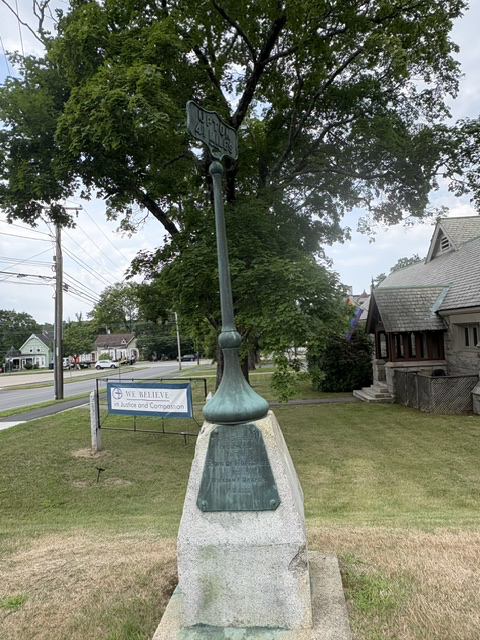
Historic Street Markers
Sometimes the smallest details reveal the most about a community. As I explored Hopedale, one of the features that caught my attention was this beautifully crafted bronze street marker. Mounted on a granite base and topped with a directional sign pointing travelers toward Upton, four and a half miles away, it reflects a time when […]

