The Old Burying Ground at Pemaquid
Weathered headstones stand among the grass and trees at Pemaquid’s old burying ground. Some are modest slabs, while taller monuments rise above them. Lichen covers parts of the stone, and time has softened inscriptions that once clearly identified the people buried here.
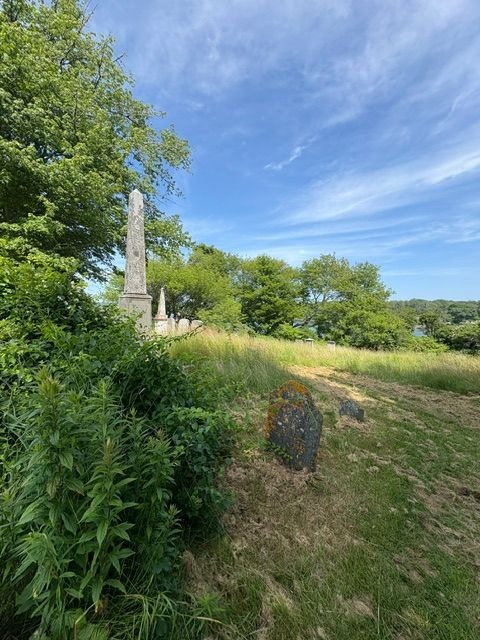
The surviving gravestones date back to the early 1700s. The burial ground itself may be considerably older: Maine’s Bureau of Parks and Public Lands identifies it as a likely burial place for English settlers who arrived in the 1620s. That distinction matters—the remaining markers document later generations, while earlier graves may have lost their markers or never had lasting ones.
The cemetery is also believed to have once covered a larger area. Around 1847, James Partridge enclosed the portion that became the present burial ground. Its boundaries therefore do not necessarily mark the full extent of the earlier burials.
The old stones preserve more than names and dates. Carved willows, death’s heads, and decorative borders reflect ways earlier generations expressed grief, mortality, and remembrance. Maine’s historical account specifically notes these details among the cemetery’s surviving monuments.
Here, the history of Pemaquid becomes a history of individuals and families. Some can still be identified through their inscriptions; others remain unnamed. The burial ground preserves a place for both.

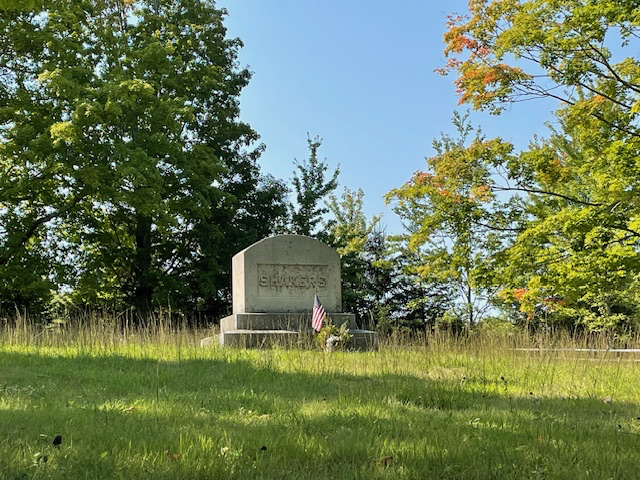
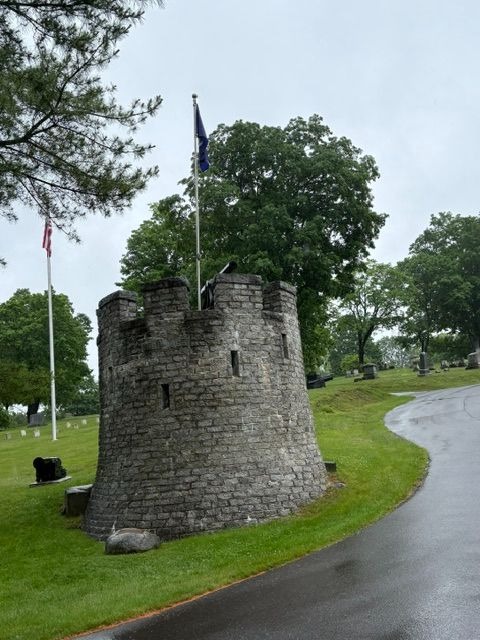
Read More From Nancy
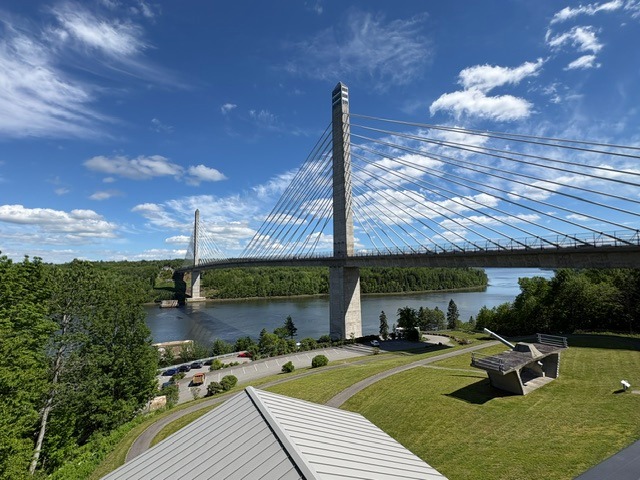
Penobscot Narrows Bridge and Observatory
The Penobscot Narrows Bridge carries travelers across the Penobscot River between Prospect and Verona Island. Its tall towers and spreading cables mark a crossing whose history includes ferries, an innovative suspension bridge, and an urgent engineering challenge. The Waldo–Hancock Bridge opened in 1931, replacing the ferry crossing with a permanent connection. Designed by engineer David […]
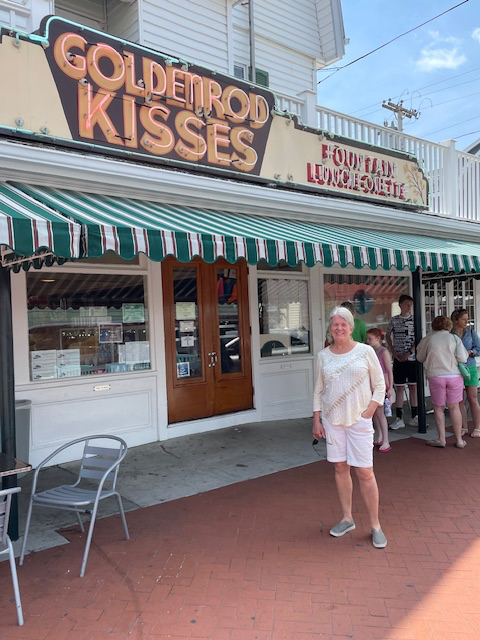
Goldenrod
Every year, I travel to York Maine, to revisit many of the usual sites. One of these places is The Goldenrod, a place that feels as timeless as the tides rolling onto Short Sands Beach. No trip to York is complete without stepping inside this landmark, where the air is sweet with the scent of […]
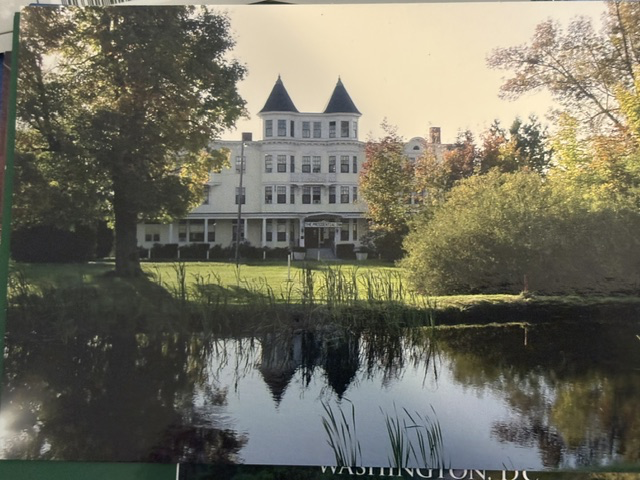
Poland Spring Resort
I made my way to Poland Spring to spend the night, and in many ways it felt like stepping back in time. This was not a modern luxury hotel experience. The room was plain, the towels were thin, and there was a small bar of soap waiting in the bathroom. The accommodations were simple and […]

