Soldiers’ and Sailors’ Monument
The Soldiers’ and Sailors’ Monument in Sandwich was dedicated on Memorial Day, May 30, 1911, to honor the men of the town who served in the Civil War. Rising approximately thirty feet above what is now known as Eaton Square, the monument is crowned by the figure of a Union soldier. Its story, however, reaches beyond the war itself. It is also the story of Sandwich’s glassworkers and of William Eaton, a man who never forgot the community in which he had grown up.
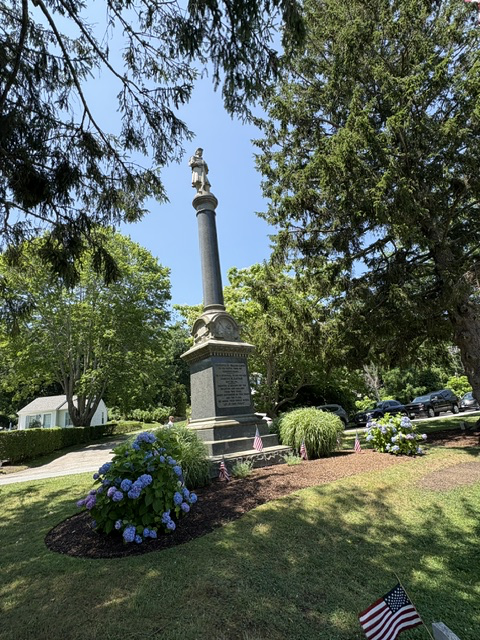
William Eaton was born in Sandwich in 1848. His father, James Eaton, was an English immigrant employed by the Boston and Sandwich Glass Company. When James died in 1856, William was only eight years old. With no public assistance available to support the family, the young boy went to work at the glass factory. His wages were small, but by the age of fourteen he had saved enough to rent a house and provide a home for his mother and two brothers.
William was fascinated by machinery and spent whatever free time he had in the factory’s engine room. John F. Clayton, the company’s steam engineer and a friend of William’s father, recognized the boy’s interest and ability. Clayton encouraged him, answered his questions and taught him about the operation and maintenance of steam engines. William eventually became his assistant and built a successful career as a steam engineer. After leaving Sandwich, he invested in real estate and accumulated considerable wealth in Brockton.
William was too young to serve during the Civil War, but he remembered the young men from the glass factory who left Sandwich to join the Union Army. A total of 386 Sandwich men entered military service during the war, including approximately 100 glass-factory workers. Fifty-four men from the town died in battle or from wounds and disease. Their departure also reduced the glassworks’ labor force and affected production for years after the war.
During his retirement, William visited Gettysburg and was deeply affected by the sacrifices made there. The experience returned his thoughts to his childhood in Sandwich and to the factory workers he had watched leave for war. Although the town had discussed constructing a Civil War memorial as early as 1867, the project had been postponed and never completed. William decided to provide the monument himself, dedicating it both to his father and to Sandwich’s soldiers and sailors, whom its inscription describes as defenders of the Union and the flag.
The monument was presented to the town during an elaborate Memorial Day ceremony in 1911. Despite the rain, veterans, schoolchildren, town officials, musicians and members of the United States Revenue Cutter Service joined the procession. Boston Mayor John F. “Honey Fitz” Fitzgerald, the grandfather of President John F. Kennedy, delivered the principal address. The land beside the Town Hall where the monument was erected subsequently became known as Eaton Square.
William Eaton’s commitment to Sandwich continued beyond the monument. He established a scholarship in the name of John F. Clayton, the engineer who had educated and encouraged him, and created a charitable fund to provide Christmas meals and assistance to families in need. Although he had left Sandwich and found success elsewhere, he continued to honor the people who had shaped his life. The Soldiers’ and Sailors’ Monument therefore remembers more than military service. It preserves the intertwined stories of war, industry, mentorship, family responsibility and one man’s enduring gratitude toward his hometown.
Read More From Nancy
The Ready Rooms
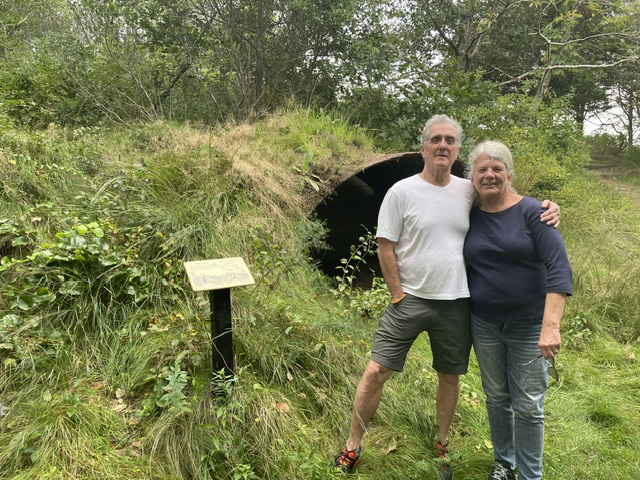
During a hike through the Sagamore Hill area of Sandwich, we came upon this earth-covered entrance hidden among the grass and trees. What appears at first to be a small bunker is one of the Ready Rooms belonging to the former Sagamore Hill Military Reservation, a World War II coastal-defense installation overlooking Cape Cod Bay […]
The 1912 Mercer Raceabout
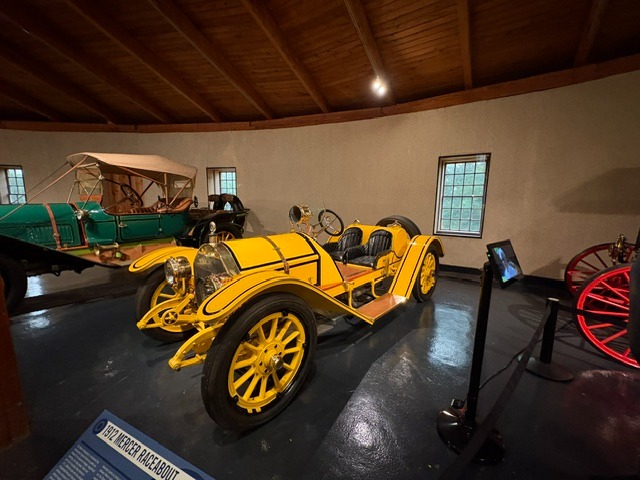
With its bright yellow body, exposed seats, and minimal protection from the weather, the 1912 Mercer Raceabout at Heritage Museums & Gardens makes its purpose clear. This was a car designed around the experience of driving, with little separating its occupants from the road. Manufactured in Trenton, New Jersey, the Raceabout earned a reputation for […]
The Mathewson Cranberry Picker
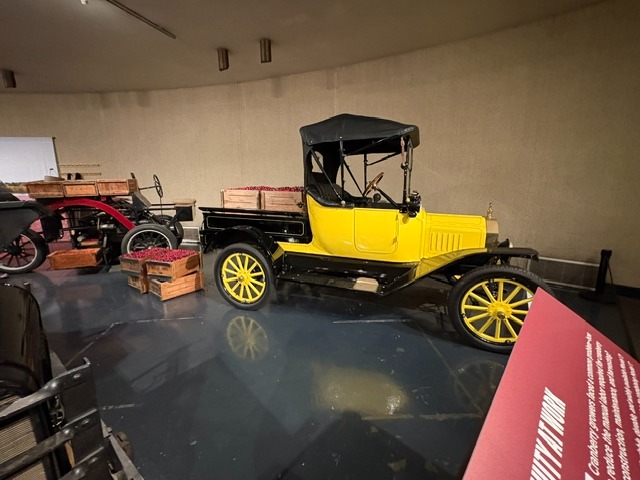
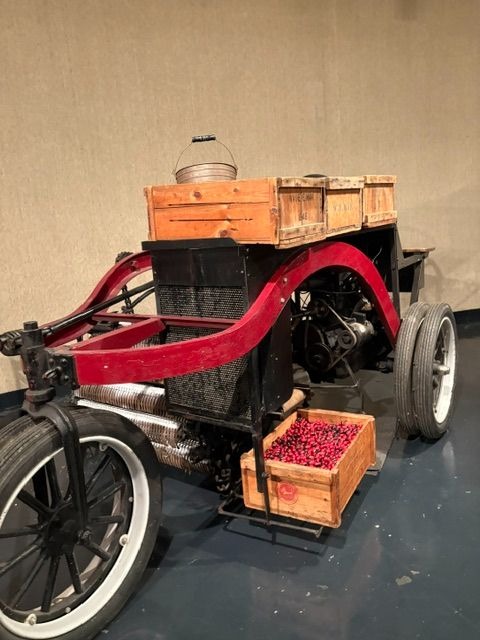
The Mathewson cranberry picker at Heritage Museums & Gardens represents an early effort to mechanize one of Massachusetts’ distinctive agricultural industries. Developed by grower and inventor Clarence W. Mathewson, it adapted automobile technology to the demanding task of gathering cranberries. Built on a Model T truck chassis, the machine used combs to remove berries from […]

