The Martha-Mary Chapel
Standing on a rise across from Longfellow’s Wayside Inn in Sudbury, the Martha-Mary Chapel looks as though it has been part of the New England landscape for centuries. In fact, it dates only to 1940, and its story is inseparable from Henry Ford and his remarkable effort to preserve an idealized piece of early American life here in Sudbury. The Town of Sudbury’s historic survey identifies the chapel as part of Ford’s transformation of the Wayside Inn property into a heritage destination.

Henry Ford purchased the Wayside Inn in 1923. Although known throughout the world for automobiles and modern mass production, Ford was fascinated by early American history, traditional craftsmanship, old buildings, and the rural communities he believed were disappearing in an increasingly industrialized nation. Around the Wayside Inn, he began assembling and creating a historic landscape where visitors could experience something of the New England past
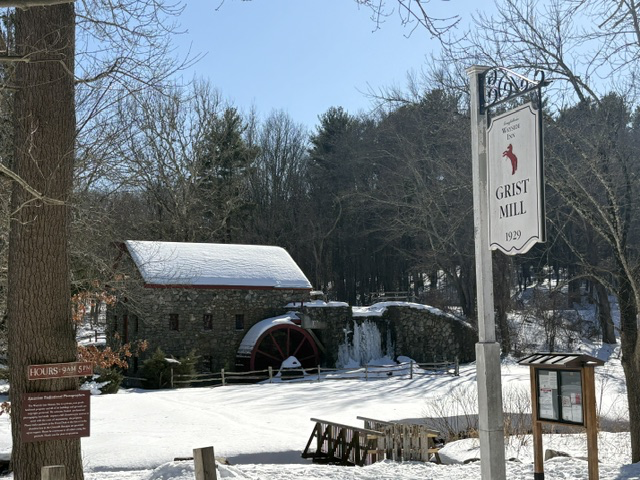
Ford restored and expanded the Wayside Inn property and brought historic buildings to the site. He moved the little Redstone Schoolhouse here from Sterling, Massachusetts, the school traditionally associated with the nursery rhyme “Mary Had a Little Lamb.” He also commissioned the nearby grist mill, completed in the late 1920s, as a working interpretation of an early New England mill. The chapel became another piece of this larger vision.
Nature unexpectedly supplied much of its building material. The devastating New England Hurricane of 1938 brought down hundreds of trees around Sudbury and the Wayside Inn estate. Ford decided that timber from the fallen trees should be used in constructing the chapel. According to Sudbury history, Ford wanted work on the property carried out using methods reminiscent of earlier generations, and timber close enough to be dragged to the construction site was used.
The chapel was constructed in 1940, reportedly with the participation of students from Ford’s Wayside Inn Boys’ School. Ford had established the school on the estate as part of his broader interest in combining education with practical work, agriculture, craftsmanship, and traditional skills.
Its name makes the building particularly personal. “Martha-Mary” honored the mothers of Henry Ford and his wife, Clara: Henry’s mother, Mary Litogot Ford, and Clara’s mother, Martha Bench Bryant. The Sudbury chapel was not the only one bearing the name. Ford created a series of nondenominational Martha-Mary chapels, including an earlier chapel at Greenfield Village in Dearborn, Michigan. The Henry Ford Museum confirms that the name commemorated these two women.
The chapel was deliberately designed to evoke the white-steepled meetinghouses that became such enduring symbols of New England towns. Its classical entrance, tall windows, white clapboards and soaring steeple give it the appearance of a much older building. Yet Ford was not attempting simply to reproduce one historic church. He was creating the kind of New England village church he believed belonged within the historic landscape surrounding the Wayside Inn.
The Martha-Mary Chapel therefore tells a larger story about Henry Ford. The man who helped transform twentieth-century America through the automobile was simultaneously deeply concerned about preserving the world that industrialization was replacing. At Sudbury, he attempted to hold onto pieces of that earlier America: its mills, schools, inns, churches, craftsmanship and village landscapes.
Read More From Nancy
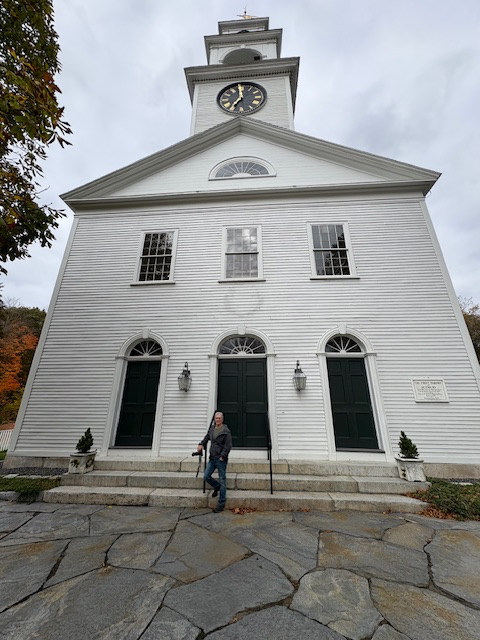
First Parish of Sudbury
The history of the First Parish of Sudbury reaches back into the early 18th century. The plaque reads: “First West Precinct Meeting House of the Rocky Pain built in 1723” tells the story of a growing colonial community that needed its own center for worship and governance. In 1723, residents of what was known as the “Rocky […]
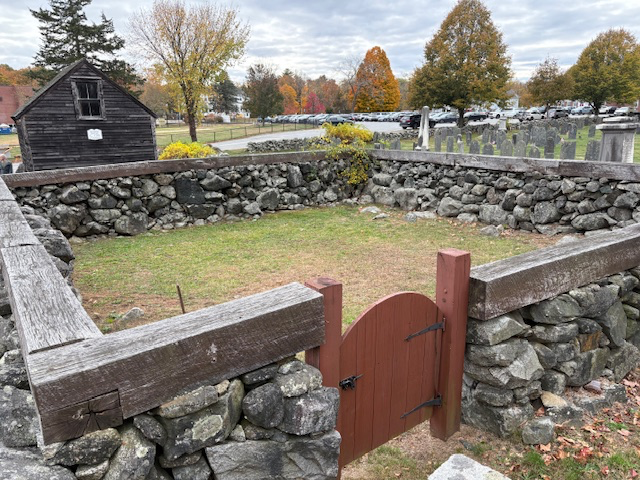
The Old Town Pound
While exploring the colonial cemetery in Sudbury, Massachusetts, I noticed this curious stone enclosure standing beside the old burial ground. At first glance, it appears to be a family plot or perhaps the foundation of a long-vanished building. In fact, it is the town’s Old Town Pound, an important but often forgotten feature of colonial life. […]
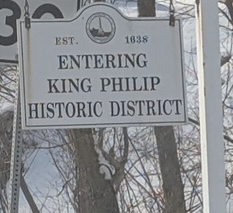
King Philip Historic District
Driving west along Route 10 from Wayland into Sudbury, it is easy to miss the roadside marker that reads: “Entering King Philip Historic District“. This simple sign points to one of the oldest colonial settlement areas in Massachusetts and to events connected with one of the most significant conflicts in early New England history. The district lies […]

