The Heroes of the Heydrich Terror Memorial
On the outside wall of the Orthodox Cathedral of Saints Cyril and Methodius in Prague is this memorial to one of the most dramatic acts of resistance against Nazi occupation during World War II. The bullet-scarred stone surrounding the small window is not a reconstructed decoration. This is where the final chapter of Operation Anthropoid unfolded in June 1942.
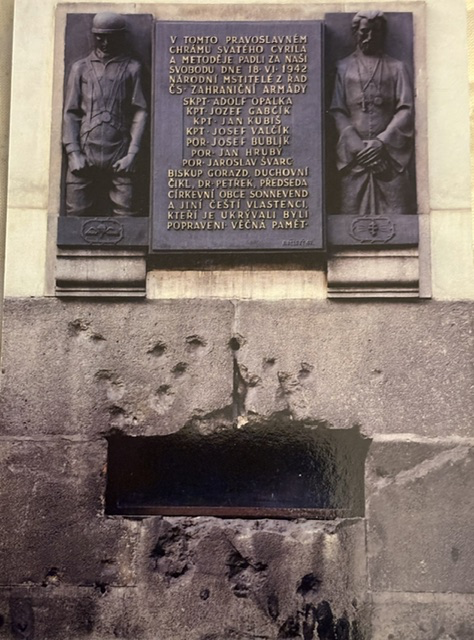
Czechoslovak soldiers Jozef Gabčík and Jan Kubiš had been trained in Britain and parachuted into occupied Czechoslovakia with orders to assassinate Reinhard Heydrich, one of the most powerful figures in Nazi Germany. Heydrich was acting Reich Protector of Bohemia and Moravia, a principal architect of Nazi terror, and one of the senior officials involved in organizing the Holocaust.
On May 27, 1942, Gabčík and Kubiš attacked Heydrich’s car as it traveled through Prague. Gabčík’s gun failed to fire, but Kubiš threw a modified explosive at the vehicle. Heydrich was badly wounded and died on June 4.
The Nazis responded with extraordinary brutality. Thousands of people were arrested, and the villages of Lidice and Ležáky became enduring symbols of the reprisals. Lidice was destroyed, its men murdered, its women deported to concentration camps, and many of its children killed.
Meanwhile, Gabčík, Kubiš and five other Czechoslovak resistance fighters were hidden inside this church. They took refuge in the crypt beneath the building, protected by members of the Orthodox Church and the resistance. Their hiding place was eventually betrayed. On June 18, 1942, hundreds of German SS and police surrounded the church. A gun battle began inside the building. Several of the paratroopers fought from the church above while the remaining men defended themselves from the crypt.
The small opening visible in this photograph became part of that desperate final battle. German forces fired into the crypt and attempted to force the men out with tear gas. Firefighters were brought in and water was pumped through the opening in an attempt to flood the crypt. The defenders continued resisting for hours. None surrendered. The seven men commemorated on the plaque—Jozef Gabčík, Jan Kubiš, Adolf Opálka, Josef Valčík, Josef Bublík, Jan Hrubý and Jaroslav Švarc—were all killed during the battle or took their own lives rather than be captured. The church itself paid a terrible price for sheltering them. Orthodox Bishop Gorazd attempted to take responsibility to protect others, but he and several church leaders were executed. The Czech Orthodox Church was suppressed by the Nazis.
What makes this memorial so powerful is that the building itself remains evidence of what happened here. The stone around the crypt window still carries the scars of the gunfire from June 18, 1942. We are not simply looking at a plaque telling us that a battle occurred somewhere nearby. We are looking directly at the place where these men made their final stand.
The inscription above them ends with words that need little explanation: “Věčná paměť”—eternal memory.
More than eighty years later, the damaged stone remains exactly where it should be, allowing anyone walking this Prague street to stop and remember the extraordinary courage, sacrifice, and terrible cost of resistance.
Read More From Nancy
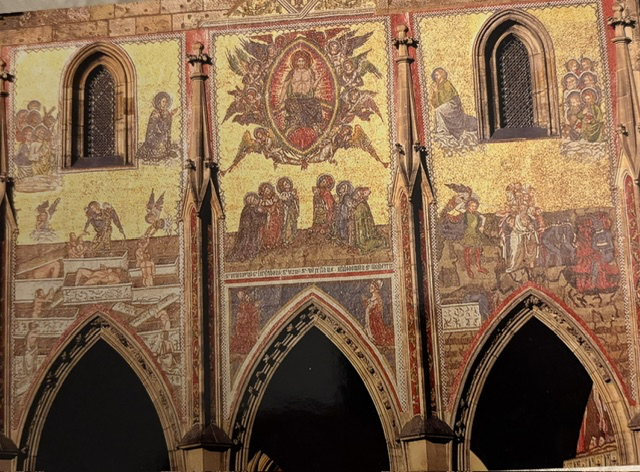
The Golden Gate Mosaic
One of the artistic treasures that captured my attention at St. Vitus Cathedral was the magnificent mosaic above the Golden Gate. While many visitors focus on the cathedral’s soaring Gothic architecture, this mosaic invites you to stop, look carefully, and appreciate one of the finest surviving medieval mosaics in Europe. Created between 1370 and 1371 […]
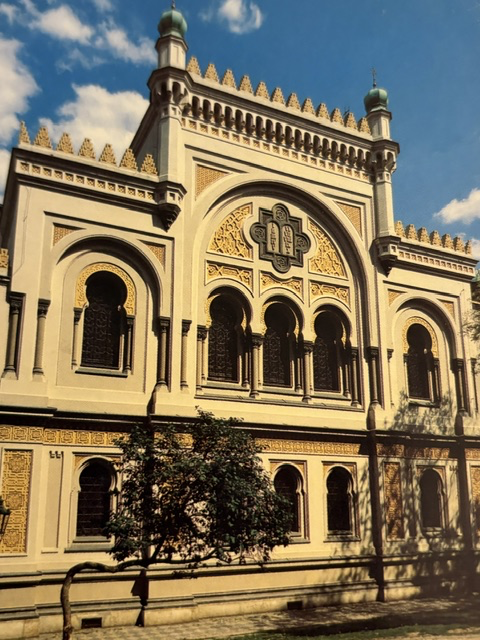
Spanish Synagogue
Among the many remarkable sites we visited in Prague, one of the most beautiful was the Spanish Synagogue. Built in 1868 on the site of Prague’s oldest synagogue, which had served the Jewish community since the Middle Ages, the building is renowned for its stunning Moorish Revival architecture and richly decorated interior inspired by the […]
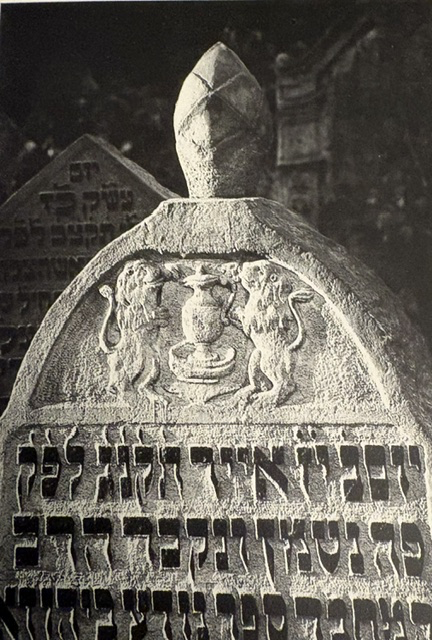
The Tomb of Rabbi Yechezkel Landau
While in Prague, we took a guided tour of the city’s Jewish Quarter, which included a visit to the remarkable Old Jewish Cemetery. Established in the early fifteenth century and used until 1787, it is one of the oldest surviving Jewish cemeteries in Europe. Because Jews were forbidden to expand the cemetery beyond its limited […]

