The Changing of the Guard
During our visit to Athens, we watched the changing of the guard outside the Hellenic Parliament in Syntagma Square. The ceremony takes place before the Tomb of the Unknown Soldier, which honors the Greek service members who died fighting for their country.
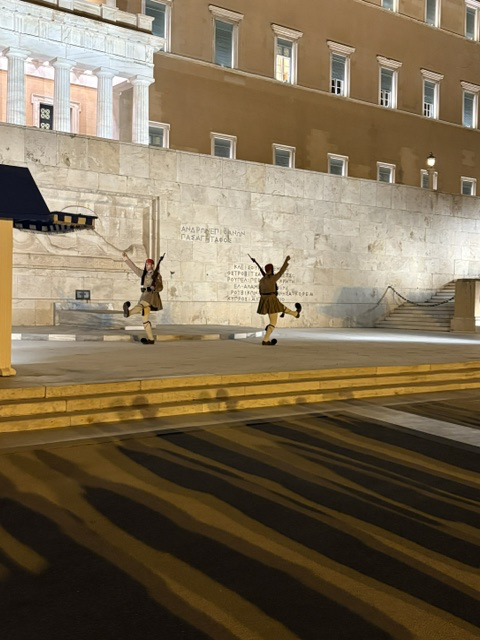
The guards are members of the Presidential Guard and are known as Evzones. This ceremonial unit traces its traditions to the soldiers who fought for Greek independence from the Ottoman Empire. The Evzones maintain a continuous guard at the tomb, remaining motionless at their posts until it is time for the next carefully coordinated change.
Their slow, exaggerated movements are among the ceremony’s most distinctive features. Each lifted leg, extended arm, and forceful step is performed with precision and control. The deliberate pace is a reminder that this is not simply a performance for visitors, but a formal military tribute to those who sacrificed their lives for Greece.
The Evzones are also recognized by their traditional uniforms. Different uniforms are worn according to the season and occasion. Their footwear, called tsarouchia, consists of heavy leather shoes with large black pompoms. The sound made when the shoes strike the pavement adds to the ceremony’s solemn rhythm.
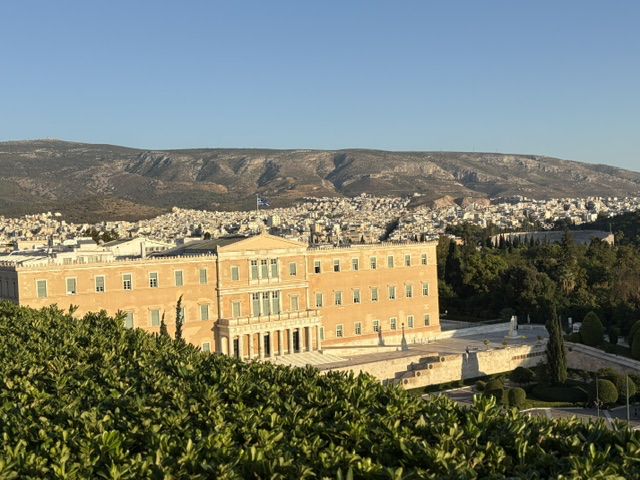
Behind the guards stands the former Royal Palace, completed during the nineteenth century and now occupied by the Greek Parliament. Beneath it, the Tomb of the Unknown Soldier bears the image of a fallen ancient warrior and inscriptions honoring Greek military sacrifice. Together, the Parliament, the tomb, and the Evzones connect the ancient imagery of Greece with the history of the modern nation.
Watching the changing of the guard allowed us to witness a tradition that takes place every hour in the center of Athens. Amid the traffic and activity of Syntagma Square, the disciplined movements of the Evzones created a moment of ceremony, remembrance, and national pride.
Read More From Nancy
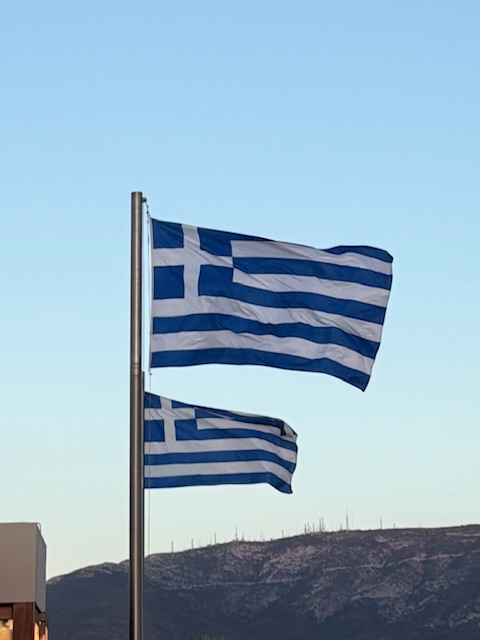
Greece: The Ancient Land with a Modern Fight for Freedom
I grew up reading the Greek myths and stories of the gods to my children, but my knowledge of Greece didn’t travel much further than that. Of course, I knew that our own founding fathers studied Greek and Roman history to help shape American democracy but that’s where my understanding began and ended. What struck […]
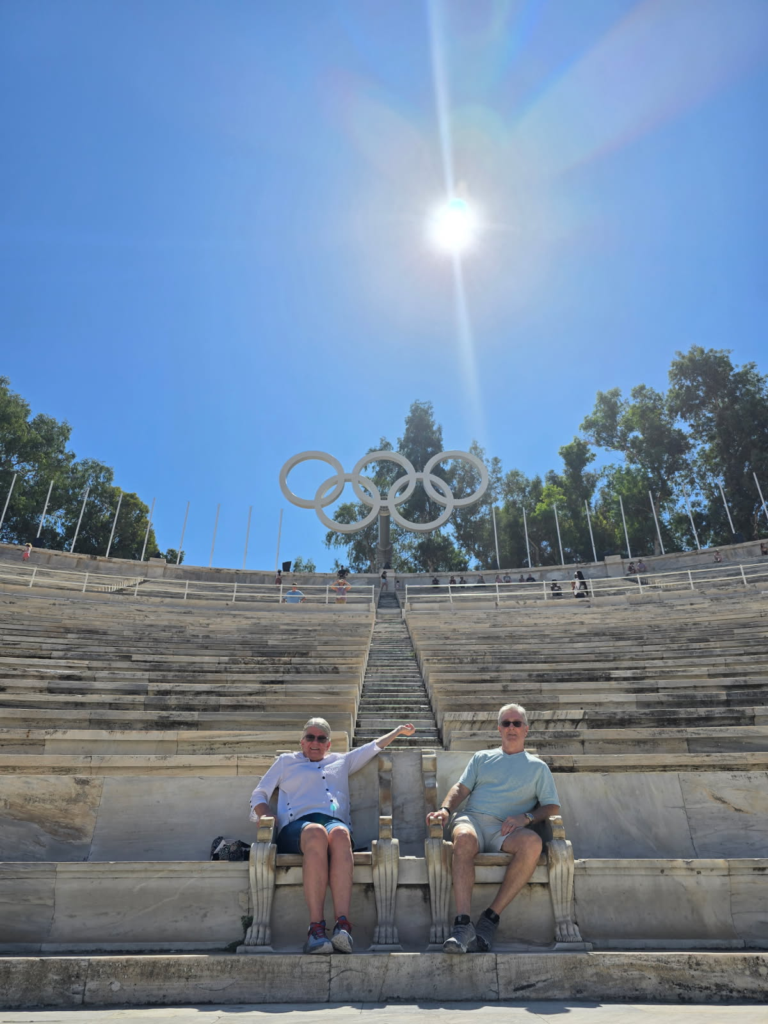
Panathenaic Stadium
Visiting the Olympic arena in Athens and sitting in the marble seats once reserved for royalty, was a special experience where we physically felt part of history. This site in Athens is the Panathenaic, meaning beautiful marble. This extraordinary venue is the only stadium ever built entirely of marble. This site was originally laid out in the 4th […]
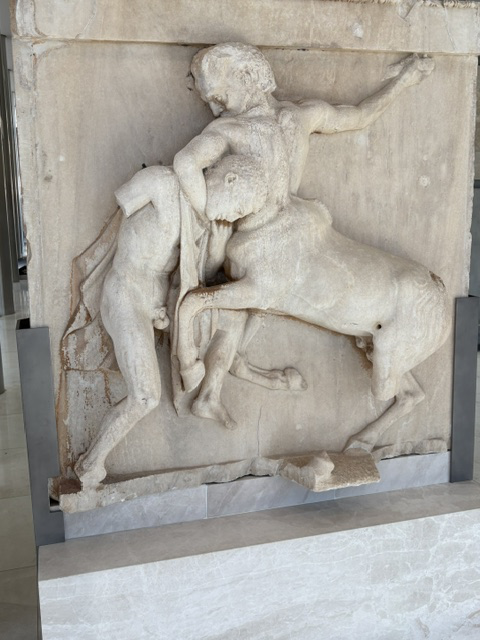
The Centaur Relief
Among the many masterpieces displayed in the Acropolis Museum, this marble relief immediately caught my attention. It depicts one of the most familiar scenes in Greek mythology—a fierce battle between a centaur and a Lapith warrior. Although carved more than 2,400 years ago, the sculpture still conveys remarkable movement and emotion. The twisting figures, powerful […]

