Hellenic Parliament
As the sun rose over Athens, the Parliament Building seemed peaceful. From our vantage point high above the city, the broad façade was bathed in the soft morning light, and it was difficult to imagine that this quiet scene would soon become one of the busiest and most debated places in Greece.
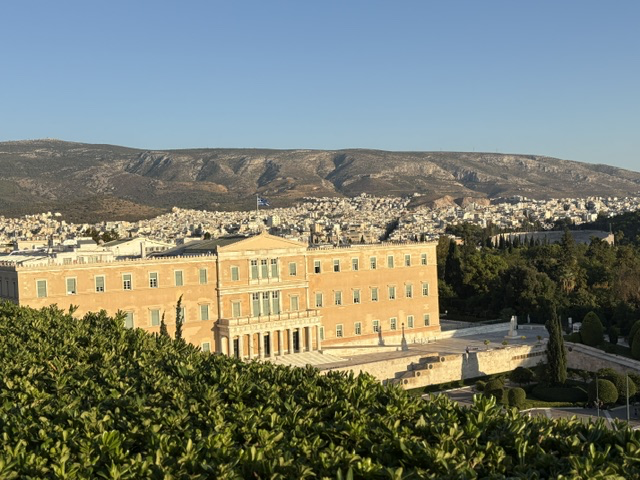
The building itself has lived many lives. Constructed between 1836 and 1843 as the Royal Palace for King Otto, Greece’s first modern king, it was designed by the German architect Friedrich von Gärtner. King Otto had been chosen by the European powers to lead the newly independent nation after Greece won its long struggle for freedom from the Ottoman Empire. For nearly a century, this building served as the home of the Greek monarchy, overlooking a city that was just beginning to establish itself as the capital of a modern nation.
Ironically, the building that was constructed for a king would eventually become the home of the people’s government. After a devastating fire damaged the royal residence in 1909 and the monarchy later moved elsewhere, the palace stood largely unused for a time. In 1935, it was officially converted into the Hellenic Parliament, where Greece’s elected representatives continue to meet today. Few buildings better illustrate how a nation’s institutions can evolve over time while the walls themselves remain unchanged.
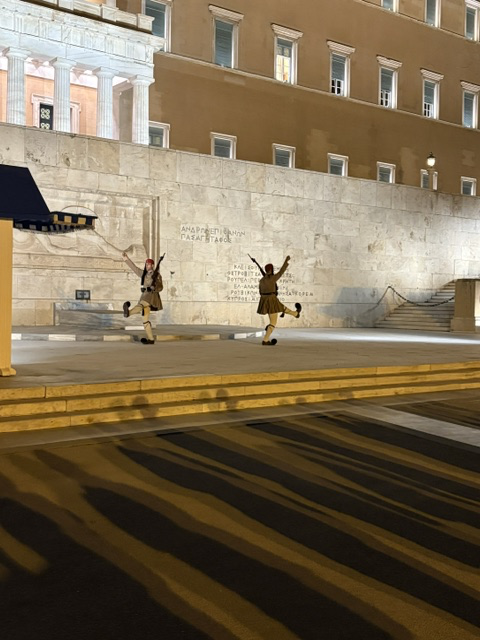
Most visitors know the Parliament Building for the ceremonial changing of the Evzones, the elite Presidential Guard, at the nearby Tomb of the Unknown Soldier. The guards, dressed in their traditional uniforms with pleated kilts, pom-pom shoes, and distinctive movements, perform a ceremony that has become one of Athens’ most recognizable traditions. Tourists gather throughout the day to witness this colorful reminder of Greece’s military heritage and national pride.
Our experience, however, revealed another side of this historic place.
During our stay in Athens, there were demonstrations in Syntagma Square every day. Citizens gathered in front of Parliament to voice their concerns, carrying signs, chanting, and exercising one of the very principles that has its roots in this city. From where we stood that morning, none of that activity was visible. The square looked calm and almost timeless. Yet within a few hours, it would once again become a gathering place for people determined to make their voices heard.
It struck me that this was exactly what the building had come to represent. It began as the residence of a monarch, where decisions flowed from the palace outward. Today, it serves as the center of a democratic government, where elected officials are expected to answer to the people gathered outside its doors. The daily protests we witnessed were not signs of instability but reminders that democracy is rarely quiet. It is a living process, often noisy, sometimes contentious, but always dependent on citizens who care enough to participate.
Read More From Nancy
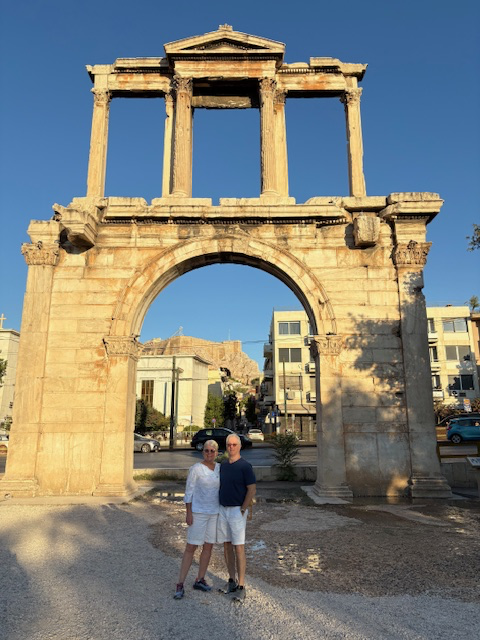
Arch of Hadrian
Marty and I stood in front of the Arch of Hadrian in Athens, with the modern city stretching out behind it. The steady rhythm of everyday life continues around a structure that has stood here for nearly 2000 years. The arch was built in 131AD to honor the Roman Emperor Hadrian, during a time when […]
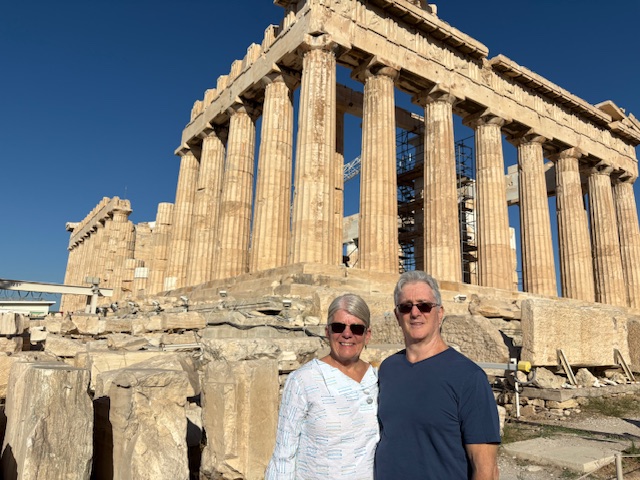
A Few Unforgettable Days in Greece
The big travels, the ones that take days of planning, always feel like special journeys. Our few days in Greece was one of those trips of 2025, and it did not disappoint. I had long wanted to walk the ancient streets of Athens and stand before the Acropolis. To finally be there, surrounded by history, […]
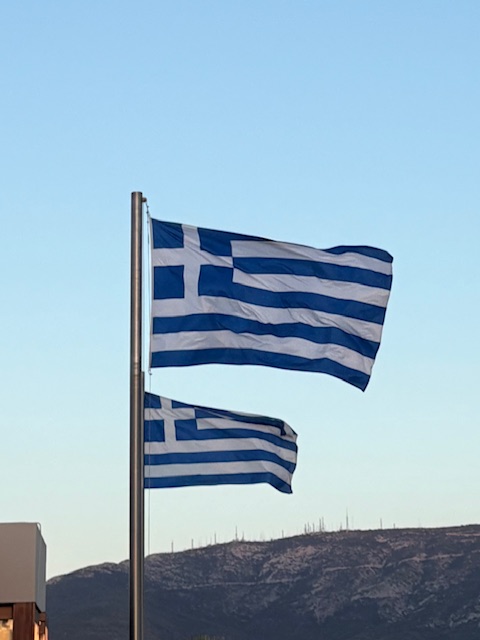
Greece: The Ancient Land with a Modern Fight for Freedom
I grew up reading the Greek myths and stories of the gods to my children, but my knowledge of Greece didn’t travel much further than that. Of course, I knew that our own founding fathers studied Greek and Roman history to help shape American democracy but that’s where my understanding began and ended. What struck […]

