Hamilton Grange National Memorial
For those who have seen the musical Hamilton, do you remember the moment when the family “moves uptown? In the late 18th century, uptown meant leaving the crowded streets of lower Manhattan for open farmland to the north. This are would later become Harlem. That is where Alexander Hamilton built his country retreat, a house known called the Hamilton Grange National Memorial.
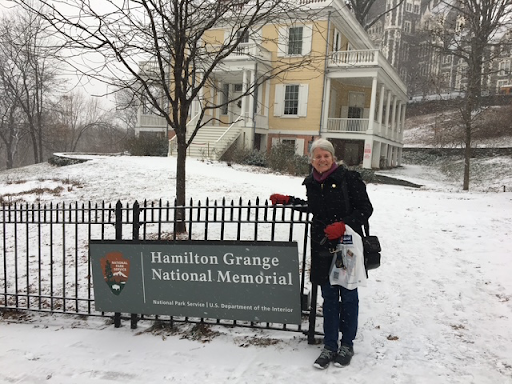
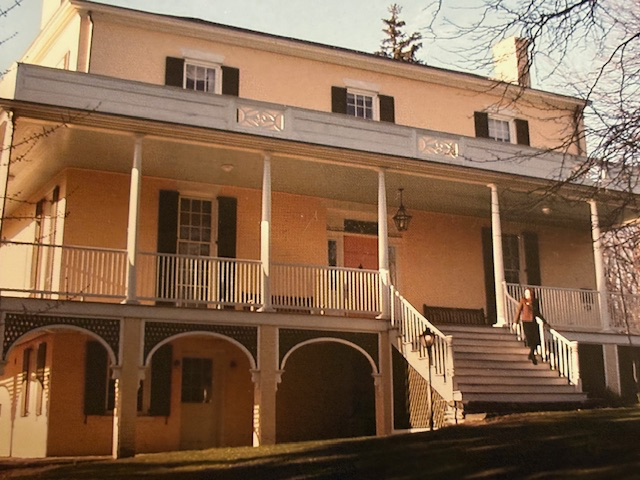
Hamilton purchased the land in 1800 seeking fresh air and a space for his growing family. The home was designed in the Federal style with views that once stretched across rolling fields toward the Hudson River. It was meant to be a place of calm after years of political battles and relentless public scrutiny.
Tragically, Hamilton and his wife Eliza enjoyed the Grange for only a short time. He completed the house in 1802, and just two years later, in 1804, he was mortally wounded in his duel with Aaron Burr. Eliza would live on for another half-century and worked tirelessly to preserve her husband’s legacy, while the neighborhood around the house transformed from rural countryside into dense city streets.
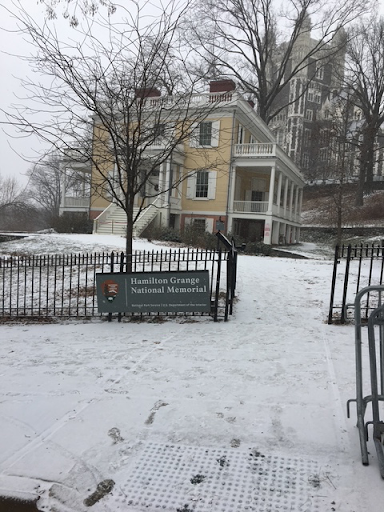
Hamilton Grange National Memorial became a federally protected site in 1962, with legislation signed by President John F. Kennedy. The designation recognized the home’s importance as a rare surviving Federal-era residence in upper Manhattan, but as the final home of Alexander Hamilton.
Over the decades, The Grange was moved twice to save it from development before being carefully restored and returned to a setting close to its original location. Today, we can walk through the elegant rooms and stand on the porch where Hamilton once looked out over open land, far from the clamor of the young nation’s capital cities.
Here sits the quiet family home, enjoyed only briefly, and preserved as a window into a fleeting chapter of his life.
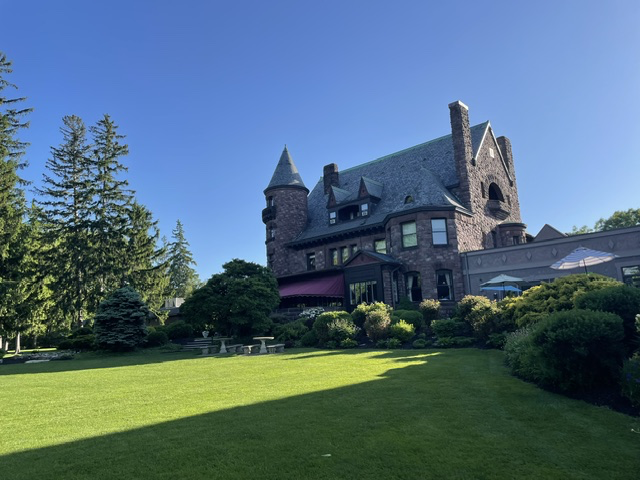
Read More From Nancy
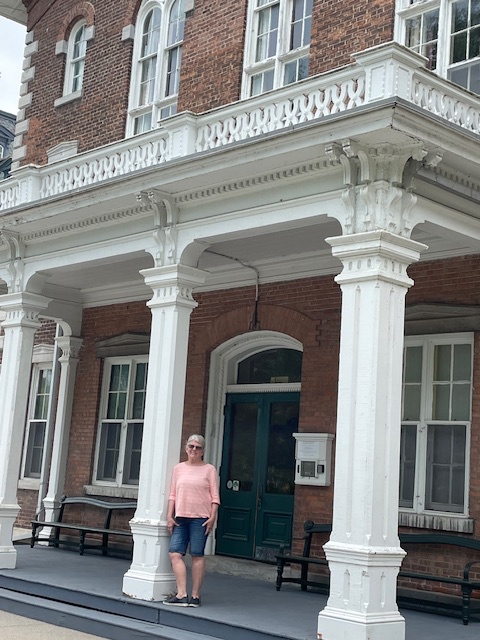
Mansion House
Last summer, on our return from a camping trip to the Finger Lakes, we took a few detours to explore historic sites along the way. Upstate New York was the heart of the Religious Awakening in the years before the Civil War, and it is dotted with places where people gathered in search of a […]
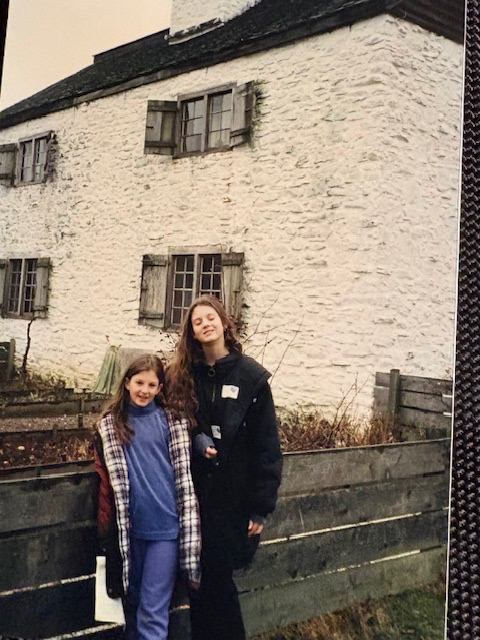
Dutch Farmhouse
During our homeschooling years, many of our lessons took place on the road. We would explore historic houses throughout New England and the Hudson River Valley, giving the girls a chance to step inside the past rather than just read about it. Traveling through this part of New York also reminded us that the region has […]
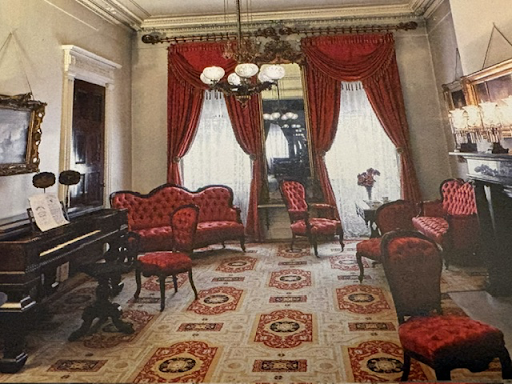
Merchant House
The Merchant House in New York City is a remarkable home that has survived almost completely intact from the nineteenth century. Built in 1832 and later owned by the wealthy Tredwell family, the house preserves not only the architecture of the period, but also the original furnishings, and atmosphere of an upper-middle-class Manhattan home from […]

