St. Joseph School
My most personal connection to St. Joseph comes through the letters sent to my father in 1942. Among the family members and friends writing to him was Sister Ignatia. Her correspondence kept him informed about the school and the boys who had gone into military service. Through her letters, the school remained part of his life even while he was far from Martinsburg.
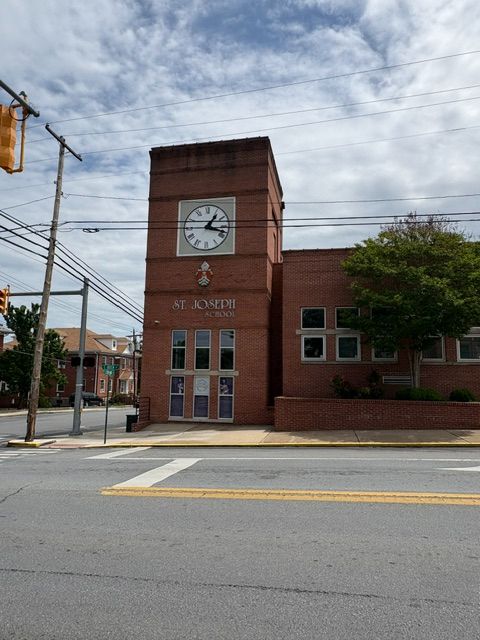
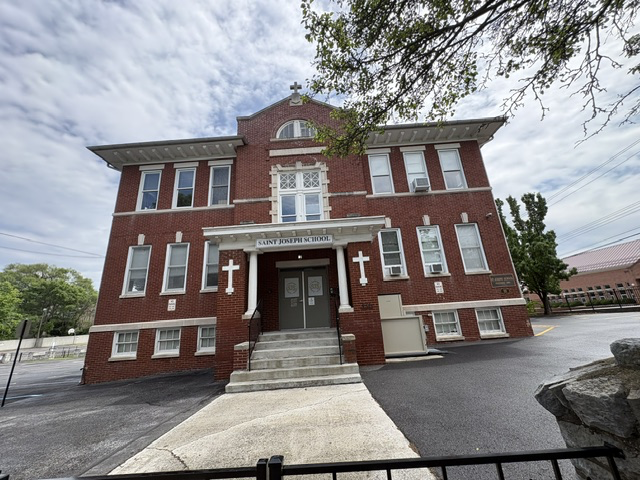
St. Joseph School began on September 4, 1883, when the Daughters of Charity from Emmitsburg, Maryland, established four classrooms in a two-story building on East Stephen Street. The wooden school was moved to South Queen Street in the late 1880s. A four-year high school program followed in 1905, and an eight-room brick school building replaced the earlier structure in 1913. It was dedicated in October 1914, several years before my father was born.
By the time Roger attended, the school had become an established part of Martinsburg’s Catholic community. His days there included both classroom work and basketball. Knowing that he played on the team adds something personal to the school’s institutional history. He was one of the boys representing St. Joseph on the court, sharing practices, games, and the experiences of being part of a team.
A gymnasium was built and dedicated in 1938—the same year he would have graduated. That coincidence places his final school year at an important moment in St. Joseph’s athletic history. I do not yet know whether he played in the new gym before leaving, but its dedication belongs to the period when he was completing his education. In later years, the St. Joseph Crusaders basketball team attracted spectators from across West Virginia.
The school’s connection to my father continued after his student years. Among the letters sent to him during military service in 1942 were those from Sister Ignatia. She kept him informed about St. Joseph and the boys who had entered the service. Her correspondence shows that leaving school had not ended his relationship with its community. Someone there still remembered him, followed his life, and made the effort to keep him connected.
These letters also reveal how the war spread through a familiar circle of young people. Boys who had attended school together were now serving in different places. News of their assignments and experiences became part of the correspondence traveling between Martinsburg and the men away from home. Sister Ignatia helped maintain those connections, giving Roger updates from a community he knew.
St. Joseph’s campus changed over the decades, including a move across Stephen Street in 2000. The building we visited therefore represents the continuing school community, though I cannot assume that it was the particular building where my father attended classes. His years belong to an earlier arrangement of the campus.
What made this stop meaningful was the opportunity to bring together several pieces of his story: Roger the student, Roger the basketball player, and Roger the serviceman receiving letters from Sister Ignatia. The school provided a setting for those connections. His basketball years help me picture him before the war, while the letters show how people from that earlier life continued to reach out to him.
Standing outside St. Joseph, I was looking at a place connected to a young man I never knew as young. Each detail from the team, the graduation year, and the letters that followed—helps me understand a little more of the life my father had before he became my father.
Read More From Nancy
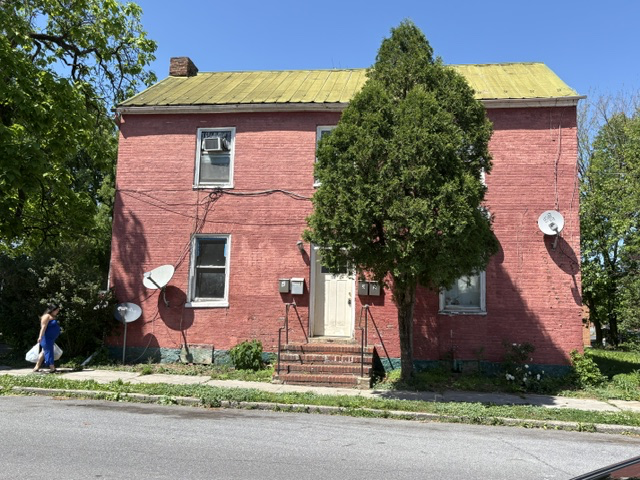
506 West John Street
This address appears on so many envelopes preserved in my parents’ papers that I felt compelled to include it in my exploration of Martinsburg. During my visit, I made a point of finding 506 West John Street and taking a photograph of the house. From the outside, I saw no obvious connection to my father, […]
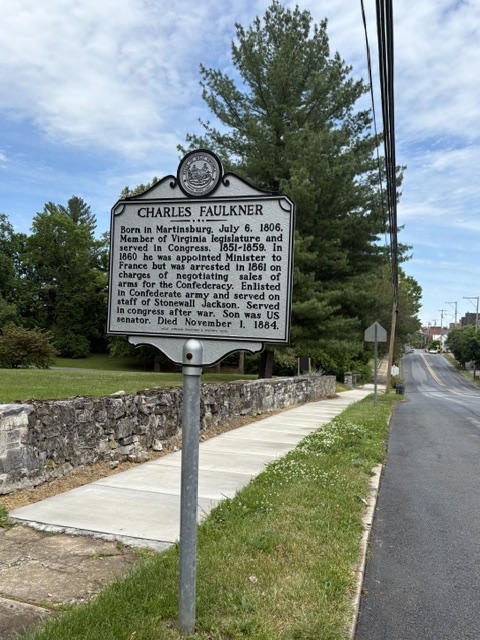
Charles James Faulkner
Walking through Martinsburg, I wanted to capture as many of the landmarks and stories as possible that might have been familiar to my father during his youth. One of the markers I encountered honored Charles James Faulkner, one of the most distinguished citizens ever to come from the town. Born in Martinsburg in 1806, Faulkner […]
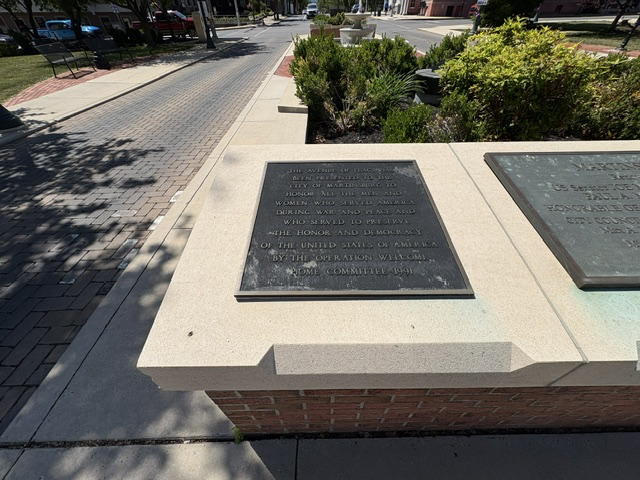
Martinsburg Town Square
The three bronze plaques incorporated into Martinsburg Town Square tell the story of the purpose, construction, and dedication of this public space. Rather than serving as traditional monuments to a single event or individual, they preserve the memory of a community effort that transformed a section of downtown into a gathering place and tribute to the city’s […]

