Historic McFarland House
While exploring Martinsburg, we stopped in front of a brick house set above South Queen Street. A broad flight of brick steps led to a sheltered entrance, with tall windows, dark shutters, and dormers rising along the roof. The name above the doorway identified it as the Historic McFarland House. In the city where my father grew up, it was another place that encouraged me to look more closely at the history surrounding his life.
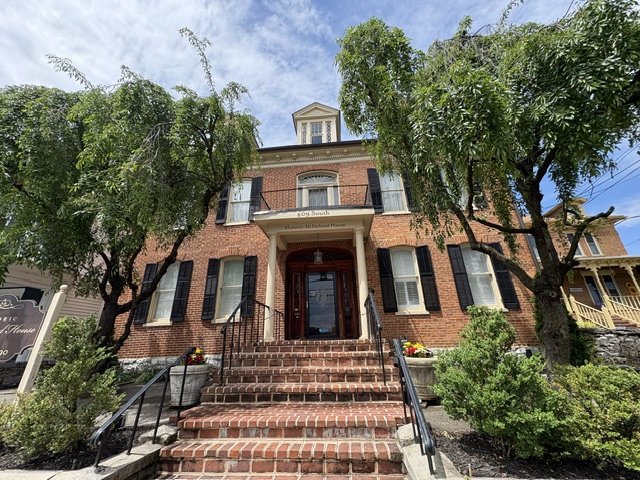
The house at 409 South Queen Street was built in 1878 for Alexander B. Parks, a local businessman whose activities extended into development and civic affairs. Its substantial size and carefully arranged façade reflected the ambitions of an owner establishing a prominent home in Martinsburg. Although later generations would know it by the McFarland name, its story began with Parks.
From the sidewalk, the entrance provides the house’s visual center. Columns frame the doorway beneath a small balcony, while windows balance the composition on either side. Above, dormers bring light into the upper floor. The stone retaining wall and elevated grounds give the residence a sense of separation from the street without removing it from the neighborhood around it.
Parks’s career connected the house to the region’s business and agricultural life. He became president of the National Fruit Company, associated with the White House brand, and later served as a West Virginia state senator. His interests reached beyond the household to the enterprises and public institutions that helped shape the surrounding community.
Parks sold the property before the end of the nineteenth century. Among its subsequent owners were William and Jane McFarland, whose surname became the house’s lasting identity. They operated a catering business from the residence, giving it a role in the celebrations and gatherings of other families. A private home became a place associated with hospitality, food, and shared occasions.
Its appearance also drew visitors interested in historic homes and gardens. In 1967 and 1968, the house was included in the Shenandoah-Potomac House and Garden Tour. That recognition placed it within a wider appreciation of the region’s domestic architecture and the people who maintained it.
The tradition of hospitality continued through later use for dining, weddings, and private events. These activities gave the house a purpose beyond preservation alone, allowing people to experience its rooms as settings for occasions in their own lives. Its history includes both the family who commissioned it and the many people welcomed there afterward.
I do not know whether my father or grandmother ever entered this house. But standing outside it added another piece to my understanding of their Martinsburg. The letters I have preserved describe people, concerns, and everyday events; buildings like this help give that world a physical setting. The McFarland House offered its own story within that landscape, a residence whose identity evolved through business, family ownership, and a long association with welcoming others.
Read More From Nancy
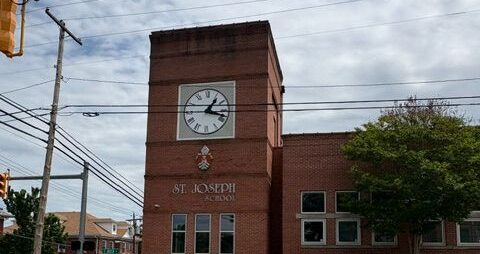
St. Joseph School
My most personal connection to St. Joseph comes through the letters sent to my father in 1942. Among the family members and friends writing to him was Sister Ignatia. Her correspondence kept him informed about the school and the boys who had gone into military service. Through her letters, the school remained part of his […]
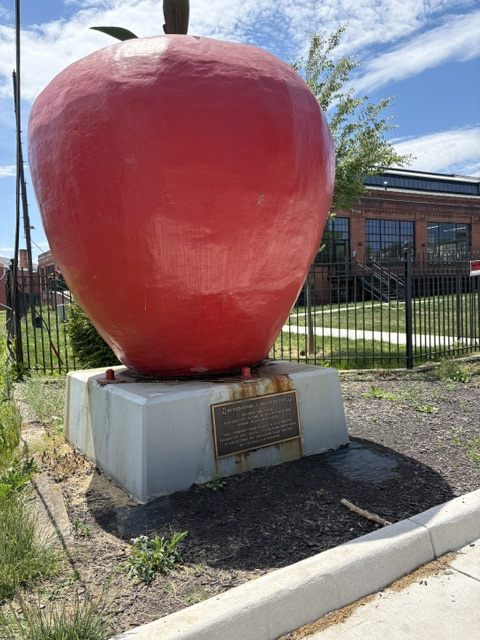
Big Apple Time Capsule
One of the more unusual landmarks I discovered during my visit to Martinsburg was the Big Apple Time Capsule. The giant red apple dedicated on October 19, 1990, was sponsored by the Martinsburg Jaycees. I knew this landmark had not been there when my father was growing up in Martinsburg, but I could not resist stopping for […]
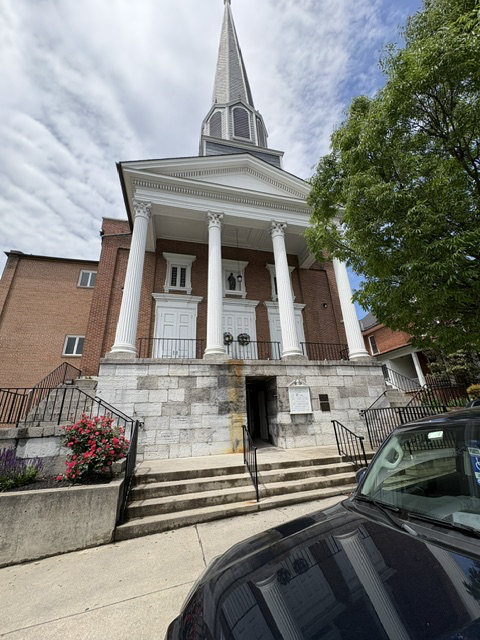
St. Joseph’s Catholic Church
One of the places I wanted to visit in Martinsburg was St. Joseph Catholic Church. Rising about South Queen Street, its imposing columns and soaring spire make it a recognizable landmark in the city. Standing before the church, I could easily imagine my father climbing these same steps and joining generations of Martinsburg families for worship. St […]

