506 West John Street
This address appears on so many envelopes preserved in my parents’ papers that I felt compelled to include it in my exploration of Martinsburg. During my visit, I made a point of finding 506 West John Street and taking a photograph of the house. From the outside, I saw no obvious connection to my father, which leaves me only to speculate about why so much of his mail was sent here.
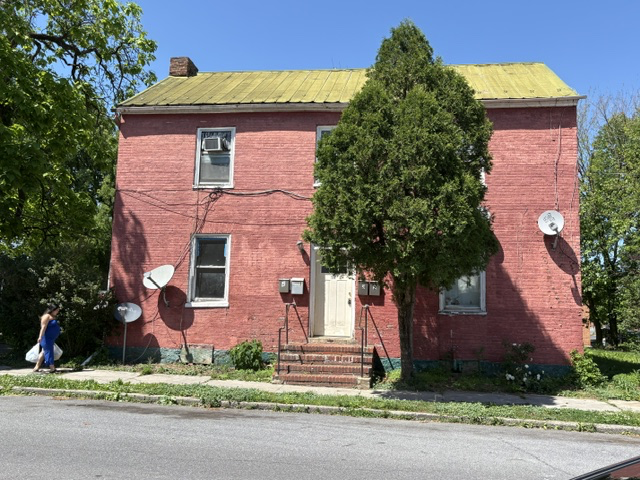
Most of the correspondence dates from the years when my father was finishing high school. The envelopes contain information from mail-order schools offering courses in cartooning, decorative painting, and other subjects. Perhaps these represented his own interests and dreams, or perhaps they reflected expectations his parents had for his future. One possibility that crossed my mind was that he may have preferred to have these materials sent to another address rather than his own home. I simply do not know.
What I do know is that this address appeared again and again among the papers my parents carefully saved. Because of that, 506 West John Street became more than just another house on a street. It became one of those small mysteries that emerge during family research, a place connected to my father’s young adulthood, ambitions, and unanswered questions. Although I may never know exactly why this address was important to him, its repeated appearance in the family papers made it worthy of a stop during my journey through Martinsburg.
Sometimes the significance of a place lies not in what we know with certainty, but in the stories that remain unfinished.
This address appears on so many envelopes preserved in my parents’ papers that I felt compelled to include it in my exploration of Martinsburg. During my visit, I made a point of finding 506 West John Street and taking a photograph of the house. From the outside, I saw no obvious connection to my father, which leaves me only to speculate about why so much of his mail was sent here.
Most of the correspondence dates from the years when my father was finishing high school. The envelopes contain information from mail-order schools offering courses in cartooning, decorative painting, and other subjects. Perhaps these represented his own interests and dreams, or perhaps they reflected expectations his parents had for his future. One possibility that crossed my mind was that he may have preferred to have these materials sent to another address rather than his own home. I simply do not know.
What I do know is that this address appeared again and again among the papers my parents carefully saved. Because of that, 506 West John Street became more than just another house on a street. It became one of those small mysteries that emerge during family research, a place connected to my father’s young adulthood, ambitions, and unanswered questions. Although I may never know exactly why this address was important to him, its repeated appearance in the family papers made it worthy of a stop during my journey through Martinsburg.
Sometimes the significance of a place lies not in what we know with certainty, but in the stories that remain unfinished.
Read More From Nancy
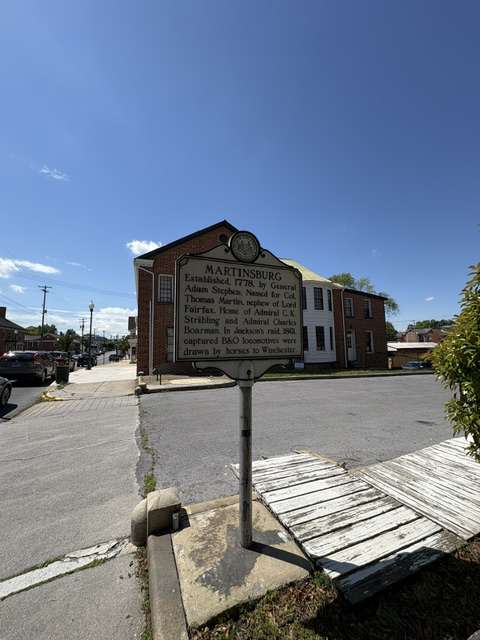
Jackson’s Great Train Raid of 1861
Established, 1778, by Gen. Adam Stephen. Named for Col. Thomas Martin, nephew of Lord Fairfax. Home of Admiral Charles Sterling and Admiral Charles B. Caldwell. In Jackson’s raid, 1861, captured 8,500 locomotives and 300 miles of railway. This marker is referring to a remarkable railroad operation of the Civil War, commonly known as Stonewall Jackson’s […]
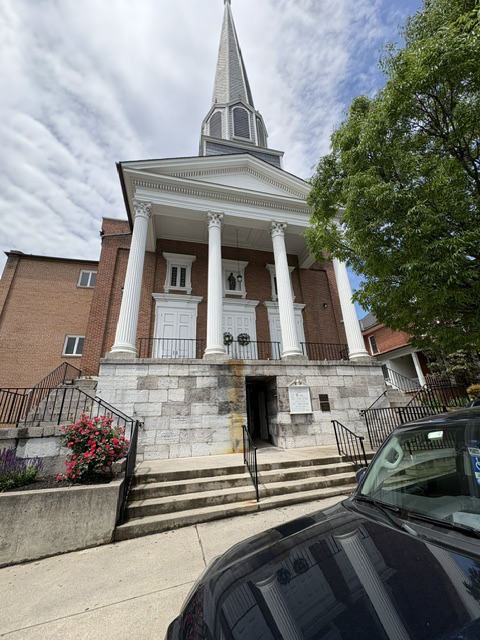
St. Joseph’s Catholic Church
One of the places I wanted to visit in Martinsburg was St. Joseph Catholic Church. Rising about South Queen Street, its imposing columns and soaring spire make it a recognizable landmark in the city. Standing before the church, I could easily imagine my father climbing these same steps and joining generations of Martinsburg families for worship. St […]
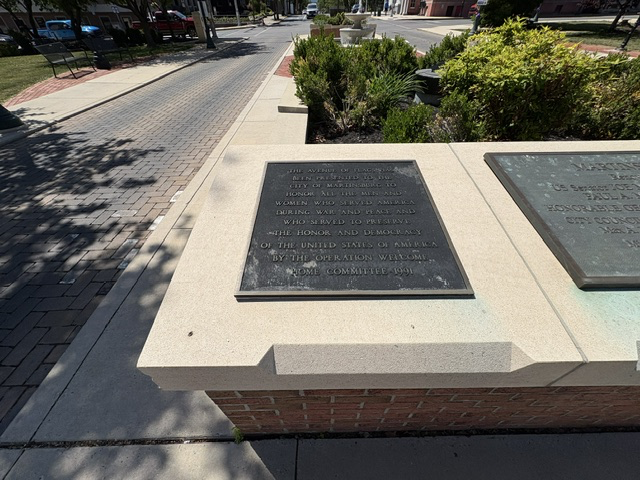
Martinsburg Town Square
The three bronze plaques incorporated into Martinsburg Town Square tell the story of the purpose, construction, and dedication of this public space. Rather than serving as traditional monuments to a single event or individual, they preserve the memory of a community effort that transformed a section of downtown into a gathering place and tribute to the city’s […]

