Saxonville
Although today it is simply one of the villages that make up Framingham, Saxonville has a story all its own. Long before shopping centers and office parks defined the area, the Sudbury River provided the power that transformed this quiet corner of town into an important industrial community.
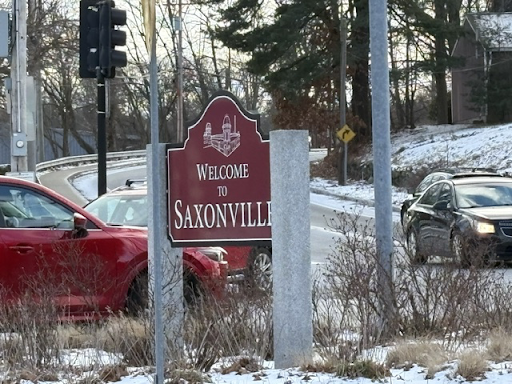
Originally known as Stone’s End, after early settler John Stone established a gristmill here in the 1640s, the village remained a farming and milling community for nearly two centuries. In 1824, the Saxon Factory Company built a large woolen mill along the Sudbury River. Although the company itself survived only a short time, the name “Saxonville” endured, and the growing village soon became known by the name of its most important industry.
The village grew rapidly during the nineteenth century as textile mills expanded along the river. Powered by the Sudbury River, the mills became one of Framingham’s largest employers, and workers’ homes, churches, schools, and businesses soon surrounded the factory, creating a classic New England mill village. By the 1870s, the Saxonville Mills were the town’s largest taxpayer and employed nearly ten percent of Framingham’s population.
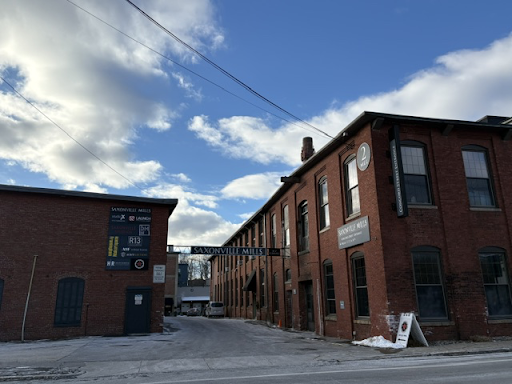
One of Saxonville’s claims to fame reaches far beyond Massachusetts. The mills became known for producing high-quality woolen textiles, including the bright red cloth used for the uniforms of the Royal Canadian Mounted Police. Under mill owner Michael Simpson, the complex was rebuilt in brick after a devastating fire in 1883, creating much of the mill complex that still stands today.
Like many New England mill villages, however, Saxonville eventually felt the effects of changing times. The textile industry gradually declined during the twentieth century as manufacturing moved to the southern United States and later overseas. After merging with the Roxbury Carpet Company in 1919, the mills continued operating for several decades before finally closing in the 1970s. What had once been the industrial heart of Framingham entered a new chapter.
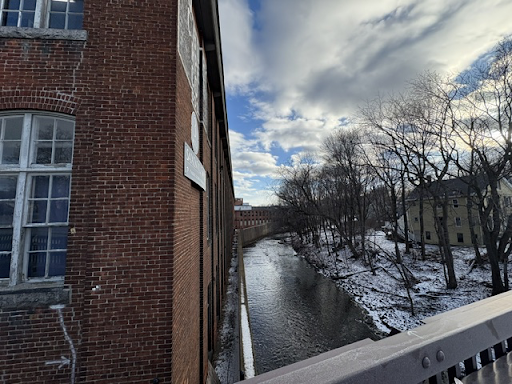
Walking through Saxonville today, many of the original brick mill buildings remain. Rather than standing empty, they have found new life as offices, artists’ studios, apartments, restaurants, and small businesses. Looking across the Sudbury River, it is easy to imagine the sound of water rushing through the mill race and the hum of machinery that once filled these buildings.
One of the things I enjoy most about exploring towns like Framingham is discovering that each village has its own identity. Saxonville is more than just a neighborhood. It is a reminder of how rivers shaped communities and how industry helped build New England. Its ability to reinvent itself while preserving its historic character makes it one of Framingham’s interesting places to explore.

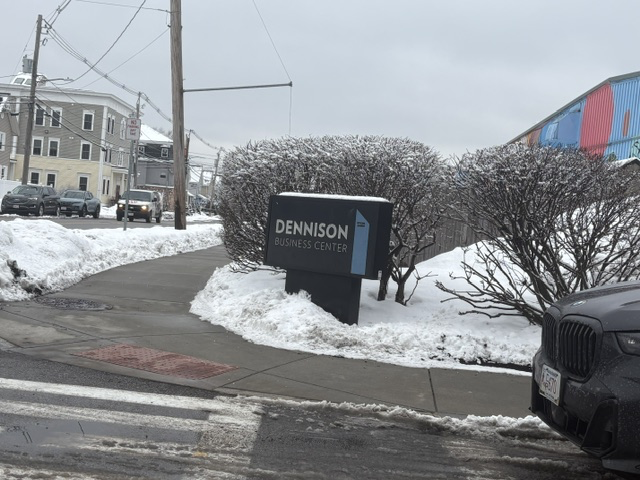
Read More From Nancy
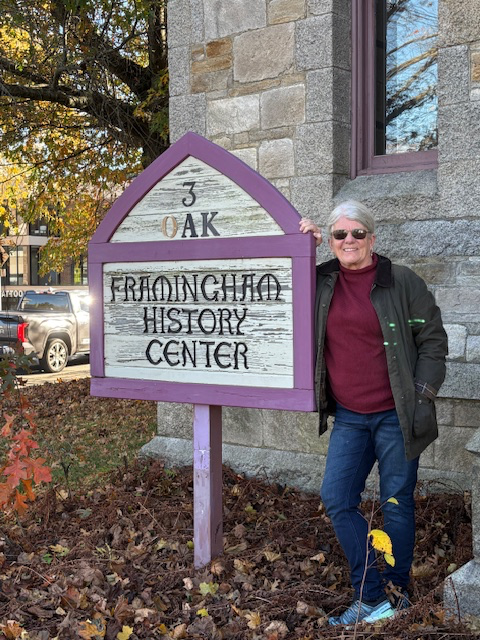
Framingham History Center
The home of the Framingham History Center is as much a historical artifact as the collections inside. The Center is housed in the former Edgell Memorial Library, a late 19th century structure that was completed in 1898. It was constructed as a public library through a private gift from philanthropist George Loring Edgell. This was an era when […]
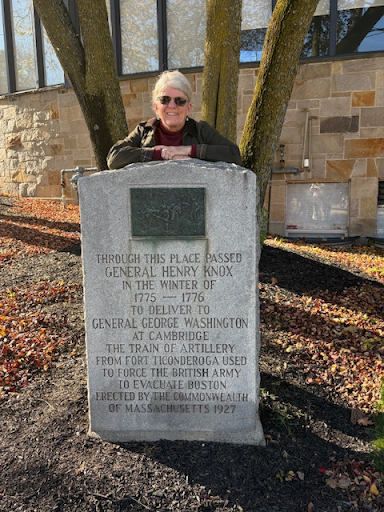
Henry Knox in Framingham
In Framingham, Massachusetts, there stands a granite block bearing an inscription that is easy to pass by without a second glance. Yet the words carved into this stone marks one of the most daring feats of the American Revolution: “Through this place passed Henry Knox in the winter of 1775–1776 to deliver to General George Washington […]
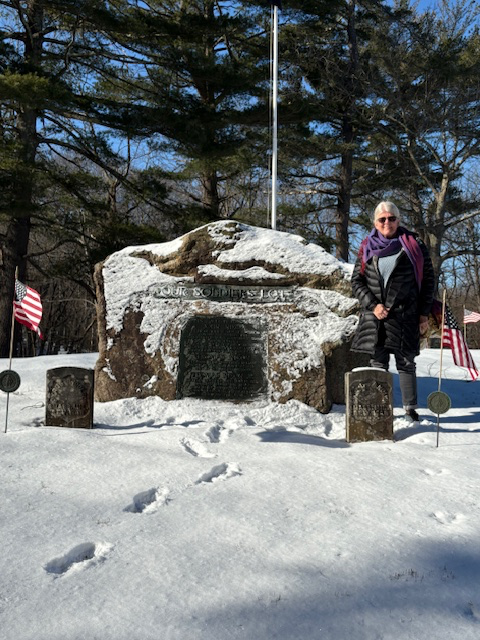
Old Soldier’s Lot
I drove to the Framingham Cemetery to discover the stone monument marking a section known as the Old Soldier’s Lot. Monuments like this quietly ask us to stop and remember. At the top of the plaque are the words: “This tablet in honor of John Nixon“. The monument recognized John Nixon, a Framingham native who played an important […]

