Sandwich Glass
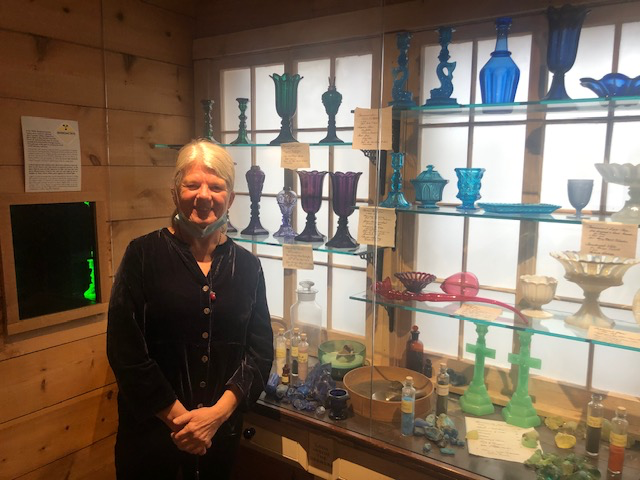
Inside the Sandwich Glass Museum, the shelves display the remarkable variety of glass that gave this Cape Cod town an international reputation. Deep cobalt blue, turquoise, amethyst, emerald green, ruby, and clear glass were formed into candlesticks, lamps, vases, dishes, goblets, compotes, and countless decorative objects. Together, these pieces reveal that “Sandwich glass” was never a single pattern or color, but a wide range of household and ornamental glass produced by highly skilled workers.
The story began in 1825, when Boston entrepreneur Deming Jarves established a glasswork in Sandwich. The business was incorporated the following year as the Boston & Sandwich Glass Company. Contrary to what might be assumed, Jarves did not choose Sandwich because of the sand on its beaches, which was unsuitable for making fine glass. The town offered a sheltered harbor and, most importantly, a large supply of wood to fuel the extremely hot furnaces.
The company initially produced blown and mold-blown glass, but it became especially important for perfecting the manufacture of pressed glass. In this process, a gather of molten glass was placed into a metal mold and forced into its shape with a mechanical plunger. The mold could reproduce complicated patterns much more quickly and consistently than traditional cutting by hand. This allowed the factory to create attractive tableware and household objects in large quantities, making decorative glass affordable to a much broader portion of the American public.
Many Sandwich pieces were made from lead-based flint glass, valued for its weight, clarity, brilliance, and ability to reflect light. Different minerals and metallic compounds were added to the molten mixture to create the rich colors visible in the display. Cobalt produced intense blues, while other carefully controlled ingredients created shades of green, amber, purple, red, and turquoise. Small variations in formulas, furnace temperatures, and production methods could alter the finished color, making Sandwich glass particularly interesting to collectors.
The forms were as varied as the colors. The factory produced practical objects used in ordinary homes as well as elaborate pieces intended for display. Lamps, drinking glasses, plates, bowls, salts, pitchers, candlesticks, perfume bottles, and covered dishes all came from the Sandwich furnaces. Pressed patterns imitated the appearance of more expensive cut glass, placing objects that once represented luxury within reach of middle-class families.
The company transformed Sandwich from a largely agricultural and maritime community into an important industrial town. Hundreds of skilled glassworkers and their families came to live here, while related businesses developed to supply, package, and transport the company’s products. The arrival of the railroad in 1848 was closely tied to the need to carry Sandwich glass to markets throughout the country.
By the late nineteenth century, the company faced growing competition from factories in Pennsylvania, Ohio, and West Virginia, where fuel and transportation were less expensive. A labor dispute and worker lockout in 1888 contributed to the closing of the Boston & Sandwich Glass Company after more than six decades of production.
Although the furnaces were extinguished, the glass survived. Each piece preserves the relationship between artistic design and industrial innovation that made the company successful. Looking at the brilliant colors and intricate forms in this display, it becomes possible to understand why Sandwich became known as “the town that glass built” and why its glass remains valued long after the factory.
Read More From Nancy
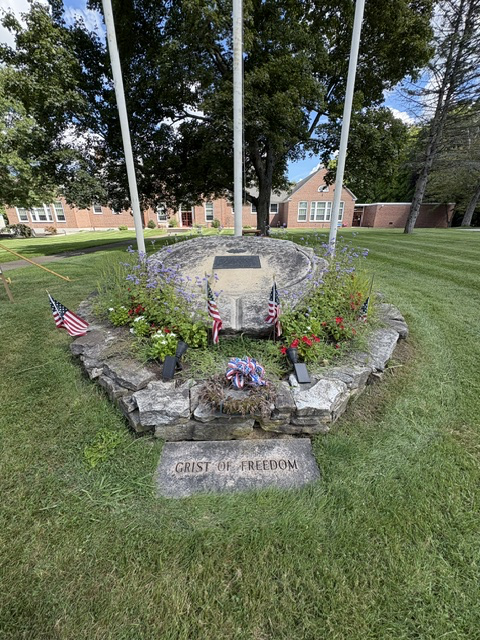
The Grist of Freedom
On the grounds of the Sandwich Public Library stands a distinctive memorial built around a large, weathered millstone. Three flagpoles rise behind it, while American flags, flowers, and carefully maintained plantings surround the stone. At the front, the words “Grist of Freedom” provide the memorial with its name and suggest its larger purpose. A millstone […]
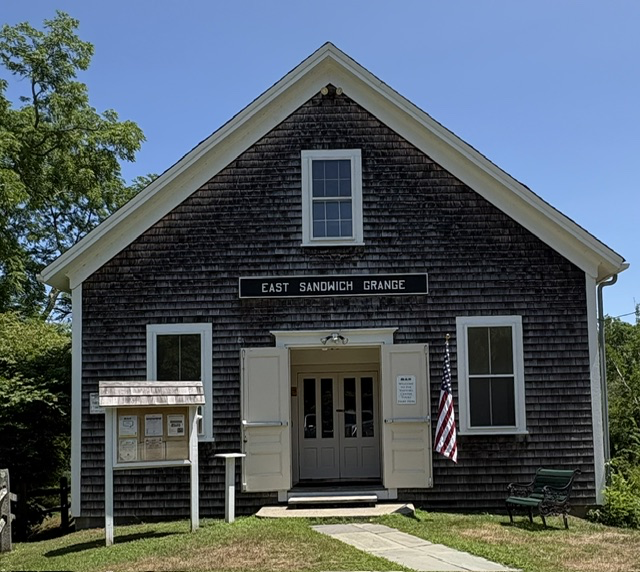
East Sandwich Grange Hall
While visiting the Benjamin Nye Homestead, I also stopped at this simple shingled building nearby. The sign above the entrance identifies it as the East Sandwich Grange. It may not be as old as the 1678 Nye Homestead next door, but it represents another important part of life in this farming community. The East Sandwich […]
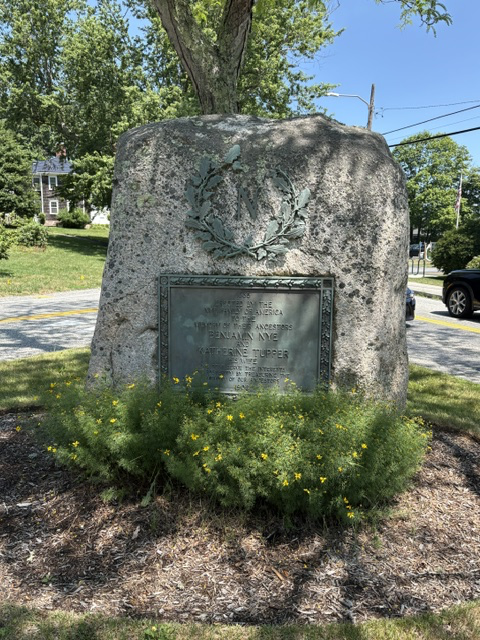
Benjamin Nye and Katherine Tupper Memorial
While exploring Sandwich, I came across this large stone memorial to Benjamin Nye and his wife, Katherine Tupper. I had already visited the Benjamin Nye Homestead in East Sandwich, so finding their names again in another part of town helped connect the house I had seen with the larger story of the family. Benjamin Nye […]

