Landing Place of William Penn
Visiting New Castle in May of 2026 was so much more than I expected. It was my first time exploring this historic town, so everything was new to me. As I drove into town, my first impression was that I had arrived in Williamsburg, Virginia. It didn’t take long, however, to realize that unlike Williamsburg, which was carefully reconstructed, New Castle is the real thing. Here is a remarkably preserved colonial town where the streets, homes, churches, and public buildings have stood for centuries. Exploring its buildings, monuments, and waterfront was an exciting step back into early American history.
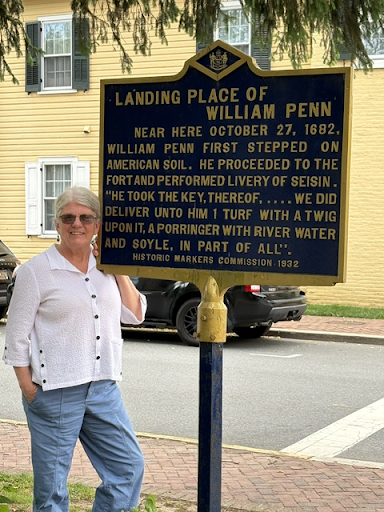
One of the most significant discoveries was this historic marker commemorating the landing of William Penn. Near this spot, on October 27, 1682, Penn first stepped onto American soil before continuing north to establish Philadelphia.
What I found especially interesting was learning that Penn did not come to America intending to found Delaware. His dream was Pennsylvania, the colony granted to him by King Charles II in payment of a debt owed to Penn’s father. However, Pennsylvania had no direct access to the Atlantic Ocean without control of the Delaware River. Before Penn could begin his “Holy Experiment” of religious freedom and representative government in Pennsylvania, he first had to take possession of the Lower Counties on the Delaware, lands that had been transferred to him by the Duke of York. In many ways, New Castle became the gateway to Pennsylvania. Although Penn is remembered as the founder of Pennsylvania, his first official act in America took place here in Delaware.
The marker describes the ancient English legal ceremony known as “livery of seisin.” Upon arriving at the fort, Penn was formally presented with its key, along with a piece of turf bearing a twig and a vessel containing water and soil from the Delaware River. These symbolic gifts represented the legal transfer of the Duke of York’s lands into Penn’s possession. Though the ceremony may seem unusual today, it marked the official beginning of Penn’s authority over the Lower Counties and paved the way for the establishment of Pennsylvania and the future State of Delaware.
Read More From Nancy
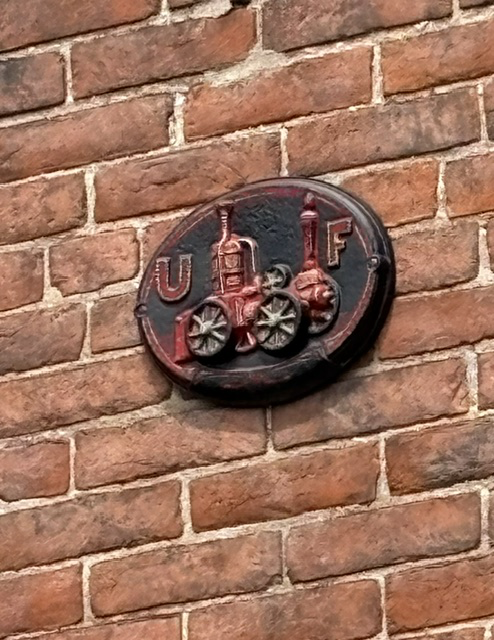
Union Fire Company
One of the things I enjoy most about exploring historic towns is noticing the small details that are easy to overlook. While walking through New Castle, I spotted this cast-iron plaque mounted high on the side of a brick building. At first I wasn’t sure what it represented, but I soon learned that it was […]
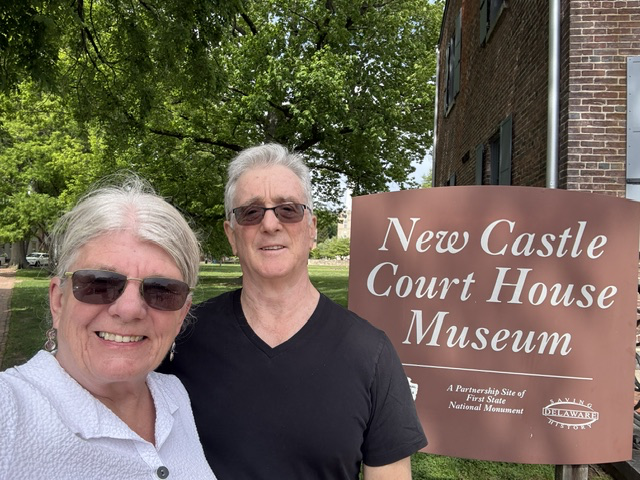
Court House Museum
One of the highlights of our visit to New Castle was the historic Court House, one of the oldest surviving courthouses in the United States. Standing before this building, it is easy to appreciate that it was much more than a courthouse. For nearly a century, it served as the center of government for Delaware, […]
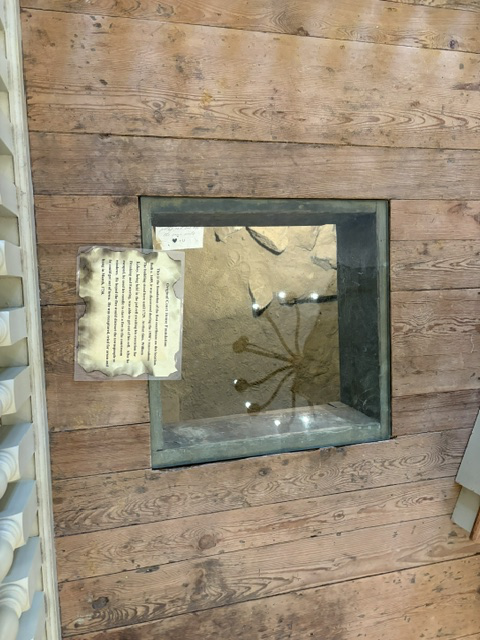
Beneath the Courthouse
Sometimes the most interesting history is literally beneath our feet. Inside the New Castle Court House, this small glass opening in the floor reveals part of the foundation of the first courthouse built on this site in 1689. The remains were discovered during renovations to the courthouse in the 1950s. Rather than covering them again, […]

