Kenai Fjords National Park
Sweeping from a rugged coastline to glacier-crowned mountains, Kenai Fjords National Park encompasses more than 600,000 acres of wilderness on Alaska’s Kenai Peninsula. During our stay in Seward, we had the opportunity to experience this enormous landscape in two very different ways both from the water and from the land.
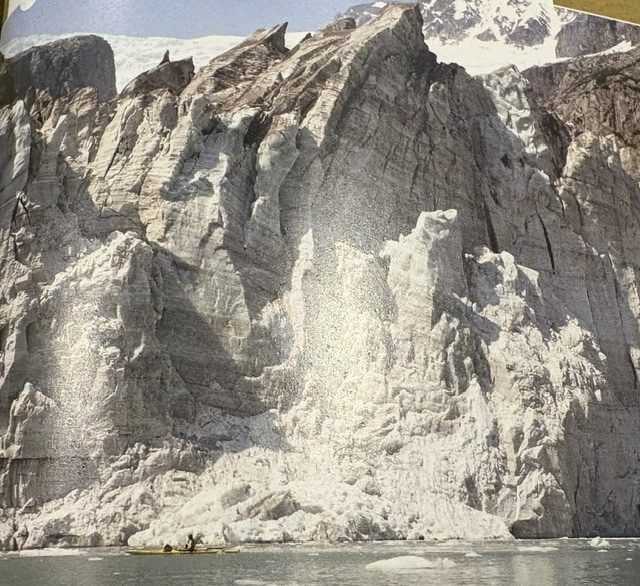
Our first experience was a boat trip out of Seward into the coastal waters of Kenai Fjords. Much of the park cannot be reached by road, making a boat one of the best ways to see its dramatic coastline. Traveling through the fjords, we passed steep cliffs, rocky islands, and glaciers descending from the mountains toward the sea. From the boat, the scale of the landscape became apparent, with our small vessel surrounded by mountains and immense walls of rock and ice.
The fjords themselves were created by glaciers. Over thousands of years, enormous masses of moving ice carved deep valleys through the mountains. As the glaciers retreated and sea levels rose, ocean water filled these valleys, creating the long, narrow fjords that give the park its name.
At the heart of this landscape is the Harding Icefield, one of the largest icefields contained entirely within the United States. Covering hundreds of square miles, it feeds nearly 40 glaciers that flow outward in different directions toward the surrounding valleys and coastline.
On another day, we experienced this glacial landscape from an entirely different perspective. We drove from Seward to the Exit Glacier area, the only part of Kenai Fjords National Park accessible by road. Exit Glacier flows down from the Harding Icefield and provides visitors with an opportunity to approach this enormous system of ice from the land.
It was here that we had our first experience walking out onto glacial ice. Standing on the ice gave us a completely different appreciation for its size and power. Yet what we were able to experience was only a very small part of Exit Glacier, which itself is only one outlet of the much larger Harding Icefield.
Kenai Fjords is also rich in wildlife. Its productive coastal waters support sea otters, harbor seals, Steller sea lions, orcas and humpback whales. Bald eagles, puffins and other seabirds can be seen along the coastline, while bears, moose and mountain goats inhabit the forests and mountains farther inland.
President Jimmy Carter first protected the area as Kenai Fjords National Monument on December 1, 1978. Two years later, on December 2, 1980, Congress established Kenai Fjords National Park through the Alaska National Interest Lands Conservation Act. The park was created to protect the Harding Icefield, its glaciers, the coastal fjords and the remarkable ecosystems surrounding them.
Our time in Seward allowed us to experience two very different sides of Kenai Fjords. From the boat, we saw the enormous coastal landscape shaped by glaciers reaching toward the sea. At Exit Glacier, we were able to approach that same world of ice from the land and, for the first time, actually walk on a glacier.
Together, those experiences gave us just a taste of the vastness of Kenai Fjords and helped us begin to appreciate the extraordinary scale of Alaska.
Read More From Nancy
North Cascades National Park
North Cascades National Park came into my travels during a visit to Seattle, where Marty was recording techniques classes. With a few hours to myself, I decided to make the drive, about three hours from the city, and what I found felt like stepping into another world They call this region the “North American Alps,” and […]
Crater Lake National Park
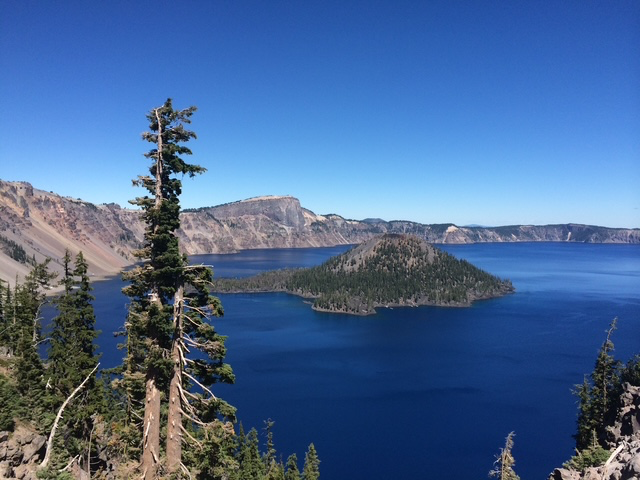
I visited Crater Lake National Park on one of my solo excursions. It was one of those places I wished I had shared with someone else. The color of the lake matched the bluest of skies as I walked along the rim, a blue so intense it almost felt unreal. There are no rivers flowing […]
Fort Vancouver National Historic Site
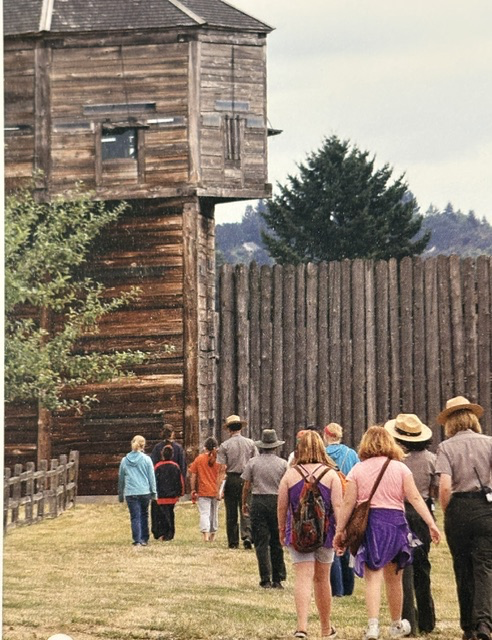
Fort Vancouver was once the administrative headquarters and principal supply depot for the Hudson’s Bay Company’s vast Columbia Department. From this location on the north bank of the Columbia River, the company directed an enormous fur-trading network that stretched from the Rocky Mountains to the Pacific and from Russian Alaska south toward California and Hawaii. […]

