John Eliot and New Roxbury
My interest in Woodstock began with my connection to Natick. Established in 1651, Natick was the first of the Massachusetts “praying towns” associated with John Eliot’s missionary work among the Nipmuc people. Learning about Eliot’s years in Natick made me curious about the other New England communities connected to his travels.
That curiosity brought me to Woodstock, where Eliot had traveled to preach among the Nipmuc people of Wabaquasset. Wabaquasset was an established Indigenous community and became one of the largest praying towns in the region. Although many miles separated it from Natick, the two places were connected through Eliot and the network of communities he visited.
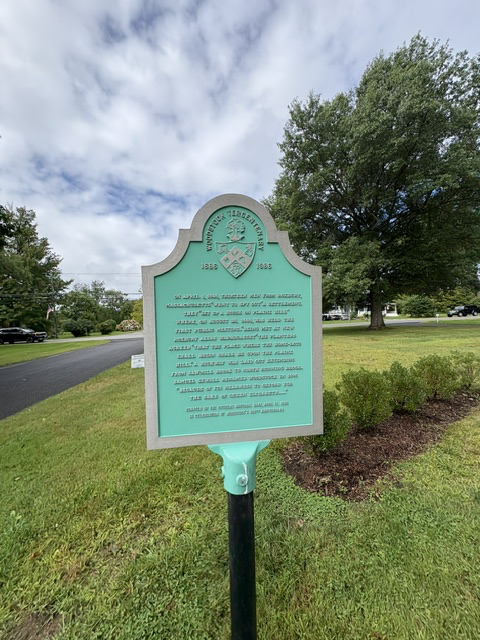
The historical marker on Woodstock Hill adds another part to that connection. It records that in 1686, thirteen men left Roxbury, Massachusetts, to establish a settlement at Wabaquasset, following the route Eliot had traveled before them. They called their settlement New Roxbury, honoring the community they had left behind and the town where Eliot had served as minister for many years.
Standing before this marker, I could trace a path connecting three places: Natick, where Eliot established the first praying town; Roxbury, where he served as minister; and Woodstock, where he traveled to Wabaquasset and where settlers from Roxbury later established a new community. I had come to Woodstock because of a familiar piece of Natick’s history, and here I discovered how much farther that story extended.
Read More From Nancy
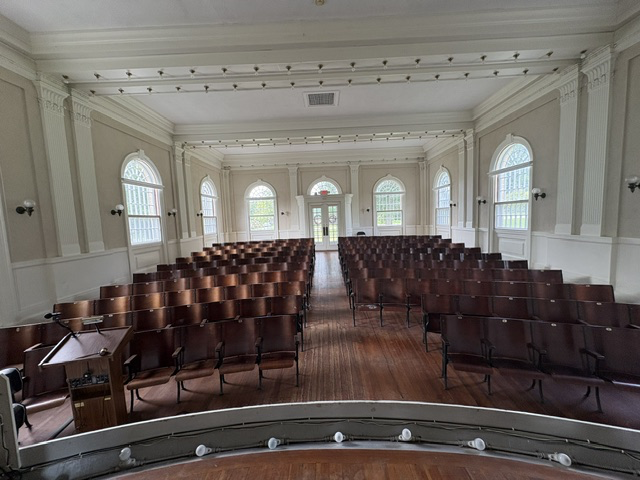
The Lecture Hall at Palmer Memorial Hall
The lecture hall inside Palmer Memorial Hall was designed to seat approximately two hundred people and included a stage and backstage area. Its sloping wooden floor, rows of folding chairs, and tall arched windows created a welcoming setting for lectures, performances, meetings, and other community gatherings. The first public program was held on May 2, […]
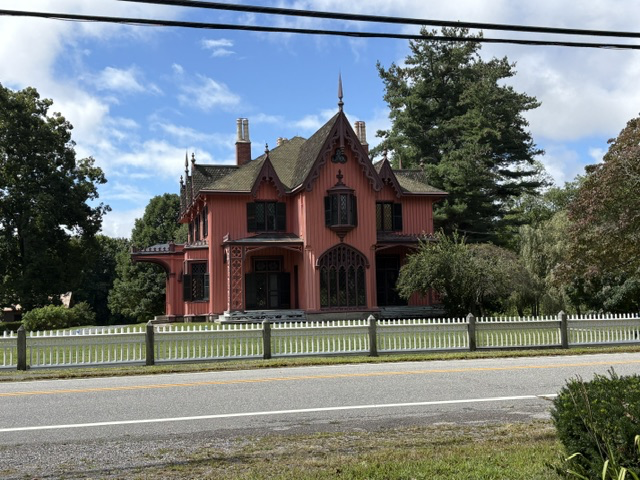
Roseland Cottage
Roseland Cottage was constructed in 1846 as the summer home of Henry Chandler Bowen and his family. Bowen was born in Woodstock but built his career in New York City as a successful businessman, newspaper publisher, and philanthropist. Although he spent much of his adult life in New York, he maintained a strong attachment to […]
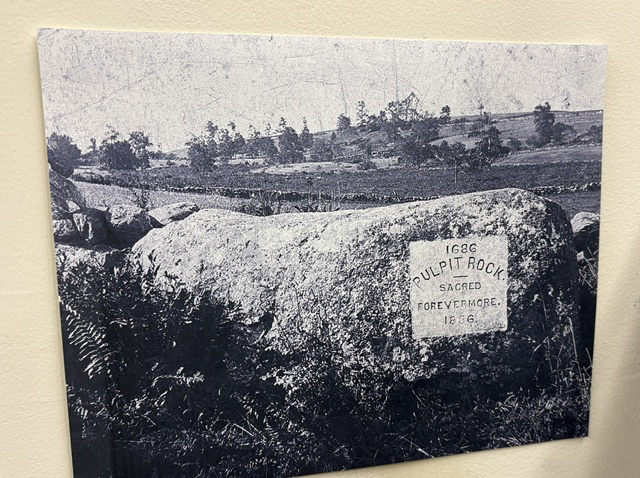
Pulpit Rock
When Woodstock’s first English settlers arrived from Roxbury, Massachusetts, in 1686, they entered a landscape without churches, meetinghouses, or other public buildings. Until a meetinghouse could be constructed, they gathered for Sunday worship around a large glacial boulder that became known as Pulpit Rock. In this open-air sanctuary, the rock served as a natural focal […]

