Founding of New Brunswick Monument
A tall granite cross in Saint John’s King’s Square marks the political events that created the Province of New Brunswick. Its story begins with the conclusion of the American Revolution, when thousands of people who had remained loyal to the British Crown left the newly independent United States and traveled north.
In 1783, approximately 14,000 Loyalist refugees arrived in the region that would become New Brunswick. Many settled along the Saint John River and around the Bay of Fundy. The sudden increase in population placed new demands upon a territory that was then governed as part of Nova Scotia. Halifax was distant, communication was difficult, and the growing settlements wanted a government closer to home.
Britain responded in 1784 by separating the territory north of the Bay of Fundy from Nova Scotia and creating the Province of New Brunswick. The new province was named in honor of King George III, whose royal family belonged to the House of Brunswick. Thomas Carleton was appointed its first governor, and a new colonial administration began taking shape.
Saint John was central to these events. The Loyalist settlements of Parr Town, on the eastern side of the harbor, and Carleton, on the western side, were united by royal charter in 1785. Together they became the City of Saint John: the first incorporated city in what is now Canada.
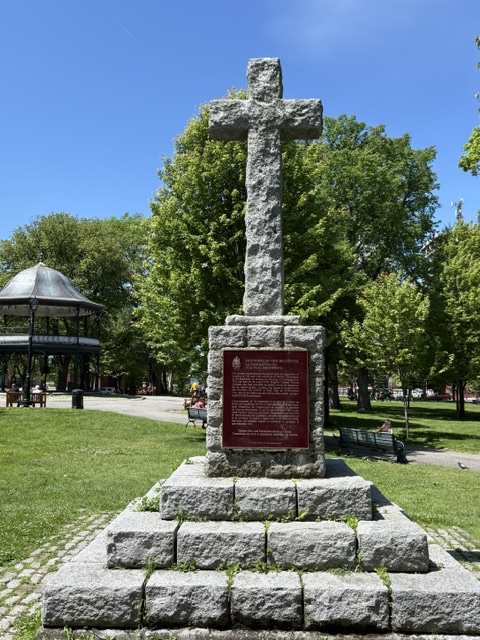
The monument stands in King’s Square, at the heart of the city that grew from those Loyalist settlements. Its plaque does more than record the date on which a province was established. It explains why New Brunswick was created and how the movement of people following the American Revolution permanently reshaped this part of Canada. What began as a struggle among Britain and its American colonies ultimately changed the map far beyond the new nation’s borders.
Read More From Nancy
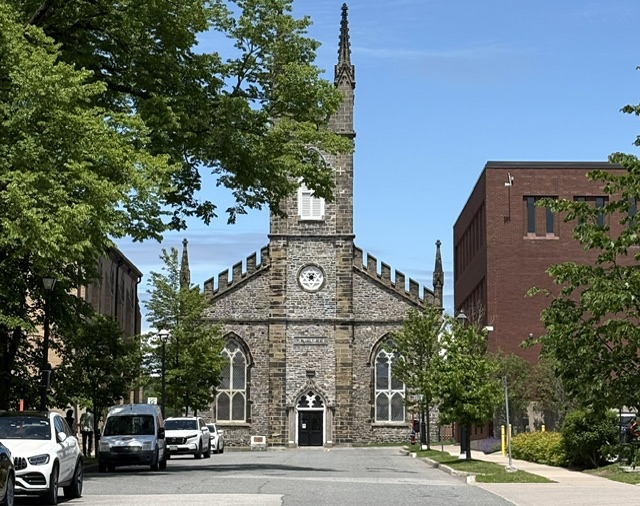
The Stone Church
At the end of Wellington Row, the narrow spire of St. John’s Anglican Church rises above one of Saint John’s oldest surviving places of worship. Commonly called the Stone Church, it has stood on Carleton Street for two centuries, witnessing the city’s growth, its devastating fires, and the many changes that have reshaped the surrounding […]
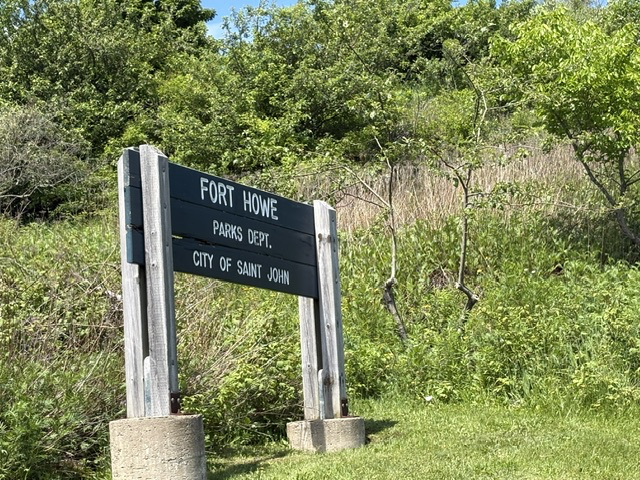
Fort Howe
From its position high above Saint John, Fort Howe once guarded the entrance to the Saint John River and the harbor below. The location offered British soldiers an expansive view of approaching ships and made the ridge a natural place from which to defend the settlement. The fort was constructed in 1777 during the American […]

Imperial Theatre
The survival of Saint John’s Imperial Theatre depended upon an extraordinary agreement: a one dollar down payment followed by a promise to raise nearly one million dollars within a year. The community kept that promise, saving a building that had entertained generations of Saint John residents and restoring it to its original purpose. The Imperial […]

