History Along a Downtown Passage
While exploring downtown Longmont, I discovered a mural stretching along a pedestrian passage. Portraits, a steam locomotive, covered wagons, farm fields, and industrial buildings unfolded across the wall. Below them, large botanical drawings surrounded poems. There was enough here to make me stop and look closely, following the scenes and wondering about the people whose lives had become part of this public artwork.
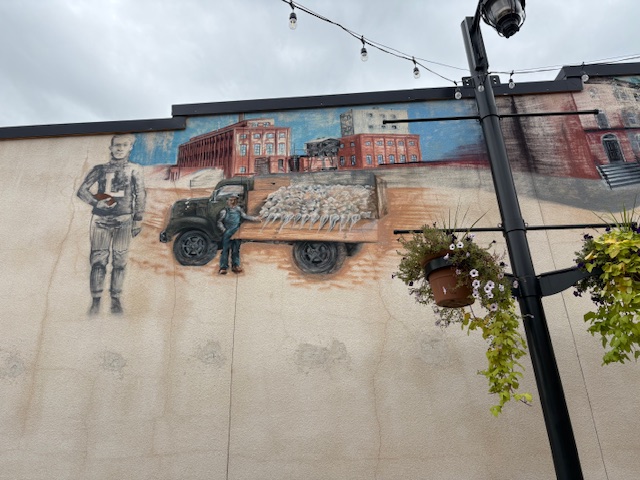
Called “Longmont’s Story,” the mural was painted in 2013 by local artist Gamma Acosta. It occupies the east breezeway in the 300 block of Main Street, where an ordinary passage became an outdoor gallery. Commissioned by the Longmont Council for the Arts and the Longmont Downtown Development Authority, the project took Acosta approximately four months to complete. His subject was the city’s evolution, expressed through images that bring its past into the everyday downtown landscape.
The mural’s historical scenes invite the viewer to consider several chapters together. Indigenous portraits appear alongside images of migration, transportation, agriculture, and work. Covered wagons cross an open landscape, while a locomotive introduces another means of movement. Fields and farm buildings connect the town to the surrounding countryside. Rather than presenting history through dates alone, the artwork gives it faces, gestures, and recognizable activities.
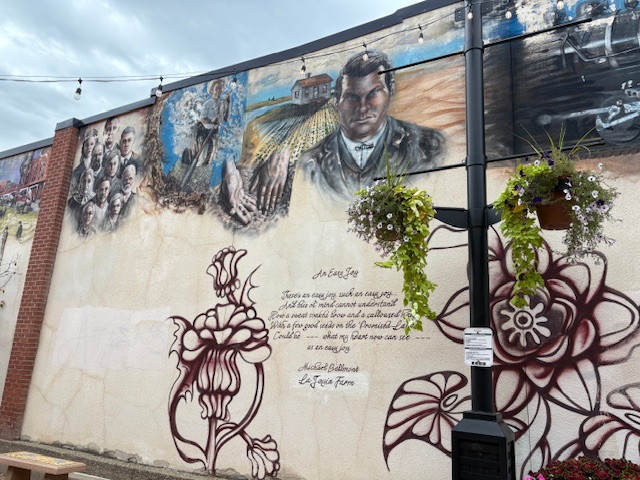
Agriculture provides important context for those scenes. Longmont’s early growth included flour mills beginning in 1872 and the Empson vegetable cannery in 1889. Agricultural processing connected the produce of surrounding farms with employment and commerce in town. The Kuner-Empson cannery and Great Western Sugar factory remained significant parts of that economy before closing in the 1970s.
Against that background, the mural’s worker beside a loaded truck and its substantial industrial buildings become especially meaningful. They direct attention to the labor behind a community’s development. The portraits and working hands encourage us to think about people as well as enterprises, the individuals who planted, harvested, transported, and processed the goods on which local livelihoods depended.
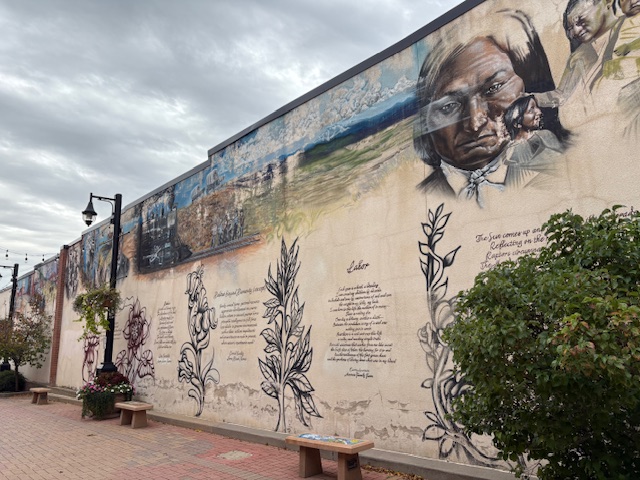
What appealed to me was the way this history occupied a place people could simply walk through. Benches, hanging flowers, and lights share the passage with the painted scenes. The mural makes room for discovery within an ordinary downtown visit.
I had stopped because the artwork caught my attention. Learning its background gave me more to consider: how a community chooses to represent itself, whose work it remembers, and how art can make those stories accessible. In Longmont, a passage between buildings became a place to encounter the city’s past through both images and words.
Read More From Nancy
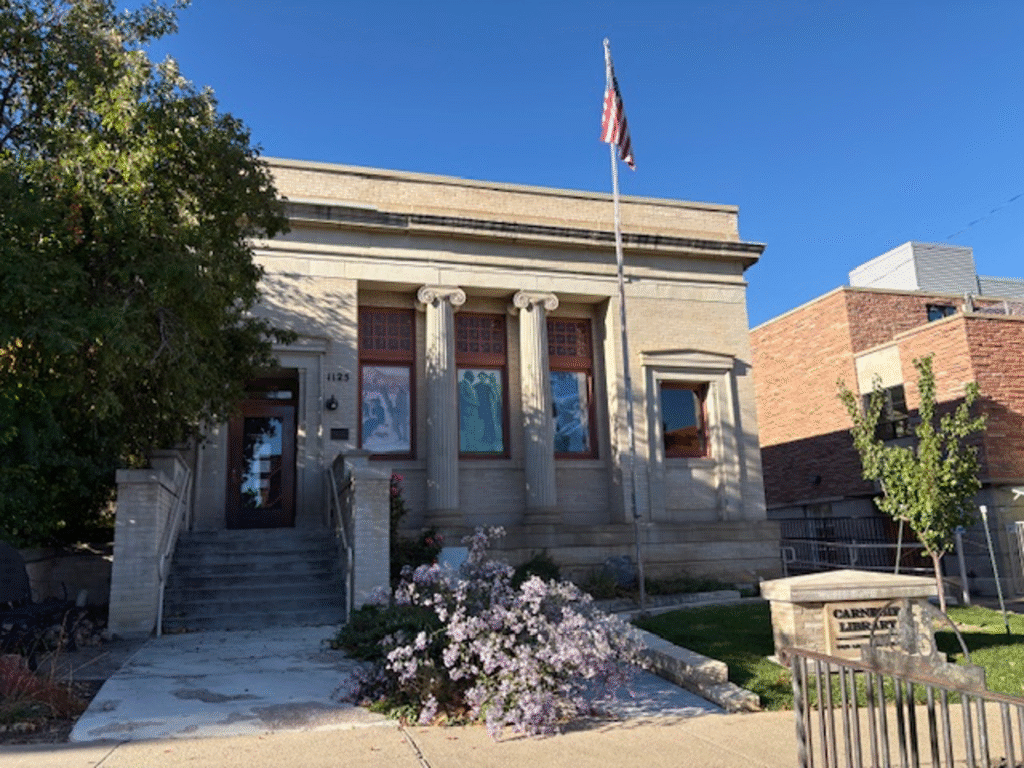
Andrew Carnegie Library
At the turn of the 20th century, Andrew Carnegie, a Scottish-born industrialist who rose from poverty to become one of America’s wealthiest men, turned his fortune toward a vision to make knowledge and education accessible to everyone. Carnegie wrote that the rich should act as stewards of their fortune to improve society. For him, the most powerful way to do this […]
Colorado Towns
Ramblin’ through the small towns of Colorado, I am, of course, captured first by the extraordinary beauty of nature: the colorful aspens, the vast sky and the rhythm of rivers carving through the landscape. But what holds me the longest is not the landscape itself, but the traces of people who came before and the moments […]

