Chief Niwot
All around the Niwot area of Colorado, the name Left Hand appears on creeks, trails and the town itself. Standing before this statue and plaque in a small park, I felt drawn to understand who he was and why his memory endures.
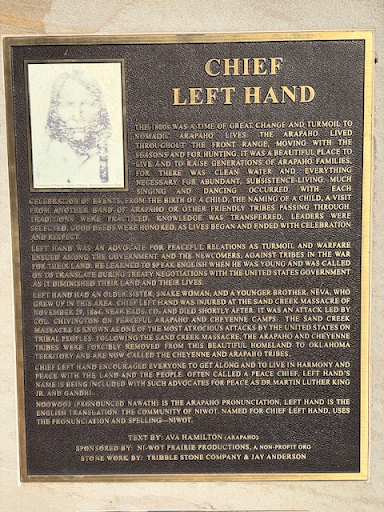
Chief Niwot, whose name in Arapaho means Left Hand, was a 19th century leader of the Southern Arapaho people. His homeland was the Boulder Valley where the tribe hunted buffalo and wintered in sheltered valleys.
When prospectors arrived in 1858 during the Pike’s Peak Gold Rush, Chief Niwot was among the first to greet them. He spoke both Arapaho and English and sought dialogue over conflict. He urged his people to coexist peacefully with the settlers into their ancestral lands.
Niwot stood on a ridge overlooking the Boulder Valley and said:
“People seeing the beauty of this valley will want to stay, and their staying will be the undoing of the beauty.”
Niwot’s efforts toward peace lasted until 1864, when he and his band were caught up in the tragedy of the Sand Creek Massacre. This was a brutal attack by US troops on a camp of mostly women, children and elders who had been promised protection. Chief Left Hand was among those killed.
Today the town of Niwot bears his name as a witness to his presence. This man is remembered not for the conquest of war, but for his compassion and foresight.
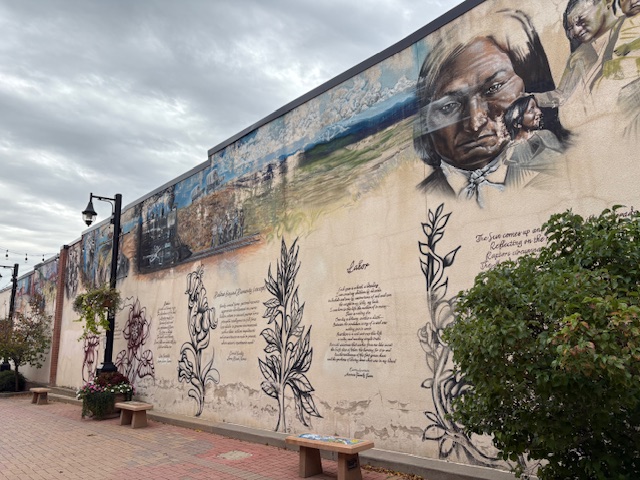
Read More From Nancy
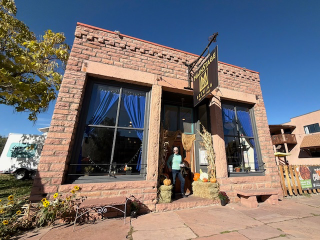
Colorado Towns
Ramblin’ through the small towns of Colorado, I am, of course, captured first by the extraordinary beauty of nature: the colorful aspens, the vast sky and the rhythm of rivers carving through the landscape. But what holds me the longest is not the landscape itself, but the traces of people who came before and the moments […]
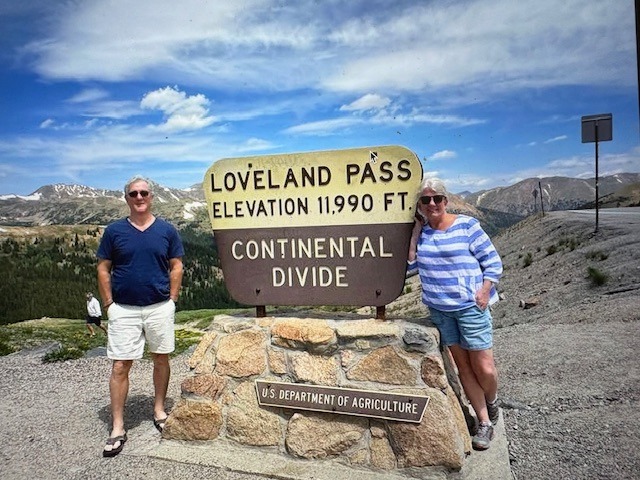
Loveland Pass and the Continental Divide
During our travels in Colorado, Marty and I stopped at Loveland Pass, where a sign marks the Continental Divide at an elevation of 11,990 feet. Surrounded by mountain ridges, we were standing at a boundary that shapes the journeys of rivers across much of the continent. The Continental Divide separates watersheds draining toward different oceans. […]

