Gilman Garrison House
Built in 1709 near the Squamscott River, the Gilman Garrison House preserves an unusual combination of fortified construction, Georgian domestic rooms, and later commercial uses. Its history connects Exeter’s early water-powered economy with generations of residents who adapted the building to support their livelihoods.
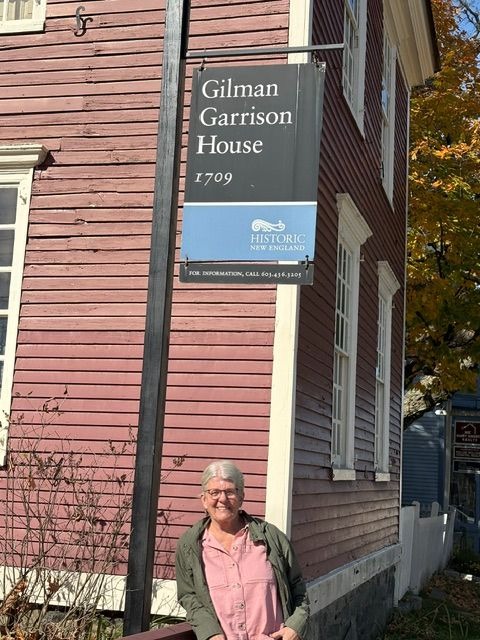
The Gilman family owned profitable sawmills along the river. Their fortified house protected both the household and its valuable industrial location. Massive horizontal timbers formed its walls, while defensive features included gun ports and a protected room. The building stood on Indigenous homelands, where colonial settlement and dams disrupted established patterns of fishing and river travel.
The Gilman family owned profitable sawmills along the river. Their fortified house protected both the household and its valuable industrial location. Massive horizontal timbers formed its walls, while defensive features included gun ports and a protected room. The building stood on Indigenous homelands, where colonial settlement and dams disrupted established patterns of fishing and river travel.
Later owners found other ways to earn income within its rooms. Ebenezer Clifford accommodated Phillips Exeter Academy students, including the young Daniel Webster. After inheriting the property in 1821, Clifford’s daughters, Betsy and Eunice, continued taking boarders and operated a successful millinery shop. Subsequent owner Asenath Harvey Darling maintained the hat-making business, making the house part of Exeter’s history of women’s enterprise.
Frances Perry Dudley purchased the property in 1912 and began restoring it. Her son, William Perry Dudley, continued the work and developed a museum. Their preservation saved important architectural features, although some stories passed down about the house—including supposed escape tunnels—were later found to lack evidence. The building therefore preserves a history of how the past was interpreted as well as how people lived.
Historic New England acquired the house in 1965. Tree-ring analysis later confirmed its 1709 construction date, replacing earlier assumptions that it dated to the seventeenth century. Its surviving structure continues to provide evidence through which the house’s long history can be examined and understood.
Read More
Read More From Nancy
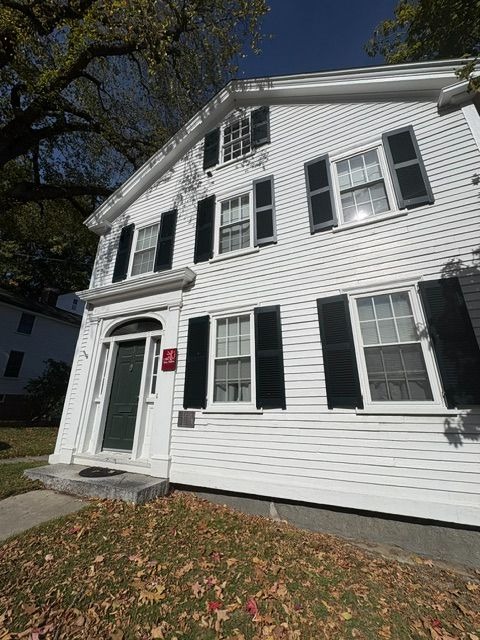
Lewis Cass House
A plaque commemorating Lewis Cass connects this Exeter house with a statesman whose career reached across the expanding United States. Born in Exeter on October 9, 1782, Cass attended Phillips Exeter Academy before leaving New England. He became a territorial governor, cabinet secretary, diplomat, senator, and presidential candidate. Cass established a legal career in Ohio […]
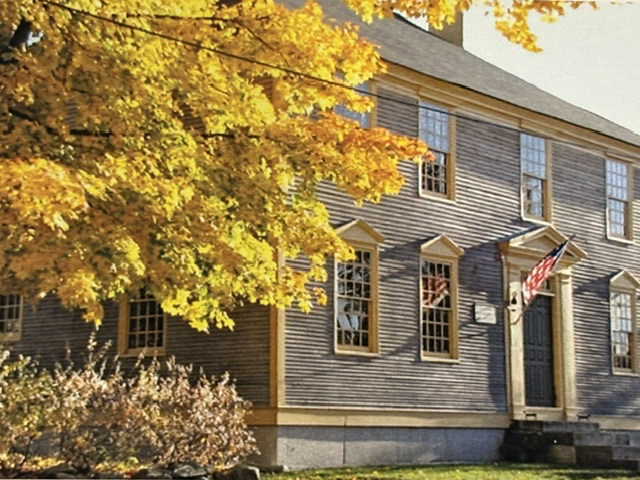
Folsom Tavern
One of the things I enjoy discovering is that many of the most important homes in American history were also places of business. The Folsom Tavern in Exeter is one of those places. Built around 1775 as the home of Colonel Samuel Folsom and his family, it also served as the community’s tavern, where travelers […]
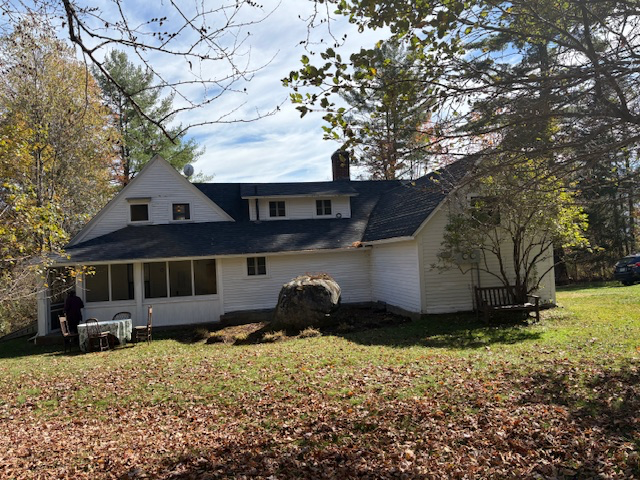
The Frost Place
This summer, we visited The Frost Place in Franconia, New Hampshire, the hillside farmhouse where Robert Frost lived with his family from 1915 to 1920. Standing on the front porch, the view looking towards the White Mountains is spectacular. This is the home when Frost’s career was beginning to rise. When Frost moved to Franconia in 1915, […]

