George H.W. Bush Presidential Library
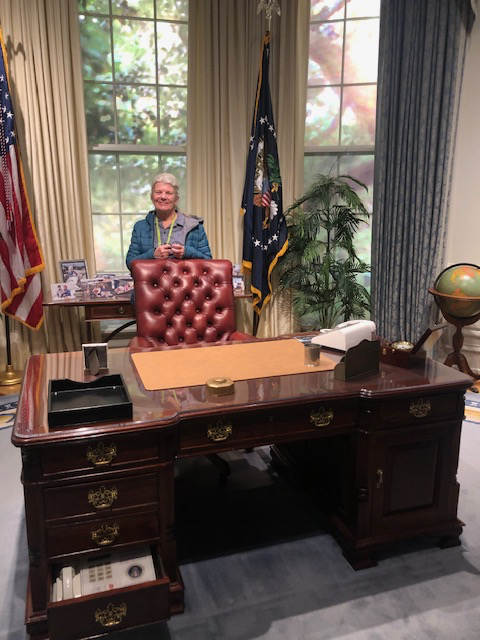
Presidential libraries give us an opportunity to explore American history through the life of the person who occupiedthe Oval Office. Our visit to the George H.W. Bush Presidential Library and Museum at Texas A&M University in College Station, Texas, was especially interesting because Bush’s story encompasses so much more than his four years as president.
George Herbert Walker Bush was only eighteen when he enlisted in the U.S. Navy following the attack on Pearl Harbor. He became one of the Navy’s youngest aviators, flew combat missions in the Pacific during World War II, and was shot down in 1944. Rescued at sea by an American submarine, he returned to combat and completed his wartime service before coming home to begin an entirely different life.
What followed was an extraordinary progression through American public service. Bush served in Congress, as U.S. ambassador to the United Nations, as America’s chief representative in China, as director of the CIA, and for eight years as Ronald Reagan’s vice president. In 1989, he became the 41st president of the United States.
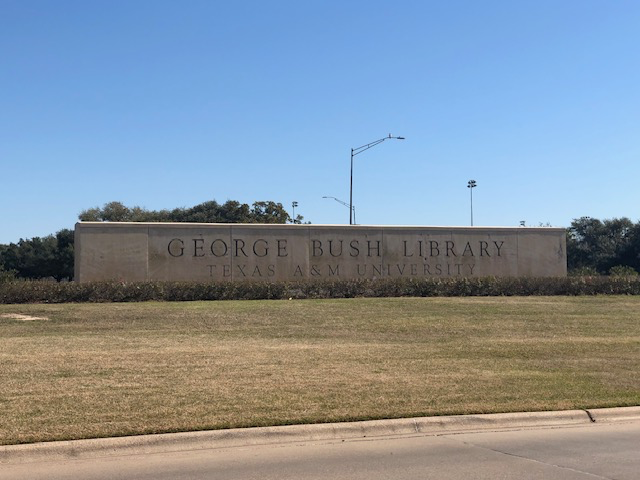
The library opened in 1997 on the campus of Texas A&M, a university with which Bush developed a close relationship. Although he had attended Yale rather than Texas A&M, he chose College Station for his presidential library, and the university became an important part of preserving his legacy and encouraging the study of government and public service.
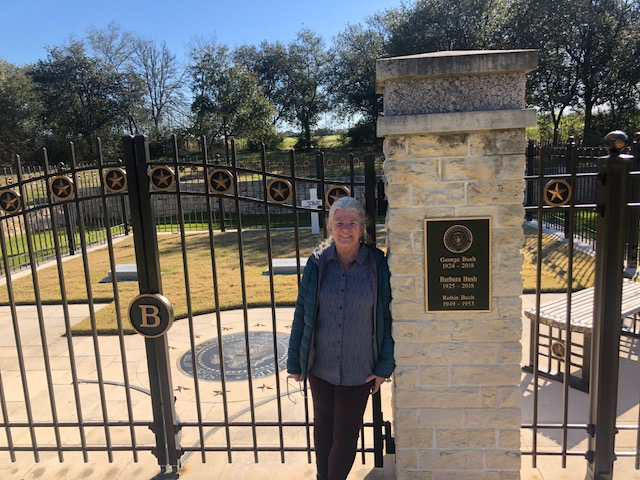
A path on the grounds leads to the Bush family gravesite. George H.W. Bush, who died in 2018 at the age of 94, is buried here beside Barbara, his wife of 73 years. Nearby rests their daughter Pauline Robinson “Robin” Bush, who died from leukemia in 1953 when she was only three years old.
After walking through galleries devoted to war, diplomacy, elections, the presidency and some of the defining international events of the 20th century, you arrive at this quiet family burial place. Perhaps that is what I appreciate most about visiting presidential libraries. They allow us to study the events that fill our history books, but they also give us glimpses of the human lives behind them. At College Station, those two stories exist side by side: a life spent on the world stage and the much more personal story of the family that accompanied him through it.