First Church of Christ
Driving to explore Lancaster, it was easy to see where the center of town has been for generations. Anchoring the broad common is the stately First Church of Christ, whose graceful dome rises above the surrounding landscape and serves as one of the town’s most recognizable landmarks. Built in 1816 and designed by renowned architect Charles Bulfinch, the church reflects the Federal style and the importance of the meetinghouse in early New England life.
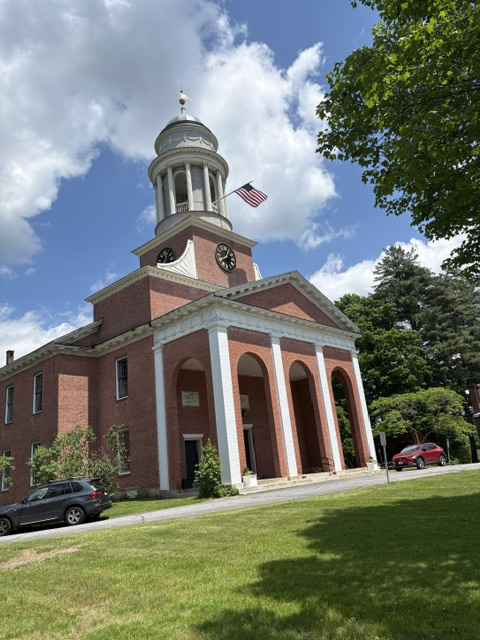
The congregation itself dates to the earliest years of Lancaster’s settlement, and earlier meetinghouses stood on or near this site. For centuries, the church and the common formed the heart of the community, where residents gathered not only for worship but also for civic affairs and important events. In many ways, the arrangement embodies the classic New England village pattern, with church, common, and public buildings creating a shared center for community life.
Some towns reveal their history immediately. In Lancaster, the church and common make it clear that this has long been the center of town, preserving much of the character and appearance that have defined the community for more than two hundred years. Today, the First Church of Christ remains one of Lancaster’s architectural treasures and a visible link to the town’s colonial and early American past.
Read More From Nancy
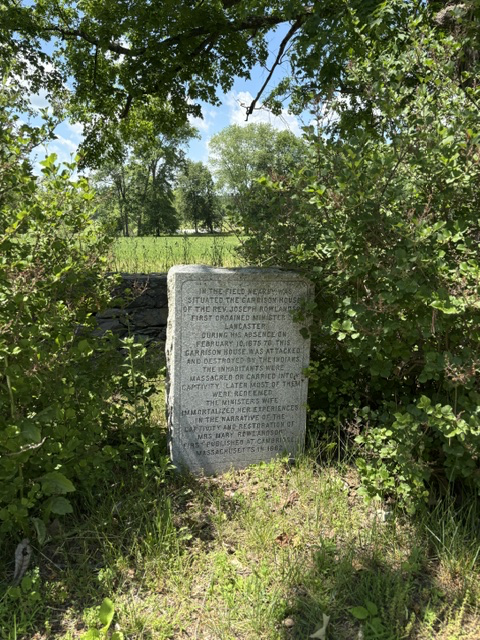
Site of Rowlandson Garrison
One of the most poignant markers I encountered in Lancaster commemorates the site of the garrison house of Reverend Joseph Rowlandson, where one of the most dramatic episodes of King Philip’s War unfolded. On February 10, 1676, during an attack on the frontier settlement, Native warriors destroyed much of Lancaster. The Rowlandson home was burned, […]
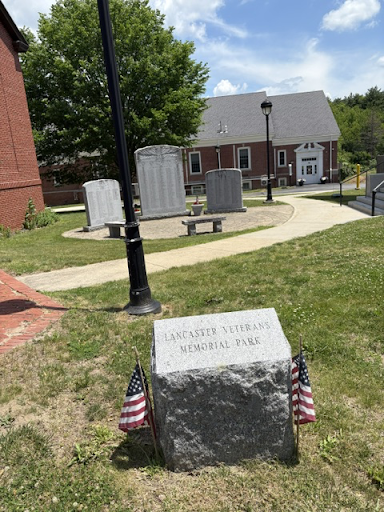
Lancaster Veterans Memorial Park
Located in the center of town, the Lancaster Veterans Memorial Park serves as a quiet and dignified place of remembrance dedicated to the men and women of Lancaster who have served their country. The park reflects the deep respect that this historic Massachusetts community has long held for its veterans. Lancaster itself has a rich military heritage […]
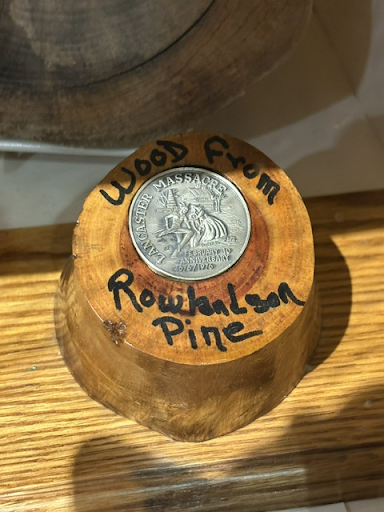
Medallion for the Lancaster Massacre
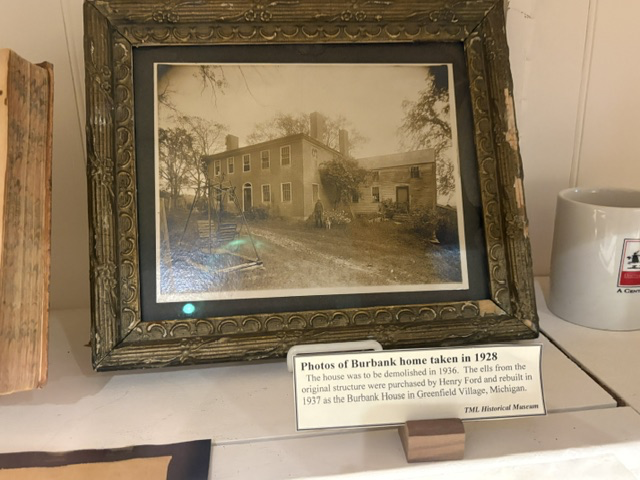
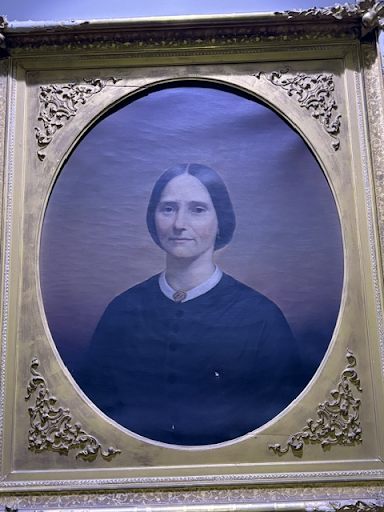
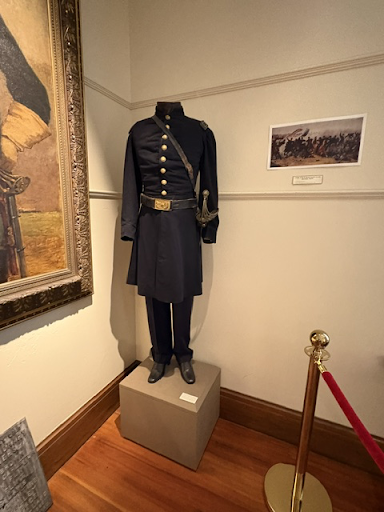
One of the unexpected treasures we discovered during our visit to the Thayer Memorial Library was the Historical Museum located on the upper floor. Established in 1863, even before the construction of Memorial Hall, the museum preserves an eclectic collection of artifacts that tell the story of Lancaster and its people. From Civil War memorabilia […]

