Fireside Industries
1937Dearest Reader,
Another company that reached out to my father was Fireside Industries of Adrian, Michigan.
They offered him a free rug hooking course, an invitation to learn a craft that could be done at home and perhaps turn into a source of income. But the offer did not stand alone. With membership, he would also receive giftwares and continued lessons, a steady stream of materials designed to both teach and keep him connected to the program.
Fireside Industries was part of a growing number of correspondence-based businesses during the 1930s, a time when opportunity often arrived by mail. In the midst of the Great Depression, when traditional paths were limited, these programs offered something tangible: a skill to learn and a product to create.
Their model was simple but appealing. A free course would draw you in. Membership would provide ongoing instruction, supplies and giftwares, that could be used or sold.
As I look at all of these envelopes, I see that my father was looking for a path. Something creative, practical and skilled. He is requesting this information and having it sent to an address not his home. This is my almost seventeen-year-old dad searching.
Dr. Nancy Watson
Washington
Read More From Nancy
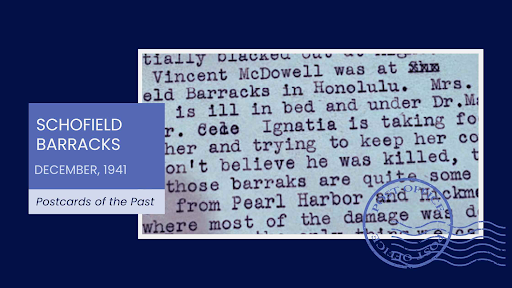
Schofield Barracks
Schofield Barracks sits in the center of Oahu, inland from the coast. Established in 1908 and named for Lt. Gen John M Schofield, the post was deliberately placed away from the shoreline to function as a permanent U.S. Army installation. It was designed for training, housing and command and not for naval operations. By 1941, Schofield […]
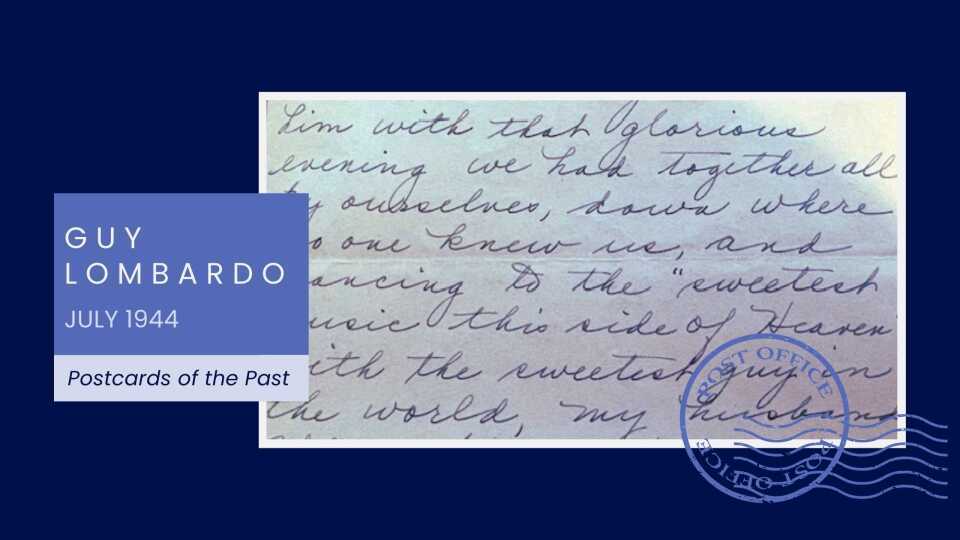
Guy Lombardo
By 1944, Guy Lombardo and His Royal Canadians, were more than a popular band, he was institutional. He was the soundtrack for weddings. honeymoons and dances. Even people who didn’t follow big-band music knew who Guy Lombardo was. In a world unsettled by war, Lombardo’s music offered something romantic and familiar. He was widely known for […]
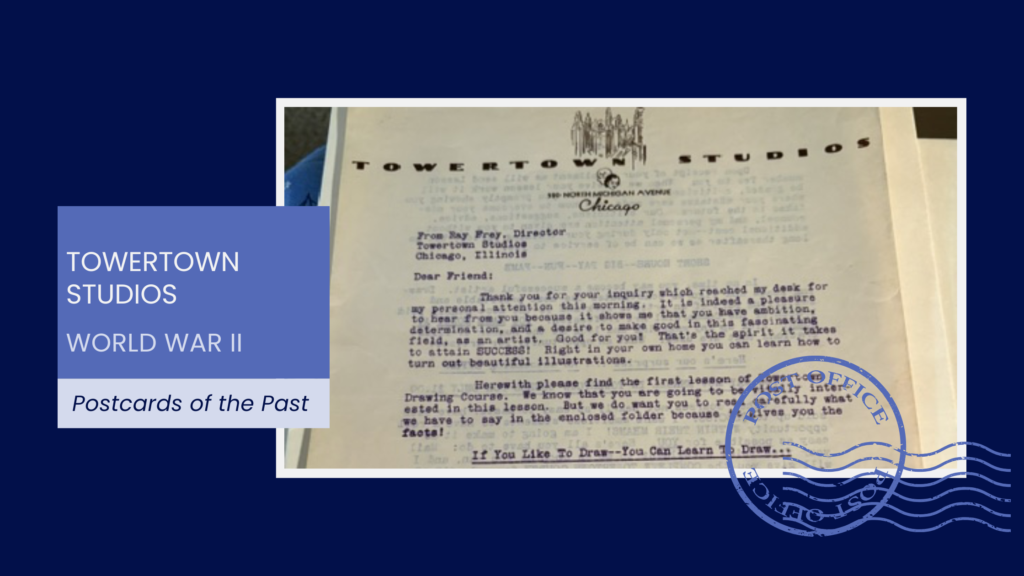
Towertown Studios
Among my father’s papers is this letter from Towertown Studios in Chicago promoting a correspondence course in drawing. By itself, it might seem like nothing more than an old piece of advertising mail. But knowing when my father received it gives it a much more personal meaning. This was part of the mail arriving while […]

