Gibson House Museum
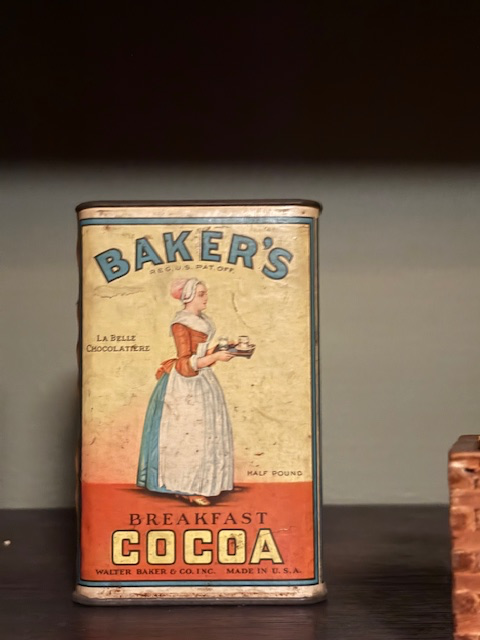
When visiting the Gibson House Museum in Boston, this colorful tin caught my eye in the kitchen. Baker’s Breakfast Cocoa, the title sparked my curiosity.
The tin was produced by Walter Baker & Co, the oldest continuously operating chocolate manufacturer in the United States. Founded in the late 1700s, in Massachusetts, Baker’s became a household name in New England. By the early 20th century, when tins like this were common, the Baker’s brand signified quality and reliability.
The center figure of La Belle Chocolatere was adapted from a European painting and became Baker’s iconic trademark. It conveyed a sense of Old-World tradition.
Baker’s Breakfast Cocoa was an everyday staple. Breakfast cocoa was not a sweetened instant drink as we think of hot chocolate today. It was plain, unsweetened cocoa powder meant to be mixed with hot milk or water and sweetened to taste. In the late 19th and early 20th centuries, cocoa was promoted as a wholesome morning beverage, nourishing and suitable for women and children.
This cocoa was also used in baking: cakes, puddings, frostings and sauces. Baker’s published recipe for us for breakfast cocoa as well as a baking ingredient. This tin dates from the 1920s to 1940s.
History lives all around us even in the small, ordinary objects.

Read More From Nancy
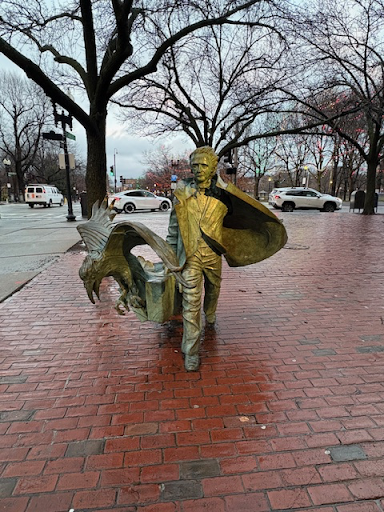
Edgar Allen Poe Statue
This is a statue of Edgar Allan Poe on the sidewalk along Boylston Street in Boston. He is caught in mid-stride, coat swirling with a raven perched atop a stack of books at his feet. The placement of this statue is intentional and rooted in Poe’s relationship with the city where his life began. Poe […]
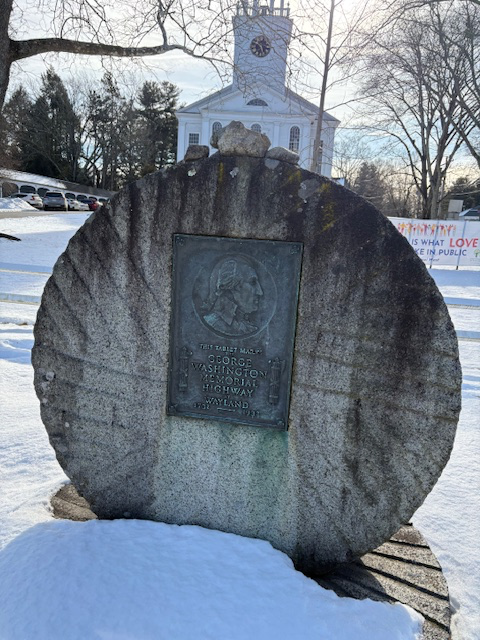
George Washington Marker
Driving through the town of Wayland, there is the round stone monument that sits along the roadside. Unlike grand statues that make historic events, this one is modest, a cylindrical stone pillar with a bronze marker identifying it as part of the George Washington Memorial Highway. The roadside marker reflects an interesting moment in American history when […]
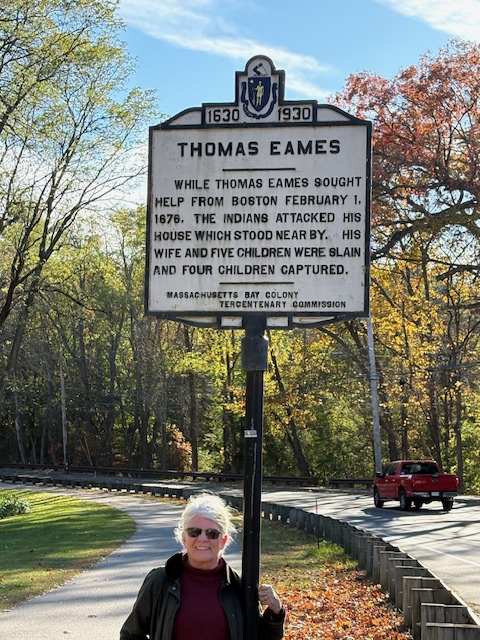
Thomas Eames Sign
Driving along a road in Framingham is this roadside sign that marks the location where the home of Thomas Eames once stood. There is no remaining structure, only the sign indicating that this was the site of a 17th century homestead. On February 1, 1676, during the King Philip’s War, the Eames house was attacked. At […]

