Vermont
Vermont entered the Union on March 4, 1791, becoming the nation’s fourteenth state and the first admitted after the original thirteen colonies. Known as the Green Mountain State, it has Montpelier as its capital and Burlington as its largest city. Its landscape is defined by the Green Mountains, Lake Champlain, the Connecticut River, fertile valleys, and forests that cover much of the state.
Before achieving statehood, Vermont existed as an independent republic from 1777 until 1791, following years of disagreement between New York and New Hampshire over control of the territory. Its early history was shaped by the Green Mountain Boys and Vermont’s role in the American Revolution. Farming, dairy production, logging, maple sugaring, textile mills, and the quarrying of marble, granite, and slate later influenced its economy and communities. Vermont’s small towns, covered bridges, historic village centers, and working landscapes continue to preserve the distinctive character of rural New England.
Recent Articles
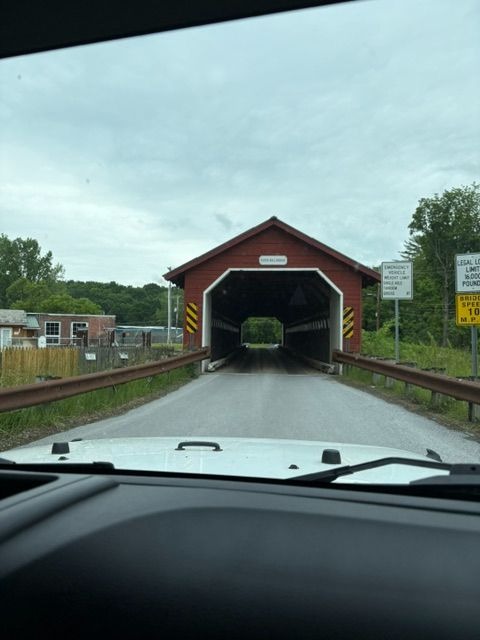
Paper Mill Covered Bridge
Paper Mill Covered Bridge carries a single lane of traffic across the Walloomsac River in Bennington. Its red siding, white-trimmed entrance, and enclosed wooden passage preserve a familiar feature of Vermont’s roads: a covered bridge that remains part of everyday travel. The original bridge was built in 1889. Approximately 125 feet long, it used a […]
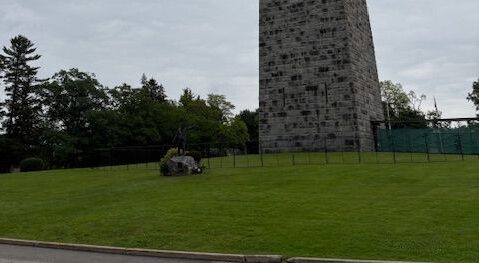
Bennington Battle Monument
During our camping trip to the Berkshires, we visited the Bennington Battle Monument in nearby Vermont. The tall stone shaft rises above Old Bennington, commemorating a Revolutionary War victory that helped change the course of the British campaign of 1777. From its observation level, we looked out across the surrounding town, wooded hills, and distant […]
Quechee Gorge
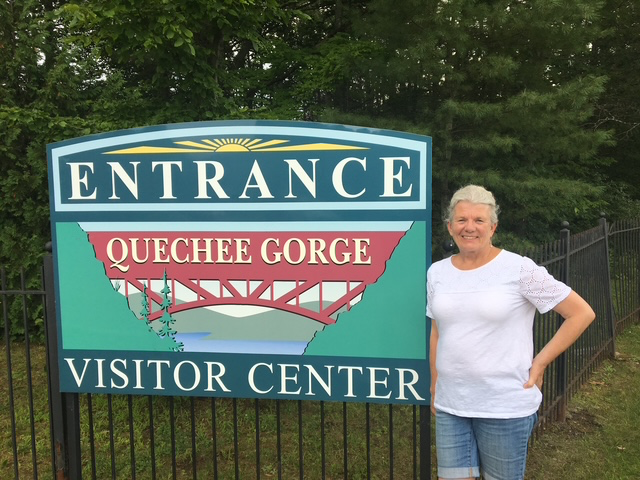
While exploring the Woodstock area, Marty and I stopped at nearby Quechee Gorge, one of Vermont’s most popular natural landmarks. We had driven through this part of Vermont before, but this time we stopped to walk out onto the bridge and really take in the landscape. The gorge stretches for about a mile, with the […]

