Blockhouse National Historic Site
One of the things I have come to appreciate through our travels is that every country chooses certain places to preserve because they tell an important part of its story. In the United States, I rarely pass up an opportunity to visit a National Park or National Historic Site. As Marty and I traveled through Canada’s Maritime Provinces, I found myself wanting to explore the places Canada has chosen to protect and remember as well.
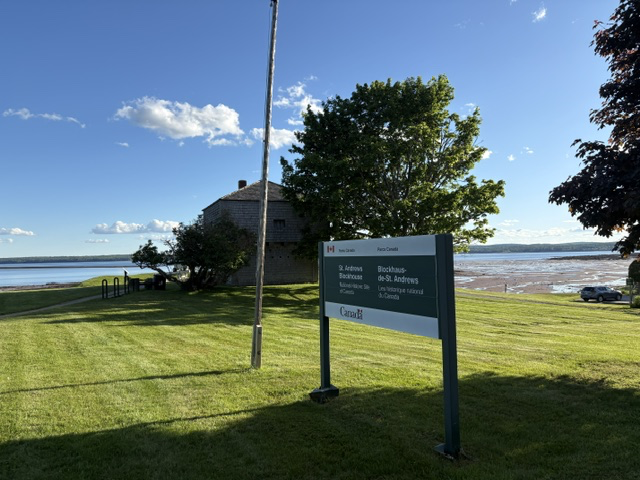
That curiosity brought us to the Blockhouse National Historic Site in the beautiful coastal town of St. Andrews, New Brunswick. Sitting quietly on a hill overlooking Passamaquoddy Bay, the small wooden blockhouse seems almost out of place amid the peaceful harbor and sailing boats. Yet this simple building represents a time when the border between British North America and the United States was uncertain, and the threat of war was very real.
The blockhouse was built in 1812 at the beginning of the War of 1812. At the time, St. Andrews was an important British port, and officials feared that American privateers or naval forces might attempt an attack. Although the town was never invaded, soldiers stationed here kept watch over the harbor and were prepared to defend one of Britain’s most important communities on the Bay of Fundy.
Read More From Nancy
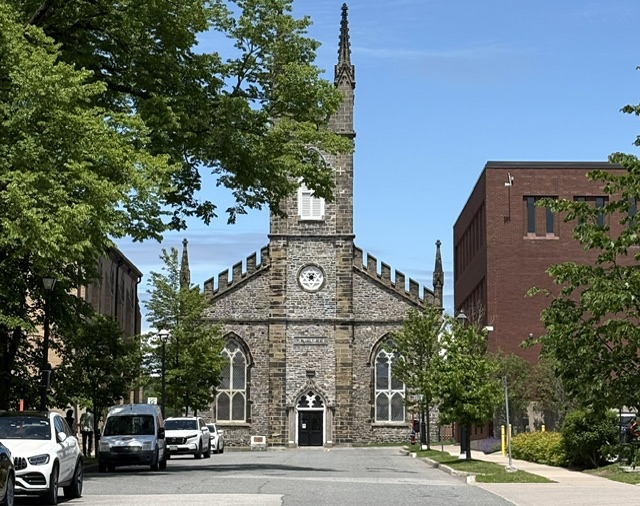
The Stone Church
At the end of Wellington Row, the narrow spire of St. John’s Anglican Church rises above one of Saint John’s oldest surviving places of worship. Commonly called the Stone Church, it has stood on Carleton Street for two centuries, witnessing the city’s growth, its devastating fires, and the many changes that have reshaped the surrounding […]
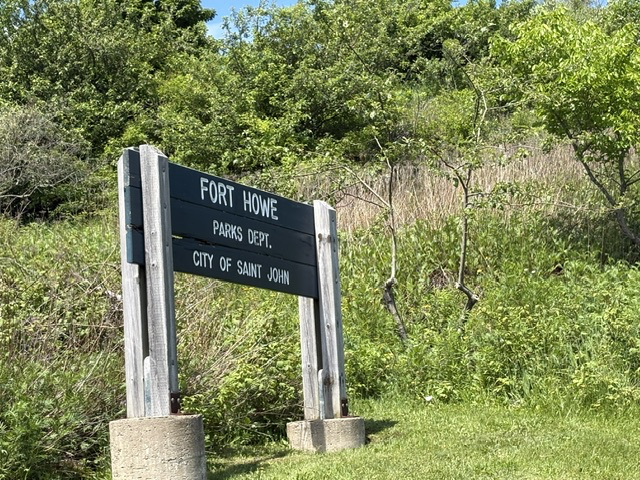
Fort Howe
From its position high above Saint John, Fort Howe once guarded the entrance to the Saint John River and the harbor below. The location offered British soldiers an expansive view of approaching ships and made the ridge a natural place from which to defend the settlement. The fort was constructed in 1777 during the American […]
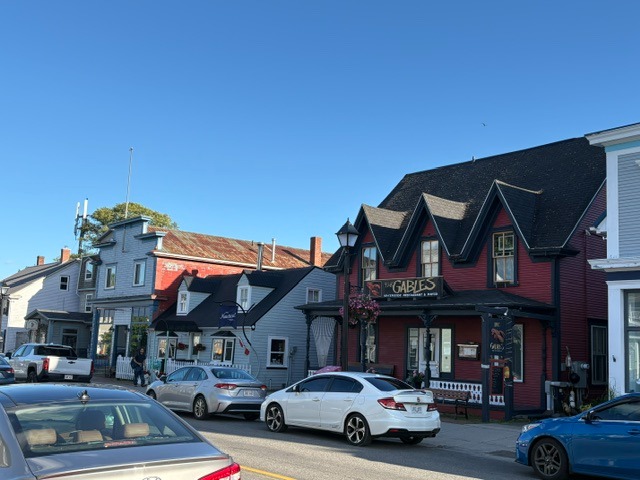
Water Street
Running parallel to the harbour, Water Street developed as the commercial centre of St. Andrews. Its closely spaced wooden buildings recall a town where merchants, shopkeepers and travellers depended on the movement of goods and people through Passamaquoddy Bay. Within the orderly street grid established after the Loyalists arrived in 1783, the waterfront road became […]

