Alexander Hamilton Statue in Boston
I love walking the Commonwealth Avenue Mall and pausing to take in the sculptures that line the path. Each one is placed not just to decorate the boulevard but also to invite reflection. One of the most prominent is the statute of Alexander Hamilton. I found myself wondering why Hamilton, who never lived in Boston. was chosen to stand here and who was the man who decided he belonged among the city’s civic monuments.
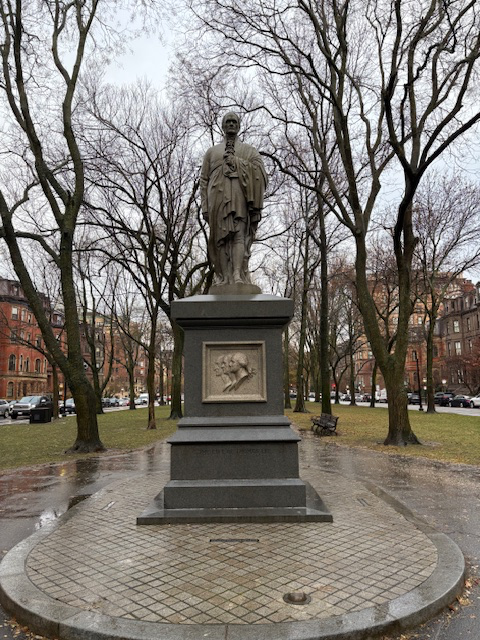
Hamilton’s ideas resonated in Boston. This was a city shaped by commerce and institutions such as banks, universities and civic organizations. Hamilton’s vision of a strong federal government and a stable financial system, aligned with Boston’s post-Revolutionary identity. Even though his political life unfolded largely in New York. His thinking helped shape Boston.
The statue was erected in 1865. The Civil War had just ended, and the country was reckoning with the cost of division, and the necessity of unity. Hamilton had come to symbolize the strength of the Union and the importance of a national framework.
Thomas Lee, the man who paid for the statue, was “a citizen of Boston.” He joined a long Boston tradition in which private citizens shaped public space to reflect shared values. The Commonwealth Avenue Mall was designed as a civic promenade. Public art often tells us much about those who commission it as it does about the figures they choose to honor – if we stop and contemplate and stay curious.
Read More From Nancy
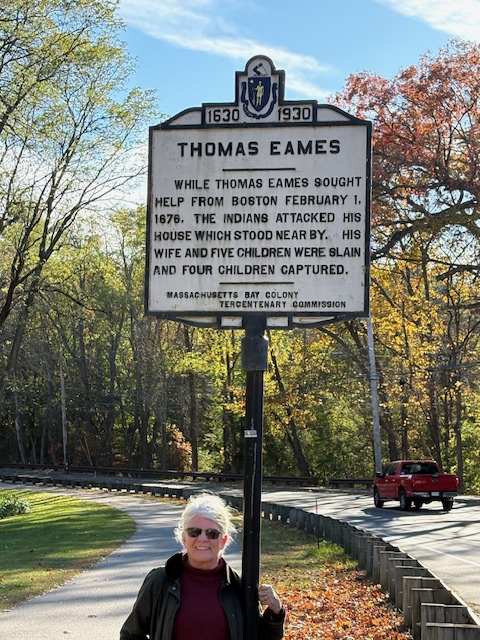
Thomas Eames Sign – Framingham
Driving along a road in Framingham is this roadside sign that marks the location where the home of Thomas Eames once stood. There is no remaining structure, only the sign indicating that this was the site of a 17th century homestead. On February 1, 1676, during the King Philip’s War, the Eames house was attacked. At […]
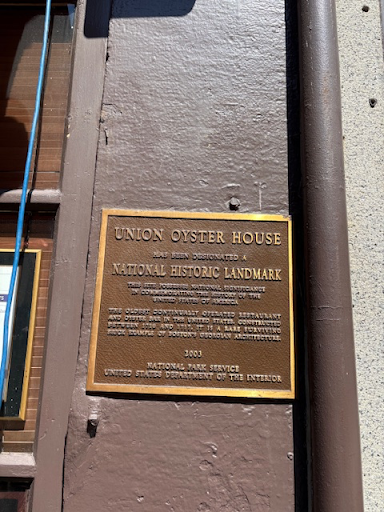
Union Oyster House
Walking along the Freedom Trail in Boston, it is easy to miss the plaque outside the Union Oyster House. But if you pass it by, you are missing not only a good meal, but an extraordinary chapter in American history. The Union Oyster House is the oldest continuously operating restaurant in the United States, serving diners […]
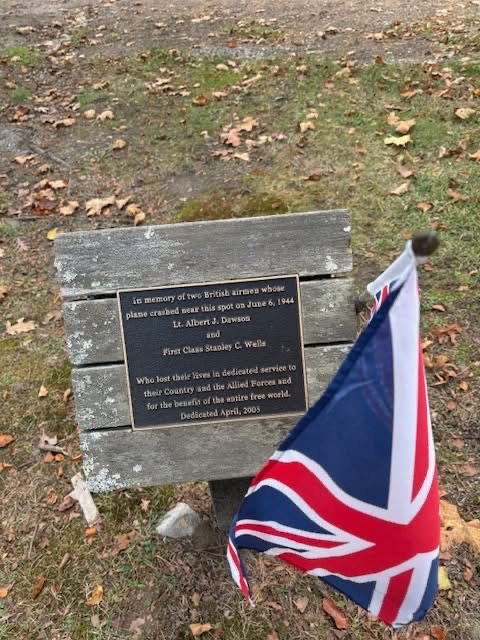
The Flag That Sparked Curiosity: Discovering History Hidden in Plain Sight
It was curiosity that led me there. Every day, on my drive to Wellesley Chiropractic Office, I noticed a small British flag beside a marker in the middle of an island. What was a British flag doing in the suburbs of MA? My first assumption was a simple one: perhaps it marked a site from colonial […]

