A School Assignment: René Viviani’s Address at Washington’s Tomb
April 29, 1917Dearest Reader,
Among the papers preserved in our family is a handwritten copy of an address given by French statesman René Viviani at the tomb of George Washington on April 29, 1917. The speech was written out as a school assignment.
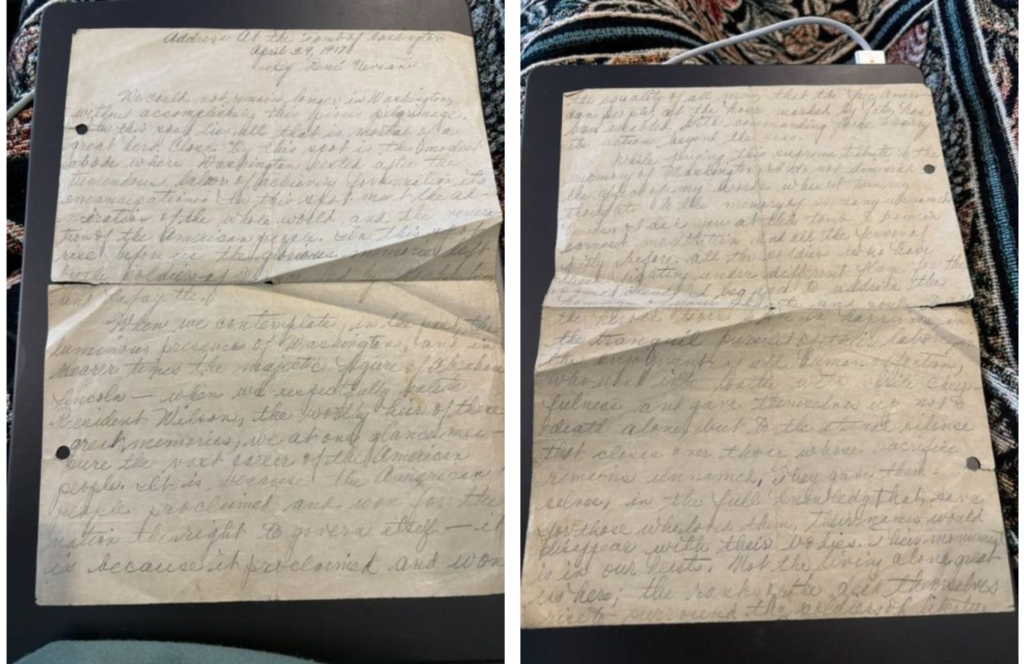
Viviani, a former prime minister of France, came to the United States as part of a French mission shortly after America entered World War I. On April 29, members of the French and British war commissions visited Mount Vernon, where they gathered at Washington’s tomb. Viviani spoke there in French, honoring Washington and the soldiers who had already lost their lives in the war.
The handwritten assignment preserves an English version of portions of his address:
Address at the Tomb of Washington
April 29, 1917
by René Viviani
We could not remain longer in Washington without accomplishing this pious pilgrimage. In this spot lies all that is mortal of a great hero. Close by this spot is the modest abode where Washington rested after the tremendous labor of achieving for a nation its emancipation. In this spot meet the admiration of the whole world and the veneration of the American people. In this spot rise before us the glorious memories left by the soldiers of France led by Rochambeau and Lafayette.
When we contemplate, in the past, the luminous presence of Washington, and in nearer times the majestic figure of Abraham Lincoln—when we respectfully salute President Wilson, the worthy heir of these great memories, we at one glance measure the vast career of the American people. It is because the American people proclaimed and won for the nation the right to govern itself—it is because it proclaimed and won the equality of all men, that the free American people at the hour marked by fate has been enabled with commanding force to carry its action beyond the seas.
While paying this supreme tribute to the memory of Washington, I do not diminish the effect of my words when turning my thoughts to the memory of so many unnamed heroes. I ask you at this tomb to bow in earnest meditation and all the fervor of piety before all the soldiers of the Allied nations fighting under different flags for the same ideal. I beg you to address the homage of your hearts and souls to all the heroes born to live in happiness, in the tranquil pursuit of their labors, in the enjoyment of all human affections, who went into battle with virile cheerfulness and gave themselves up not to death alone, but to the eternal silence that closes over those whose sacrifice remains unnamed. They gave themselves in the full knowledge that, save for those who loved them, their names would disappear with their bodies. Their monument is in our hearts. Not the living alone greet us here; the ranks of the dead themselves rise to surround the soldiers of liberty.
The student’s copy brings together Viviani’s reflections on American leaders and his remembrance of the soldiers who had died during nearly three years of war in Europe. Written out by hand for a school assignment, these pages preserve words spoken at a moment when the United States was beginning its own involvement in the conflict.
Dr. Nancy Watson
Washington
Read More From Nancy
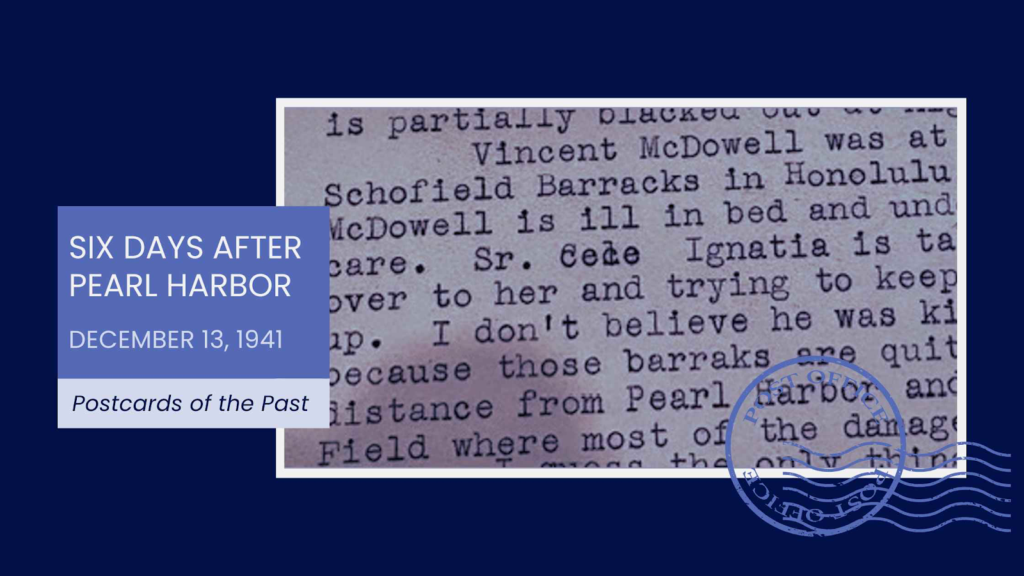
Six Days After Pearl Harbor
In another passage of her December 13, 1941 letter, my grandmother reveals how personally the attack on Pearl Harbor was being felt, even far from Hawaii. The war was no longer an abstract headline, it had names, faces and families attached to it. She wrote: “Vincent McDowell was at Schofield Barracks in Honolulu. Mrs McDowell […]
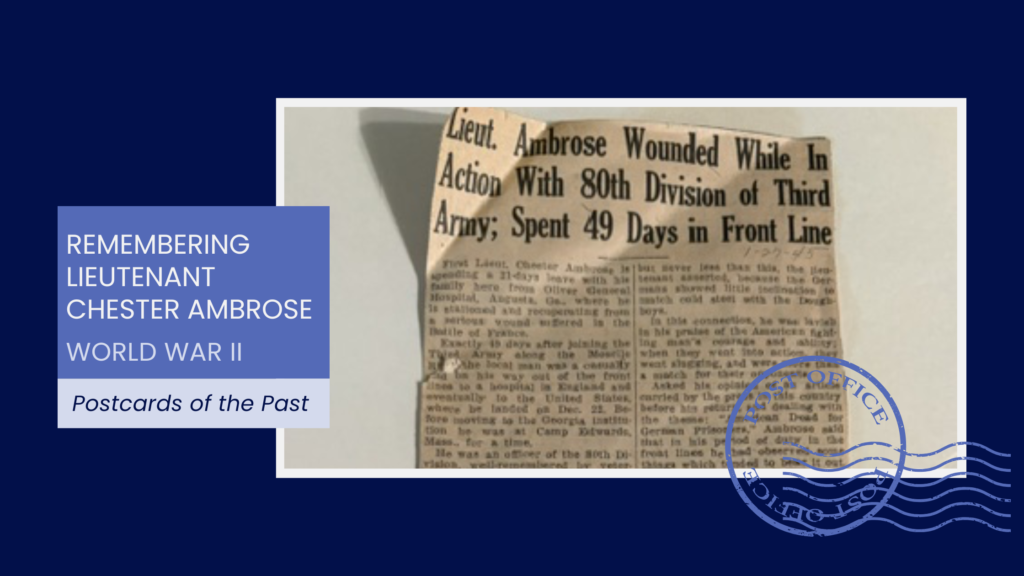
Remembering Lieutenant Chester Ambrose
As I continue sorting through the papers my parents saved, I occasionally come across newspaper clippings that offer a glimpse into the community where my father grew up. This article tells the story of Lieutenant Chester Ambrose, a teacher and athletic coach at Martinsburg High School who served with the 80th Infantry Division under General […]
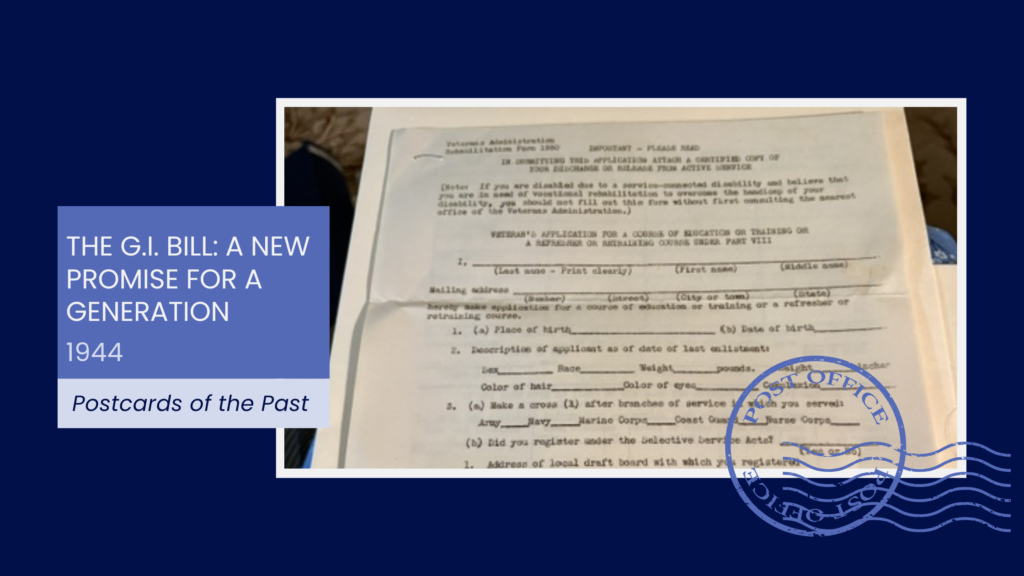
The G.I. Bill: A New Promise for a Generation
Among the papers my parents left behind is this Veterans Administration application for educational benefits under the Servicemen’s Readjustment Act of 1944, better known as the G.I. Bill. At first glance, it is simply a government form. But in many ways, it is one of the most important documents in twentieth-century American history. Signed into […]

