The G.I. Bill: A New Promise for a Generation
1944Dearest Reader,
Among the papers my parents left behind is this Veterans Administration application for educational benefits under the Servicemen’s Readjustment Act of 1944, better known as the G.I. Bill. At first glance, it is simply a government form. But in many ways, it is one of the most important documents in twentieth-century American history.
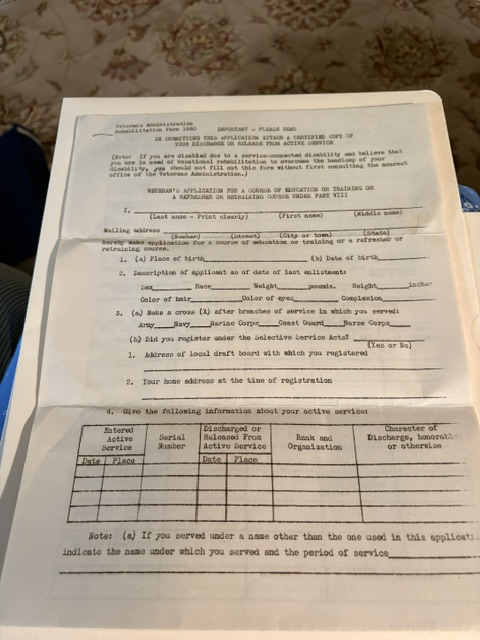
Signed into law by President Franklin D. Roosevelt on June 22, 1944, the G.I. Bill was created to help returning servicemen and women make the transition from military service to civilian life. Rather than simply thanking veterans for their service, the nation made an extraordinary investment in their future. The law provided funding for college and vocational education, low-interest home loans, unemployment assistance, and support for starting new careers.
Before World War II, a college education was a privilege available to relatively few Americans. Tuition was beyond the reach of many working families, and higher education was often reserved for those with financial means. The G.I. Bill transformed that reality. Nearly eight million veterans took advantage of its educational benefits, filling college campuses across the country and forever changing the face of American higher education. Universities expanded, new academic programs were created, and a generation of veterans entered professions that might otherwise have remained beyond their reach.
The impact extended far beyond education. Veterans purchased homes, established businesses, entered professions, and helped build what became America’s postwar middle class. Entire communities grew because of the opportunities this legislation created. Historians often describe the G.I. Bill was one of the most successful pieces of social legislation ever enacted in the United States because its influence extended well beyond the veterans themselves. It shaped their families, their communities, and future generations.
Reading through this application today, I am struck by how ordinary it appears. There are spaces to record military service, educational plans, and personal information. It looks like countless government forms we complete throughout our lives. Yet behind those blank lines lies an extraordinary promise that a nation would invest in the education and future of those who had served.
For me, this document is a reminder that history is often preserved in the quiet papers people save without realizing their future significance. I treasure it because it tells the story of a young veteran standing at the threshold of a new life, carrying with him not only the experiences of war but also the promise of opportunities that would shape the rest of his journey.
Dr. Nancy Watson
Washington
Read More From Nancy
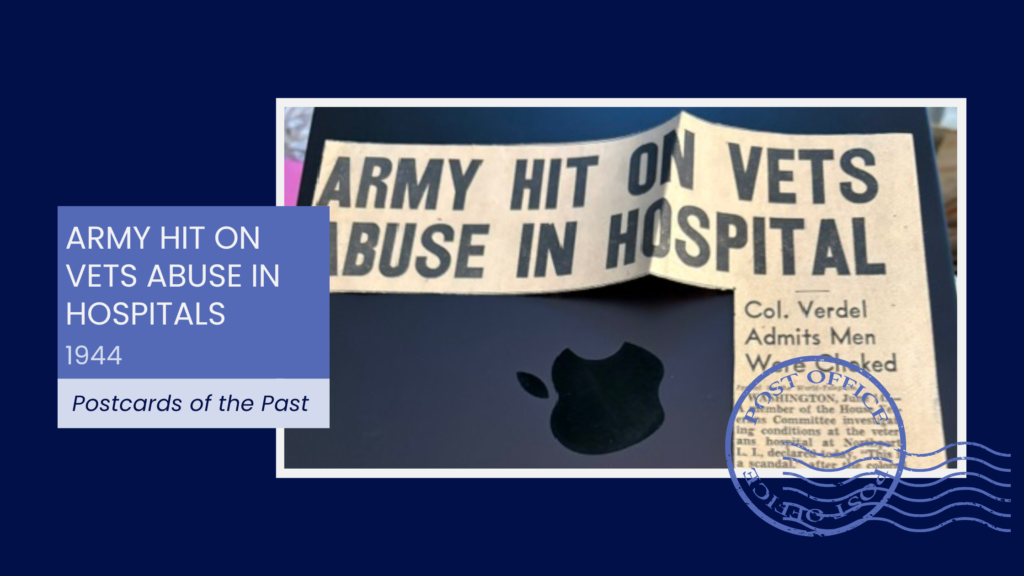
Army Hit on Vets Abuse in Hospitals
Among the newspaper clippings preserved by my mother is this article concerning allegations of mistreatment at a military veteran’s hospital during World War II. I have no direct evidence connecting the article to my family, butcannot help wondering why it was saved. At the time the article appeared, my father was serving in the Army and was spending part of 1944 in Washington […]
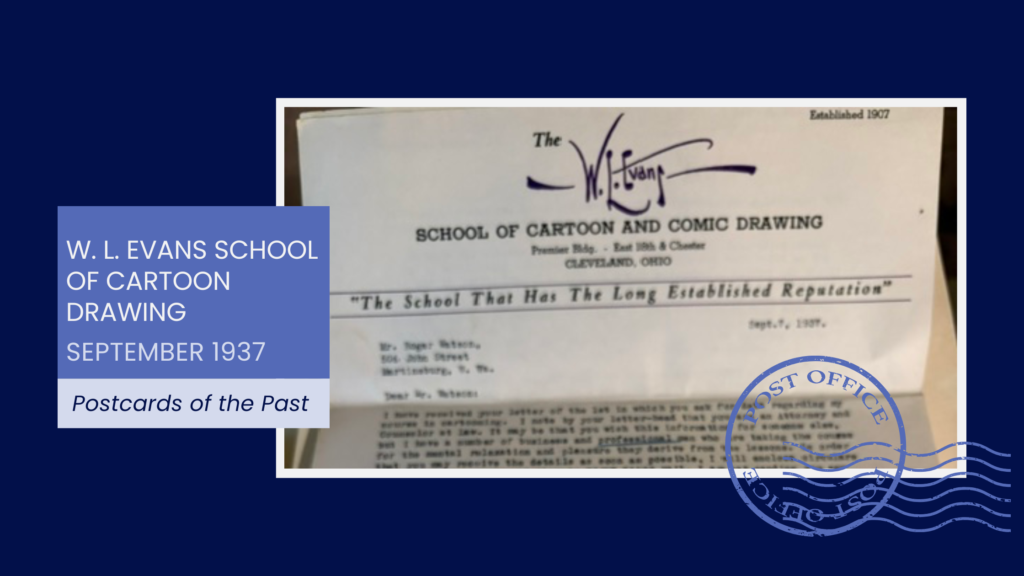
W. L. Evans School of Cartoon Drawing
Among my father’s papers is another piece of correspondence from his teenage years, this one from the W. L. Evans School of Cartoon and Comic Drawing in Cleveland, Ohio. At first glance it appears to be another promotional letter encouraging a young man to enroll in a correspondence course. Looking more closely, however, it reveals […]
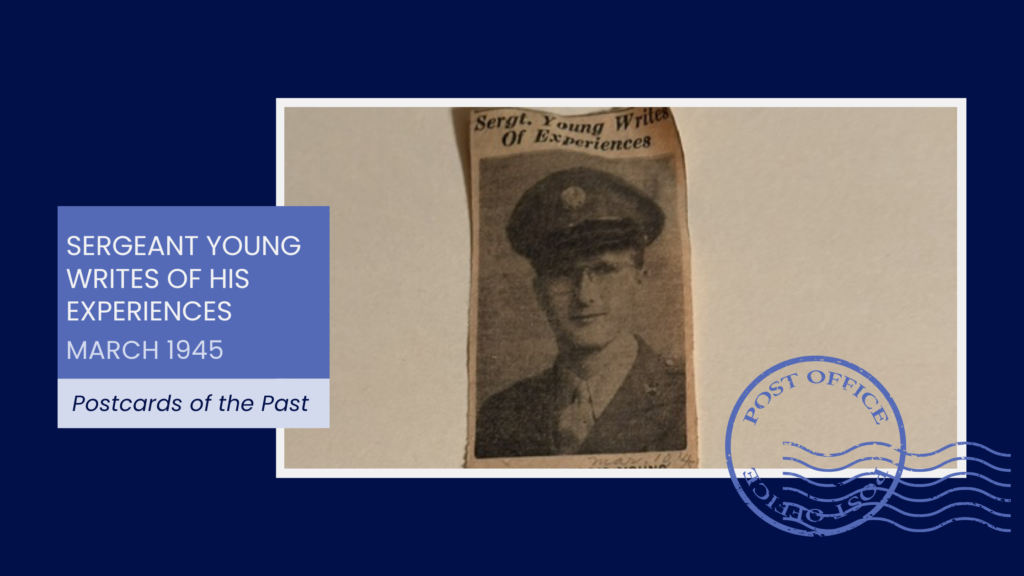
Sergeant Young Writes of His Experiences
Among my mother’s papers, I found this small newspaper clipping about Sergeant Morris Young. In her handwriting, she noted the date, “March 10, 1945” I don’t know why she chose to save it, but it was clearly important enough that she kept it for many years. During World War II, local newspapers regularly published letters […]

